
Exploring solutions for growth at Wasa Future Festival
Image
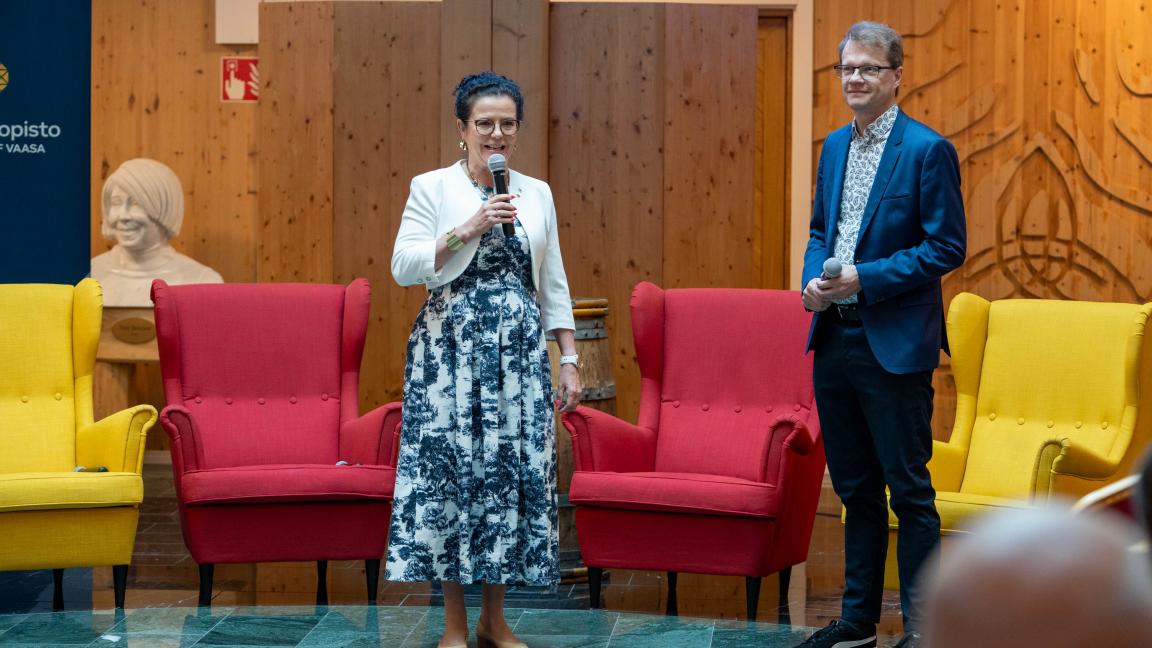
Rehtori Minna Martikainen ja vararehtori Mika Grunström avasivat festivaalin tiistaipäivän.
Wasa Future Festival once again brought together decision-makers, researchers, industry experts and societal stakeholders from 11 to 14 August 2026 to advance the economic and societal innovations that will shape Finland's future in the years ahead. The University of Vaasa contributed a diverse programme to the festival, exploring solutions for growth through themes such as investments, artificial intelligence, resilience, the energy transition, data centres, startup entrepreneurship and the space economy.
The festival is coordinated by Wasa Innovation Center. Recordings of selected programme sessions are available on the Wasa Future Festival YouTube channel.
Practical measures to attract investment
Wasa Future Festival also presented practical measures to attract more investment and accelerate economic growth in Finland. A high-level, invitation-only workshop organised by Sitra and the University of Vaasa’s Finland Investment Institute used Sitra’s AI-powered Kuutio method. The workshop generated 280 ideas and 39 proposed solutions.
Image
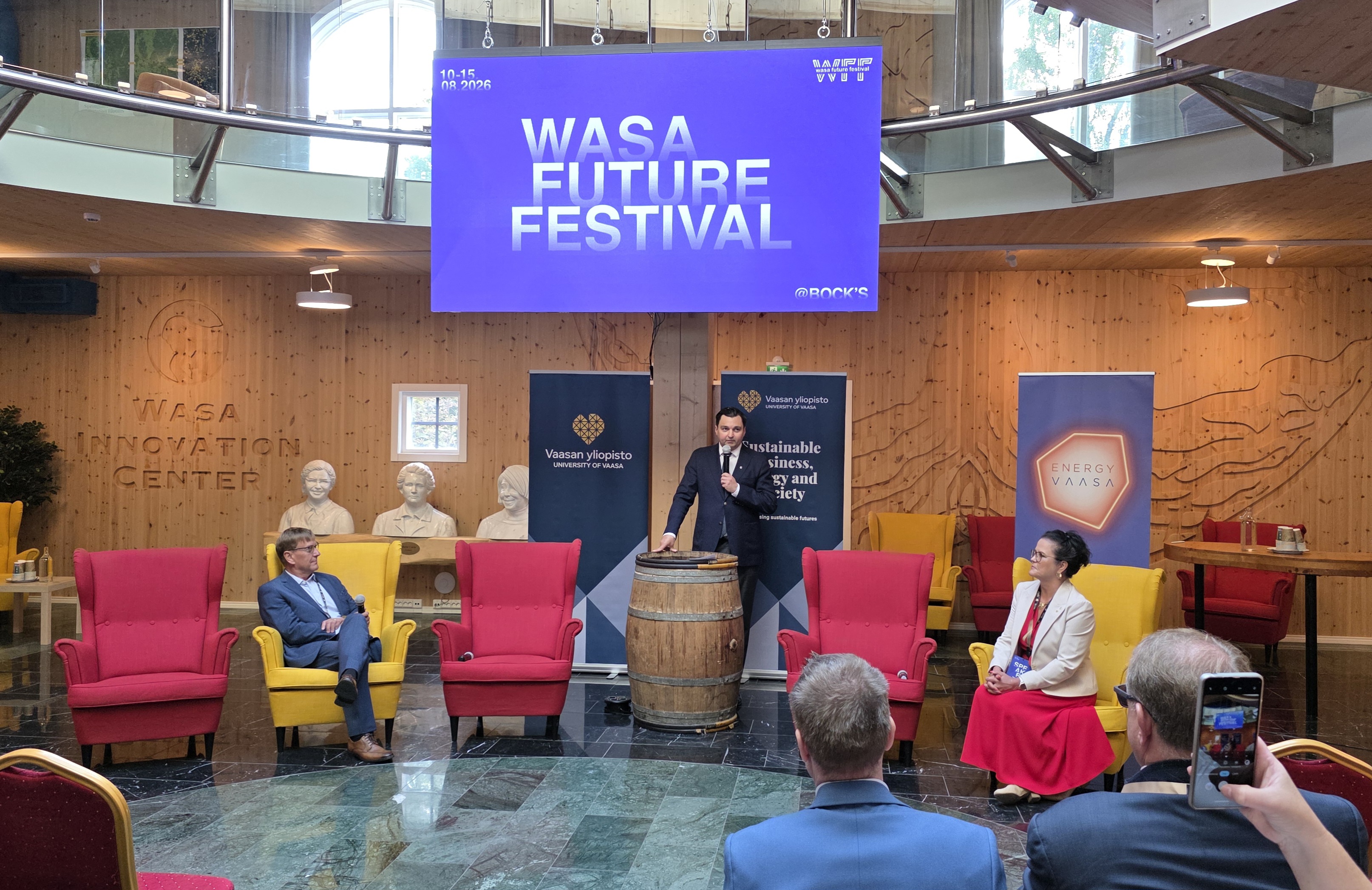
Joakim Strand, Minister for European Affairs and Ownership Steering, opened the workshop on Wednesday and called for a more systematic approach to investment policy in Finland.
– We have perhaps lacked a systematic approach to promoting and securing investment in Finland, Strand said.
The solutions developed during the workshop focused on the availability of skilled professionals, improving the investment environment and targeting RDI investment more effectively. The proposals included helping international talent establish stronger ties to Finland, using AI in permit processes and strengthening Nordic cooperation in research, development and innovation.
Image
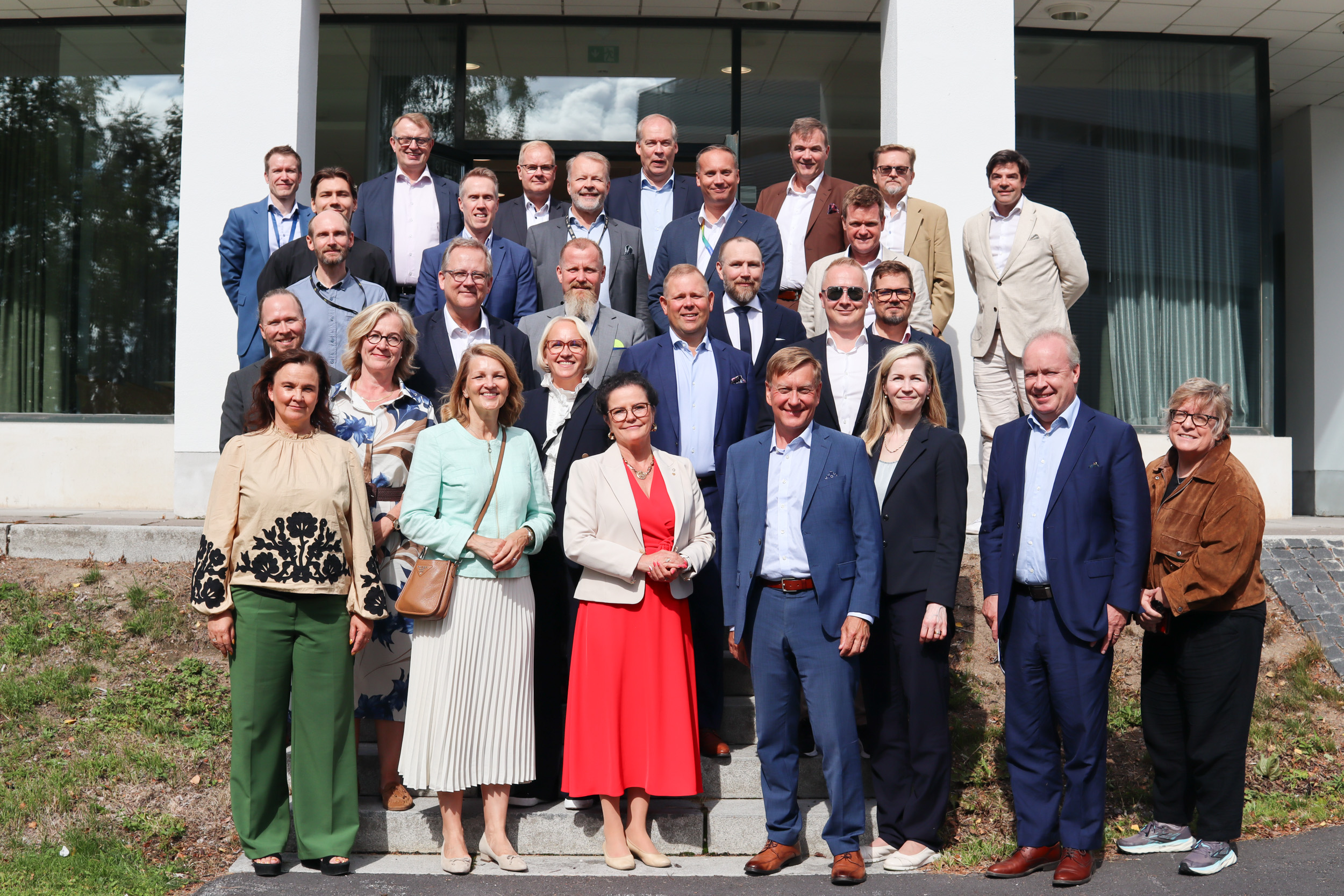
– In the future, Finland’s young population alone will not be large enough to sustain our economy and welfare state. We need highly educated international talent and determined efforts to encourage them to stay in Finland, said Minna Martikainen, Rector of the University of Vaasa, at Thursday’s session presenting the results.
Atte Jääskeläinen, President of Sitra, emphasised that solutions could no longer be built on the assumption of ever-increasing public funding.
– The key is to attract more private and international capital to Finland and create an environment in which companies can operate profitably. Finland’s expertise is one of our greatest strengths in this respect, Jääskeläinen said.
Read the summary report on the proposals developed through the Kuutio process.
Harnessing AI for research, business, and society
Image
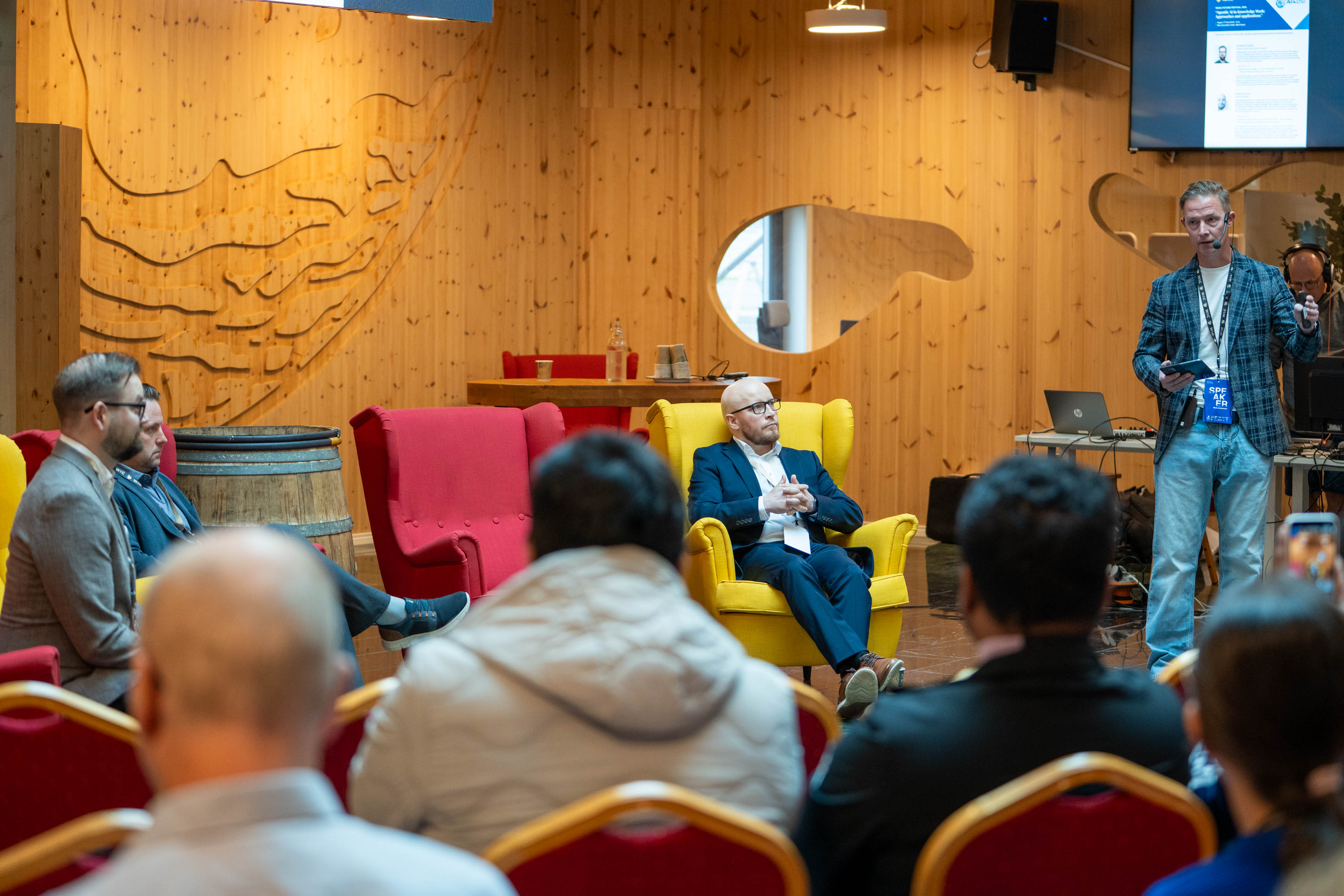
On Tuesday’s University Day, experts explored how AI is changing the way we work, make decisions and build society. Professor Marko Kohtamäkiexplained how agentic AI can support research processes and strengthen productivity, quality, creativity and capacity. Joonas Kevari, Head of AI at Elomatic, Kristian Luoma, Co-Founder at In-Parallel and Christian Sundman, General Manager of Manufacturing at Wärtsilä added perspectives from strategy, procurement and manufacturing, highlighting both opportunities and challenges in adopting agentic systems.
Later in the day, Dr Maria Pajuoja from the University of Vaasa, Dr Anna-Mari Simunaniemi from JAMK and Dr Pauli Komonen from VTT led a workshop where an AI radar tool developed in the GenAI Project was used to examine change signals related to competence needs, data, environmental impacts and human control.
The final session of the day focused on AI’s role in society. Nina Wessberg, Antero Karvonen, Anton Sigfrids and Jaana Leikas from the University of Vaasa explored AI’s impact on democracy, public administration and care. Through research-based provocations and open discussion, participants considered what kind of AI-enabled society we want to build, and which values must remain non-negotiable. Read the researchers' blog post about the topic.
How to prosper during the times of uncertainty?
Image
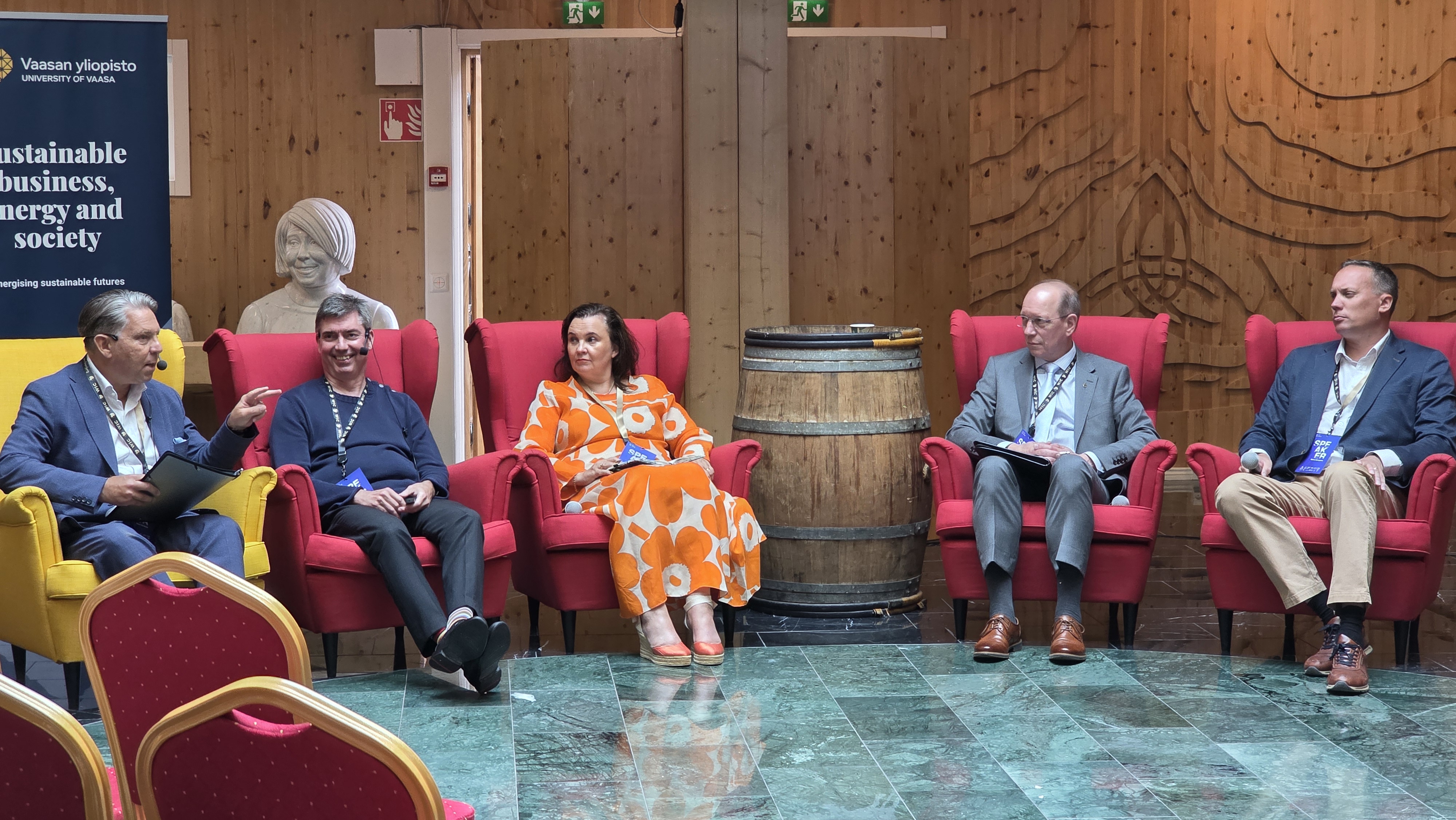
In the discussion How to prosper during the times of uncertainty?, participants explored why a crisis paralyses one organisation while prompting another to reinvent itself. Hannu Mäntymaa of Wärtsilä Marine described how the climate crisis has accelerated the development of new fuels and multi-fuel engines. Kari Renko of Patria explained how Russia’s war of aggression against Ukraine has transformed the operating environment of the defence sector and driven strong growth both across the industry and at Patria.
Futurist Mika Aaltonen stressed that organisations do not simply have to adapt to change; they can also actively shape the future. Professor of Practice Hanna Smith from the University of Vaasa encouraged participants to view uncertainty as an opportunity to improve. The discussion was moderated by Research Director Petri Uusikylä from the University of Vaasa.
Shaping the future of data centres and energy systems
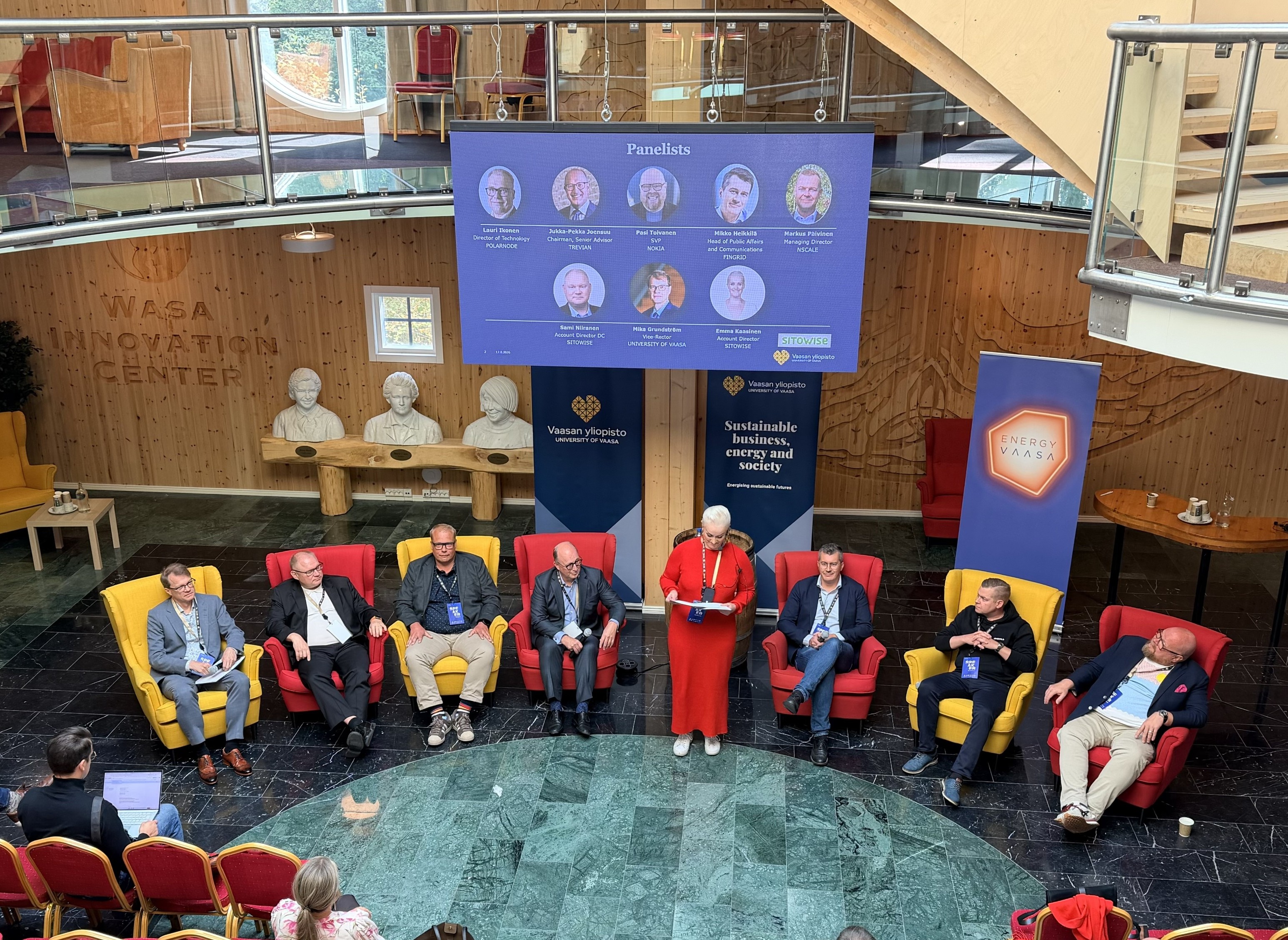
The university and Sitowise organised a panel discussion, where experts explored the role of datacentres in strengthening regional competitiveness and enabling sustainable growth, and how they can create value beyond investment and infrastructure. A key takeaway from the discussion was that as demand for AI, cloud services and digital infrastructure continues to grow, the Nordics and Finland are well positioned to build long-term competitive advantage based on clean energy, strong expertise and cross-border collaboration. Vice-Rector Mika Grundström highlighted the importance of know-how and collaboration between academia and industry, and cited the WSTAR (Wasa Zero Emission Data Centre) research environment as an example of ongoing efforts to develop new solutions for improving data centre energy efficiency.
Image
Image
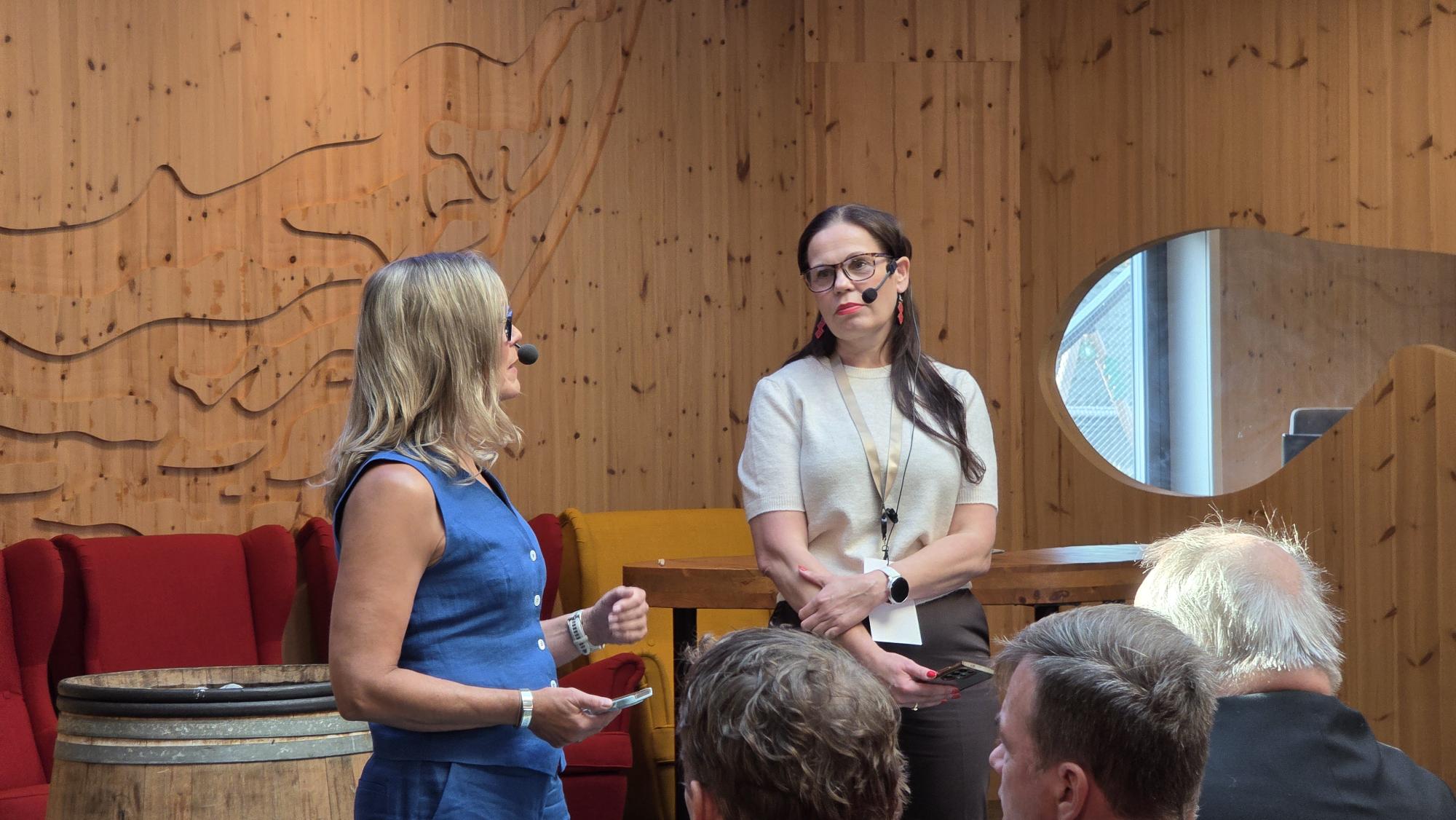
Senior Researcher Katja Sirviö participated in the EnergySampo – Future of Energy session that focused on sector coupling: how electricity, heat, hydrogen, transport, industry and data centres increasingly form one interconnected system. Sirviö highlighted the importance of simulation in this development: it can help us explore interdependencies and different future scenarios before major investments are made.
Powering the Energy Transition Together: Scaling Collaboration for Real Impact seminar brought together researchers and industry professionals to explore how university–industry collaboration can evolve from successful single project -based cooperation towards broader system-level impact. The seminar featured keynote presentations from Maciej Mikulski and Katja Sirviö, together with company perspectives from Wärtsilä, Danfoss, Hitachi Energy, Esse Elektro-Kraft, and Astemes. The presentations were be followed by an interactive workshop focused on identifying future collaboration opportunities and high-impact system-level use cases. The event was moderated by Henri Karimäki and Jan Segerstam from the university.
Vaasa’s startup ecosystem creating connections with Silicon Valley
Image
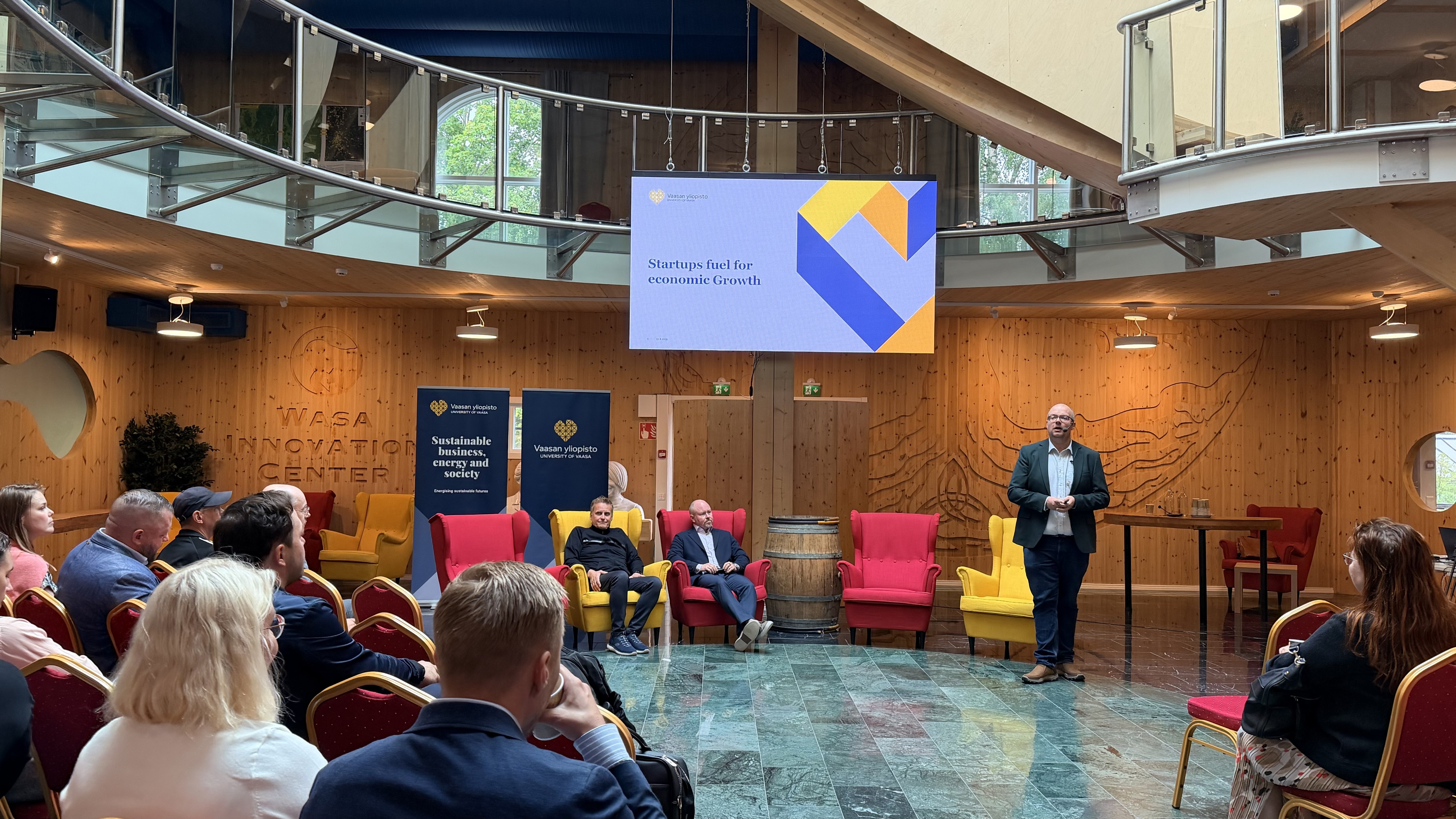
The role of startups in driving economic growth was highlighted on Tuesday’s University Day. Philipp Holtkamp presented Vaasa Startup Factory, a joint initiative of Vaasa’s higher education institutions that supports entrepreneurship, innovation and startup development. Patrik Österåker introduced the Next Level Growth challenge, whose winner will earn a trip to Silicon Valley, while Samuel Broman from Botnia Ventures discussed support opportunities for early-stage startups.
The event also focused on international connections and growth opportunities. Jan Segerstam from the University of Vaasa and Lars Ling from CleanTech Region Group shared perspectives on strengthening ties between Vaasa and Silicon Valley and the value of international networks. In addition, nine startups showcased their innovations, ranging from drone-based inspections for renewable energy production to a chat application designed to reduce loneliness, demonstrating the strength and diversity of Vaasa’s growing startup ecosystem.
Space economy strengthens Finland's competitiveness
Space Wednesday highlighted the growing opportunities of the space economy in Finland and the Nordic region. Organised by the University of Vaasa and the Kvarken Space Center, the event brought together researchers, industry representatives and experts to discuss the economic impact of space, the role of space data, and the importance of Nordic collaboration.
Image
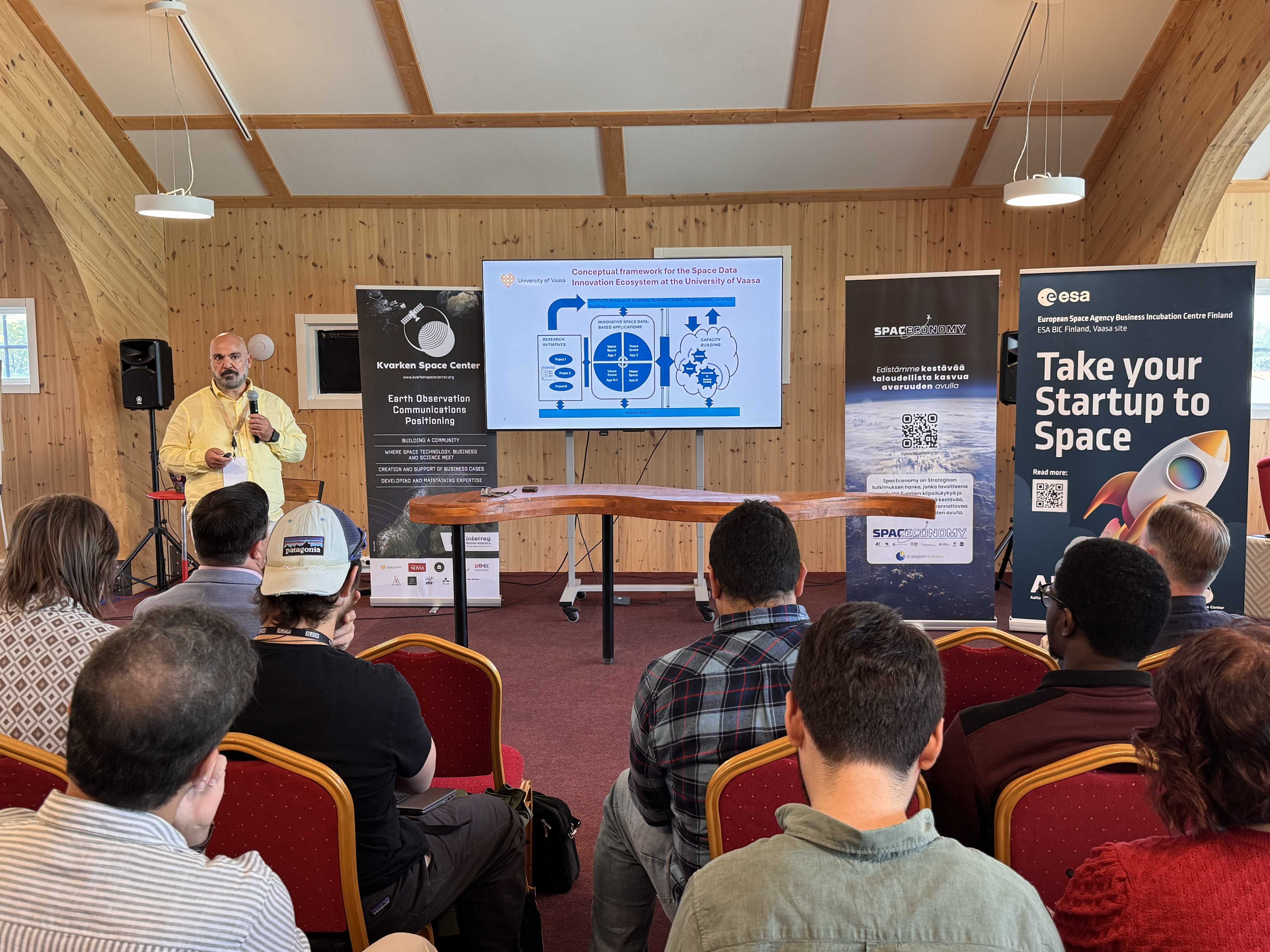
The programme featured presentations by University of Vaasa researchers and professors, including ProfessorAli Arslan, who discussed the university's space strategy and the revitalisation of the Kvarken Space Center; Postdoctoral ResearcherJohanna Kalliokoski, who presented the national SpacEconomy project together with Professor Heidi Kuusniemi from Tampere University; Professor Petri Välisuo, who introduced the Interreg Aurora-funded AuroraSpace project; and ProfessorPekka Suominen, who shared perspectives on collaboration across disciplines and organisations. The programme also included presentations by Mikko Punnala (Sharpnav) and Søren Gram Riisgard (Space Denmark).
The space perspective was also featured in Monday's programme, when Assistant Professor Elham Ahmadi discussed the potential of data and AI for sustainable urban development in the Dialogue on Smart City Development, Citiverse and Energy Data, together with Simon Björkman from EPV and Tiina Strand from the City of Vaasa. Ahmadi highlighted satellite data as one concrete example of how data can support sustainable urban development. Satellite imagery can make change visible – for example, how urban areas have developed over the past five years.
Circular economy transforms value chains
On Monday, we also saw Senior Researcher Erwan Mouazan sharing insights from the FRANCESCA Horizon Europe project on how the furniture value chain is being reshaped through new bio-based and circular materials, design for multiple life cycles, circular business models, and the Digital Product Passport.
– The transition isn't simply about recycling more. It requires rethinking how value is created, captured and preserved across the entire furniture ecosystem - from sourcing and design to reuse, repair, remanufacturing and recovery, Mouazan said.
From polarisation towards collaboration
On Wednesday, a panel discussion explored how polarisation affects our society from the perspectives of communication, identities, and human cognition. The panel featured University of Vaasa Professor of Communication Studies Tanja Sihvonen, researcher and author Tiina Raevaara, and neuroscientist Katri Saarikivi. The discussion highlighted that solving major societal challenges requires collaboration and the ability to overcome social and mental boundaries to strengthen a shared sense of community and understanding.
Perspectives to energy and innovation through art
Image
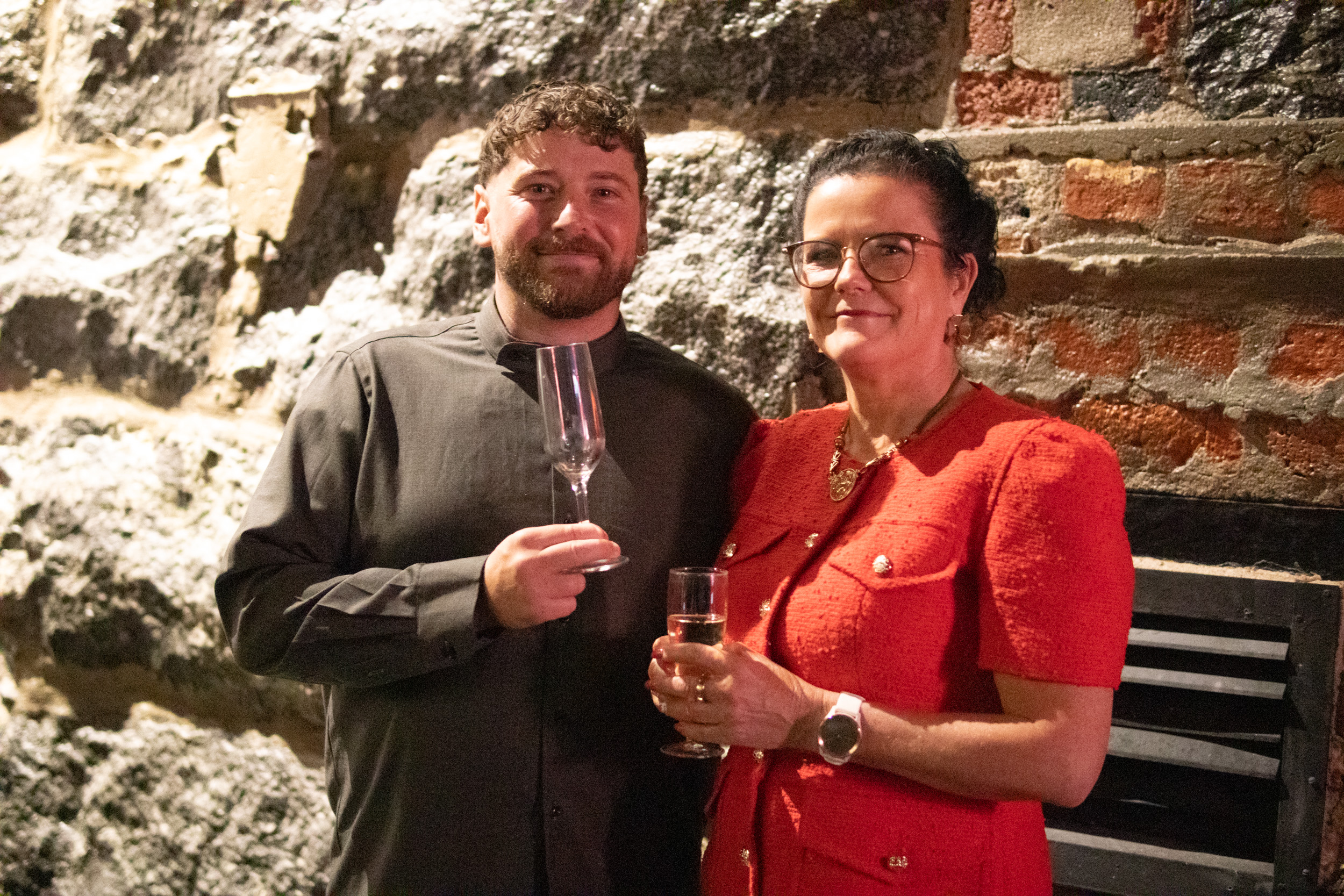
On Monday evening, the festival celebrated the opening of Australian artist Benjamin Knock’s Terra:Forms exhibition, which also became the main part of Hall of Energy’s new permanent exhibition. Knock, who worked as a visiting teacher at the University of Vaasa in the spring, drew inspiration from Vaasa’s unique post-glacial land uplift.
In her speech at the opening, Rector of the University of Vaasa Minna Martikainen said that the art featured in the exhibition encourages us to reflect on the role and different forms of energy, both now and in the future. The exhibition was organised by Wasa Innovation Center and the University of Vaasa.
On Thursday, the discussion Taide innovaatioiden kiihdyttäjä (Art as a catalyst for innovation) explored how art can influence corporate culture, creativity and innovation. The discussion was moderated by Elina Melgin, Professor of Practice at the University of Vaasa. The panellists were Ia Adlercreutz from Aalto University, artist Teemu Mäki from the Artists’ Association of Finland, Ulrika Romantschuk from Nordea and Janne Ylinen, CEO of HalpaHalli.
Research collaboration with the wellbeing services county
Image
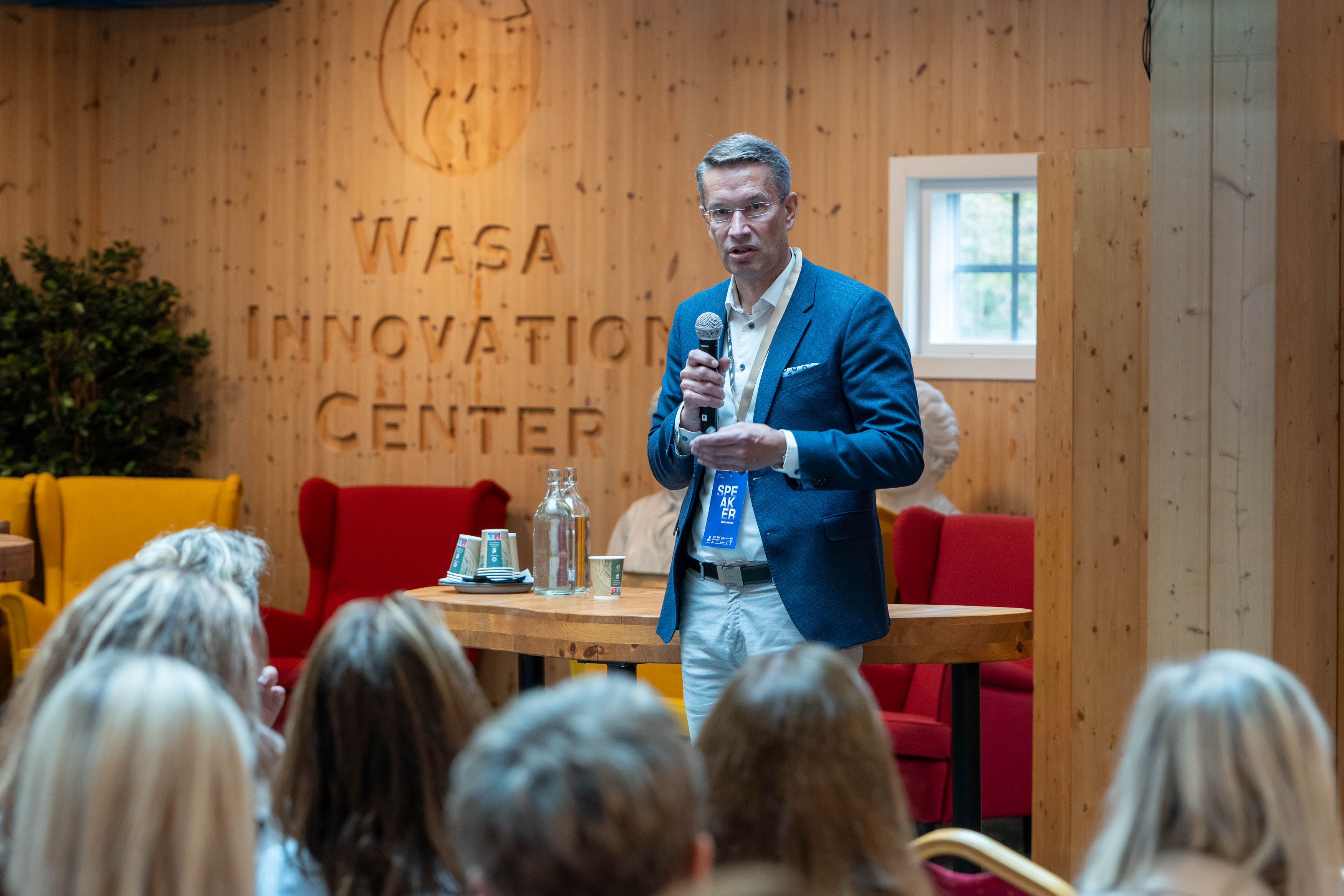
On Friday, Professor Harri Jalonen spoke about the research collaboration between the University of Vaasa and the Wellbeing Services County of Ostrobothnia. Jalonen stressed that meaningful collaboration begins with identifying challenges together, exploring new opportunities and learning from one another. This helps organisations develop their services and adapt to a changing environment. He also pointed out that research and everyday practice often operate on different timescales. Research can take years to produce results, while decision-makers and professionals often need information much more quickly. This makes close cooperation between universities and wellbeing services counties especially important.