
Hidden cancellation buttons and fake urgency – consumers have grown accustomed to deceptive design online
Image
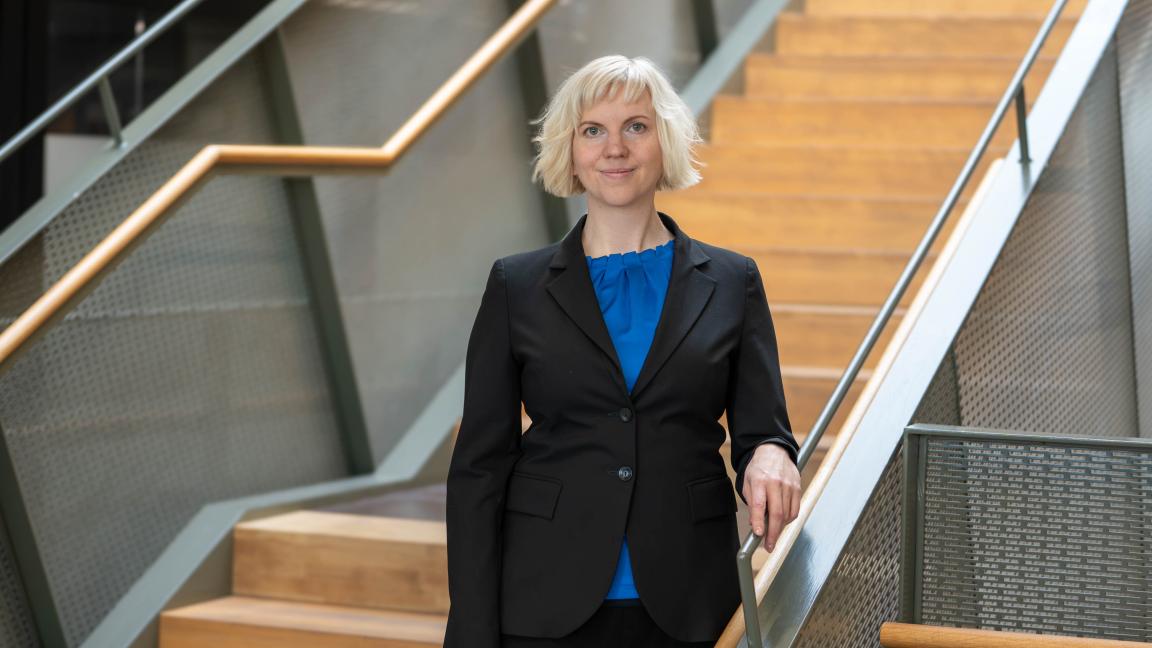


A doctoral thesis in Information Systems Science, to be defended at the University of Vaasa, examines deceptive patterns from the perspectives of both designers and users. Laura Havinen’s doctoral research reveals the multifaceted reasons behind the use of these patterns, as well as how routinely consumers now respond to them.
Anyone using digital services cannot avoid encountering deceptive patterns. A deceptive pattern refers to a user interface design choice – found, for instance, on a website, in an application, an online store, or on social media – that compromises user autonomy by nudging them into behaving in a certain way or preventing them from taking their intended action.
– A deceptive pattern can, for example, be a large and colourful subscription button that is difficult for a consumer to ignore. Meanwhile, the cancel button is discreet and hard to find. Recurring pop-up windows, on the other hand, cause fatigue and irritation. My personal favourite among deceptive patterns is the false ultimatum ‘this offer is valid today only’, says Laura Havinen.
Havinen’s dissertation investigates deceptive patterns through the eyes of both users and designers. The inspiration for the research struck while Havinen was serving as chair of Finland ACM SIGCHI Chapter, the Finnish association for human-computer interaction professionals.
– At one of our events, a designer explained why deceptive patterns are implemented, pointing out that the reasons are far more nuanced than simply designers seeking profit and users falling into traps. Ultimately, the topic expanded into a full doctoral thesis.
Havinen felt it was essential to examine why these patterns are deployed and how they are perceived, so that their proliferation can be curbed and users can better protect themselves against their effects.
– Particularly as services continue to migrate online, deceptive patterns cost users time, money, and privacy. You cannot get rid of newsletters, you end up ordering five items when one would have sufficed, or you find yourself stuck binge-watching videos on streaming platforms for hours. Artificial intelligence is also continuously introducing new ways to deceive users.
People have grown accustomed to deceptive patterns
Reflecting on the findings, Havinen was struck by the complex array of factors that lead to the implementation of these patterns, and by how habituated users have become to them. Users were also markedly more forgiving towards established brands than unfamiliar ones. As an example, Havinen points to fast-fashion brands, for whom website gamification has already become an integral part of their brand identity.
According to Havinen, various efforts are being made to rein in deceptive design, yet at present the issue relies largely on designers’ individual moral compasses. The dissertation provides insights to help guide organisations.
– Organisations need their own clear guidelines, because we must simultaneously protect digital service users and empower designers to create ethical user interfaces.
Doctoral dissertation
Havinen, Laura (2026) Deceptive Patterns: Designer and User Perspectives. Acta Wasaensia 599. Doctoral dissertation. University of Vaasa.
Doctoral defence
The public examination of M.Sc. Laura Havinen’s doctoral dissertation “Deceptive Patterns: Designer and User Perspectives”will be held on Wednesday 25 November 2026 at 12at the University of Vaasa, auditorium Nissi.
It is possible to participate in the defence also online:
https://uwasa.zoom.us/j/69448737849?pwd=F1eEBPjpO9g4YbFZfIwgxdQa75rFcW.1
Password: 065040
Professor Thomas Olsson (Tampere University) will act as opponent and Professor Tero Vartiainen as custos.
The defence will be held in Finnish.
Tietolaatikko
Further infomation
Laura Havinen, tel. +358 29 449 8525, laura.havinen@uwasa.fi
Laura Havinen holds a Master of Science in Economics and Business Administration (Computer Science, Technical Communication) and a Master of Arts (Scandinavian Languages). Her research centres on human-computer interaction. Havinen works as a University Teacher in Information Systems Science at the University of Vaasa.