
The role of physical activity promotion remains ambiguous between municipalities and wellbeing services counties – doctoral dissertation calls for public value governance
Image
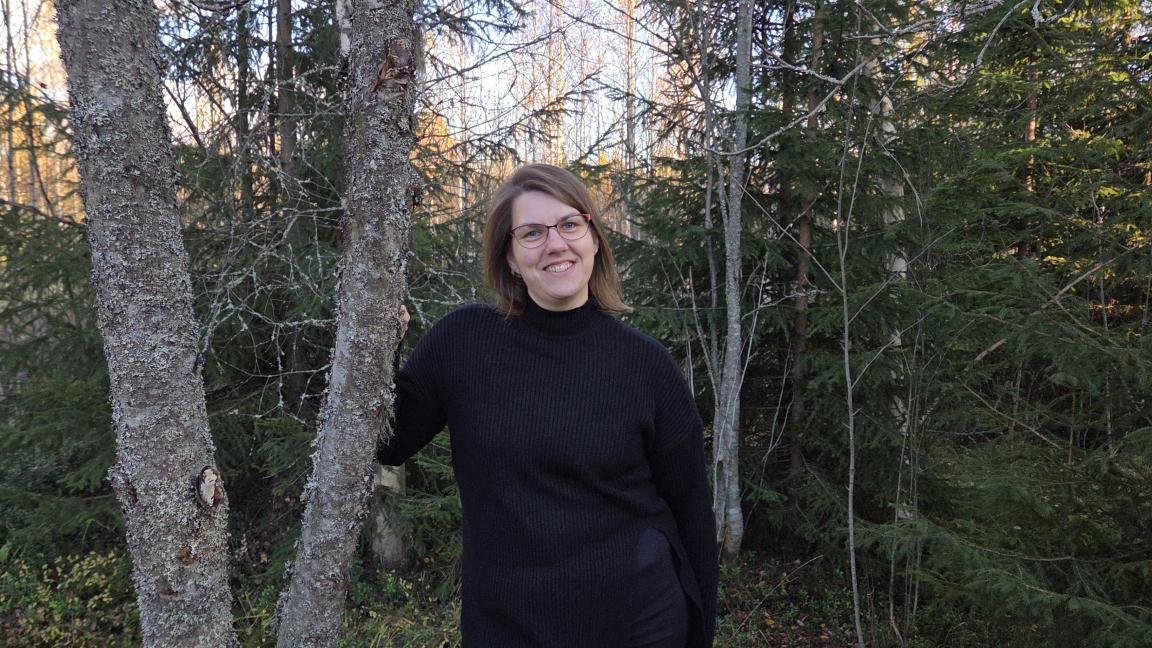

Physical activity promotion is still seeking its place at the interface between municipalities and wellbeing services counties. A doctoral dissertation underlines the need for value alignment and clearer operational coordination.
The 2023 health and social services reform fundamentally altered the operating environment for promoting of physical activity. Although municipalities remain key players in promoting physical activity, for example, several preventive services were transferred, as a result of the reform, to the jurisdiction of the wellbeing services counties.
Sari Lappalainen notes that the standing of physical activity promotion at the cross-sectoral interfaces between municipalities and wellbeing services counties remains unclear.
– The reform disrupted established structures, which has meant that many forms of collaboration have had to be rebuilt from scratch.
Lappalainen’s doctoral thesis in Health and Social Management Sciences, to be defended at the University of Vaasa, allows new insights into public value governance at organisational interfaces. Value is co-created through collaboration.
Collaboration should not be built around a single, isolated objective.
– It requires negotiation, systemic leadership, and the continuous shaping of the value foundation. Defining the value of physical activity promotion should not be regarded as the exclusive prerogative of public administration or sports policy, Lappalainen stresses.
Interfaces demand systemic management approach
Lappalainen calls for a wider discussion on values in respect of physical activity.
– Friction can emerge in collaboration if the different values of the two actors cannot be reconciled: on one hand, the counties’ focus on disease prevention, and on the other, the municipalities’ broader vision of getting the entire population moving. For instance, the role of physical activity in fostering social inclusion and a sense of community could be addressed more extensively.
Lappalainen considers the physical activity promotion as a whole to be a complex societal challenge. Currently, legislation does not require wellbeing services counties to implement specific measures related to the promotion of health and well-being, which creates ambiguity in the interpretation of the law with regard to the promotion of physical activity.
In everyday practice, ambiguities regarding key responsible personnel also pose challenges.
– Work is still underway to clarify the division of responsibilities. As a solution, Lappalainen proposes a systemic management approach to interface work. Public value governance offers a perspective that enables values to be identified and integrated into interface work.
–This can help clarify responsibilities among the various parties, Lappalainen emphasises.
Doctoral dissertation
Lappalainen, Sari (2026) Julkisen arvon hallinta liikunnan edistämisessä kuntien ja hyvinvointialueiden yhdyspinnoilla. Acta Wasaensia 597. Doctoral dissertation. University of Vaasa.
Doctoral defence
The public examination of MHSc, M.Soc.Sc, M.Sc. Sari Lappalainen’s doctoral dissertation ”Julkisen arvon hallinta liikunnan edistämisessä kuntien ja hyvinvointialueiden yhdyspinnoilla” will be held on Friday 30 October 2026 at 12 at the University of Vaasa, auditorium Nissi.
It is possible to participate in the defence also online: https://uwasa.zoom.us/j/65176943427?pwd=YmdLZW6mbJbrPbN4OB93aJsWcPbunG.1
Password: 818409
Professor Jari Stenvall (Tampere University) will act as opponent and Professor Harri Jalonen as custos.
The defence will be held in Finnish.
Tietolaatikko
Further information
Sari Lappalainen holds a Master’s degree in Social Sciences from the University of Jyväskylä in 2020 and a Master’s degree in Health Sciences from the University of Eastern Finland in 2022. She also earned a Master’s degree in Economics and Business Administration from the University of Jyväskylä in 2025. She currently works as a researcher at Jyväskylä University of Applied Sciences.