
Wärtsilä CEO Håkan Agnevall: The energy transition requires direction and the ability to adapt quickly
Image
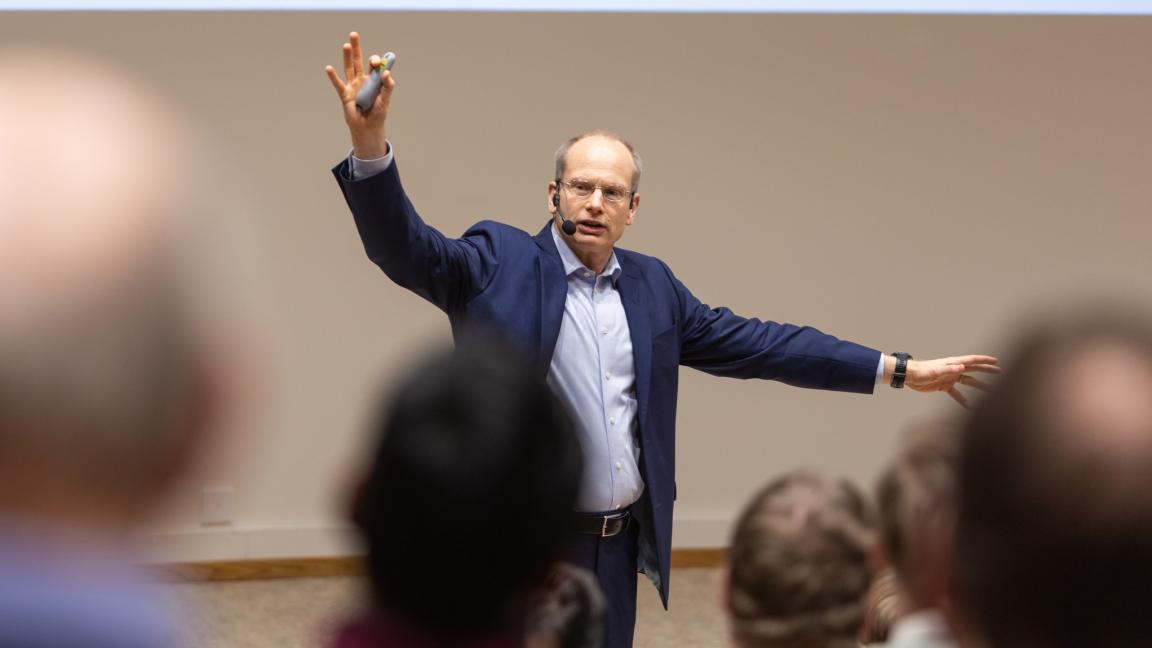


If Wärtsilä President and CEO Håkan Agnevall had been asked five years ago whether the company would be active in data centres, his answer would likely have been no. Today, Wärtsilä supplies power generation solutions for data centres, and this has become a significant growth driver for the company. According to Agnevall, this illustrates how new demand is shaping the energy transition. He addressed the topic in his lecture Strategic Leadership in the Energy Transition at the University of Vaasa on Wednesday.
Håkan Agnevall has served as President and CEO of Wärtsilä since 2021. Before joining Wärtsilä, he was President of Volvo Buses and a member of the Volvo Group management team. Earlier in his career, he held senior leadership positions at ABB and Bombardier.
The energy transition must be both sustainable and profitable
According to Agnevall, the transition to a low-carbon energy system is not held back by a lack of technology, but by the ability to implement solutions in a financially viable way and at sufficient scale.
– The technologies we need to make the transition, they are already here, he said.
– But the transition needs to be both environmentally sustainable and financially viable. Because otherwise it will not happen.
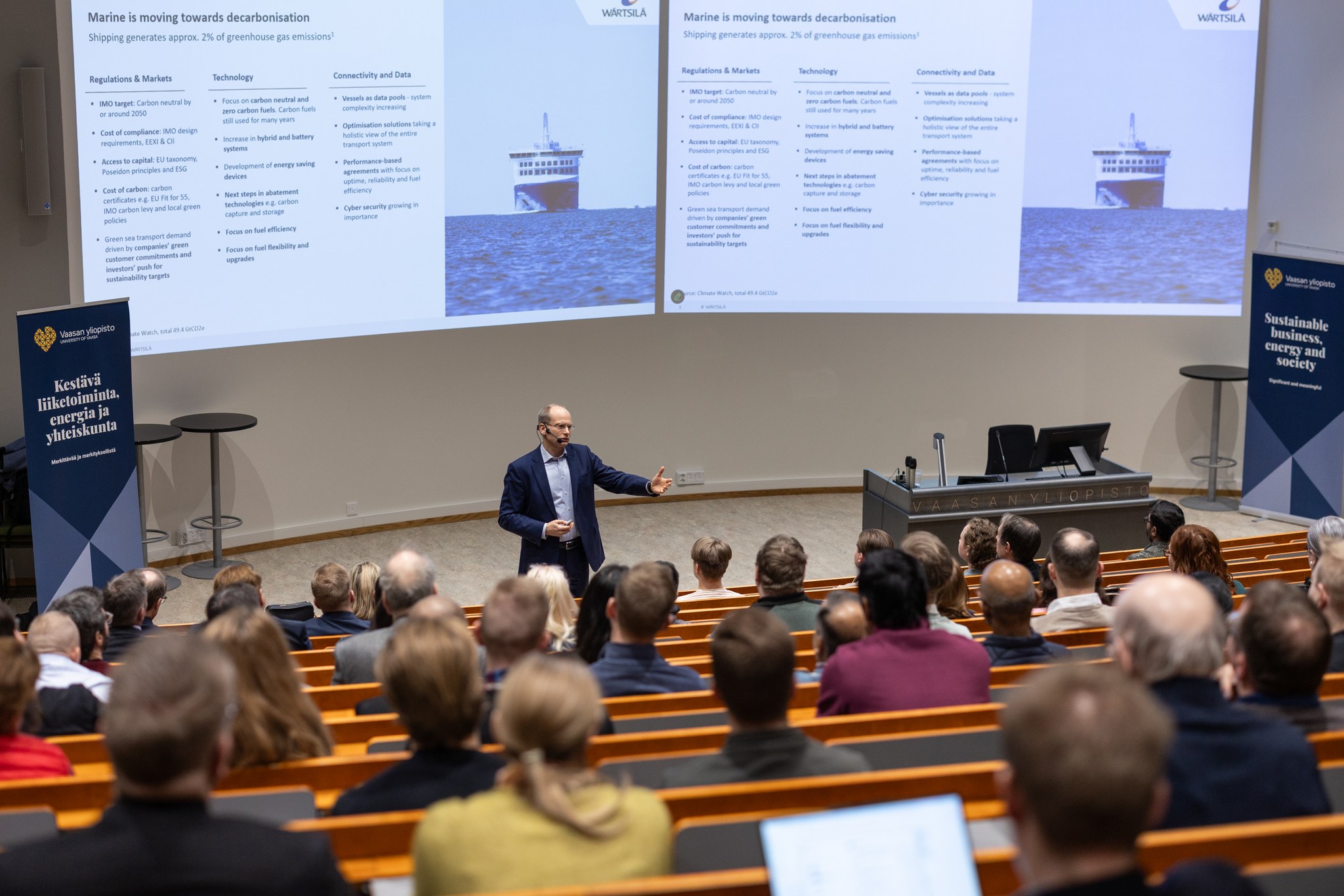
Agnevall also described the complexity of the energy transition. Shipping, which accounts for roughly two per cent of global greenhouse gas emissions, faces tightening regulation, long investment cycles and uncertainty about future fuels.
– Nobody knows what the future fuel is going to be, he said, emphasising the importance of fuel flexibility given that vessels typically have a lifespan of 25 to 30 years.
The overall picture in the energy sector is similarly complex. Electricity demand is expected to triple by 2050, driven by electrification, data centres and increasing cooling demand. According to Agnevall, the growth in electricity demand from air conditioning alone may exceed that of data centres globally.
Renewable energy sources will play a central role in meeting growing demand, but their weather dependency creates new challenges.
– Renewables are great, but they're intermittent. The sun doesn't always shine, the wind doesn't always blow, Agnevall noted, pointing to the growing need for flexible balancing power.
Image
Data centres are reshaping demand
The rapid rise of data centres illustrates how energy demand is changing. While data centres are not the only – or even the largest – driver of electricity demand, their scale has increased significantly with the growth of AI.
Where facilities previously required tens of megawatts, demand now reaches hundreds of megawatts or even gigawatts. This creates a practical challenge in many markets: access to the electricity grid.
– If you want to hook up 300 or 400 megawatts, you won't get grid access. So you need to build your own off-grid power generation. That range is right in our sweet spot, Agnevall said.
For Wärtsilä, demand from data centres has opened up a new and growing business area.
At the same time, the development illustrates a broader point about the nature of the energy transition.
– We have a saying in Wärtsilä – green is not black or white. There will be no single simple solution. There will be a multitude of different solutions, he said.
Wärtsilä is a publicly listed global company that provides technologies and lifecycle solutions for the marine and energy markets. The company employs approximately 18,000 people worldwide. In 2025, Wärtsilä reported net sales of around EUR 6.9 billion and achieved record operating results and cash flow.
Strategy is about execution
Alongside the industry outlook, Agnevall spoke about leadership and strategy.
– For me, strategy is about choosing a direction and then executing like hell, he said.
– The solution to develop a strategy is not to continuously ask for more data. The secret is in the execution.
The data centre example, he argued, also demonstrates how strategy works in practice.
– If you asked me five years ago, would we be in data centres? I would say, I don't think so, he said.
– Now it's a significant growth driver.
According to Agnevall, strategy provides direction, but organisations must be able to adapt as circumstances evolve.
– You have a general direction, but things will happen, and then you need to adapt and do the best of the situation.
To illustrate the value of continuous improvement, he referred to Emil of Lönneberga, the mischievous Swedish farmboy from Astrid Lindgren's beloved children's stories.
– Emil never redid a mischief. He learned.
Small, consistent improvements, Agnevall argued, are what build lasting competitive advantage.
He also reflected on his own career and encouraged students to build strong expertise and seek international experience. He recalled an early career moment when he volunteered to lecture senior power system engineers in India, despite being considered too junior at the time.
– When you're young, you don't always have the experience, but build your career on your knowledge. Try to build yourself a Lego set of different competences, he said.
Image
A strategic partnership built on research
Image
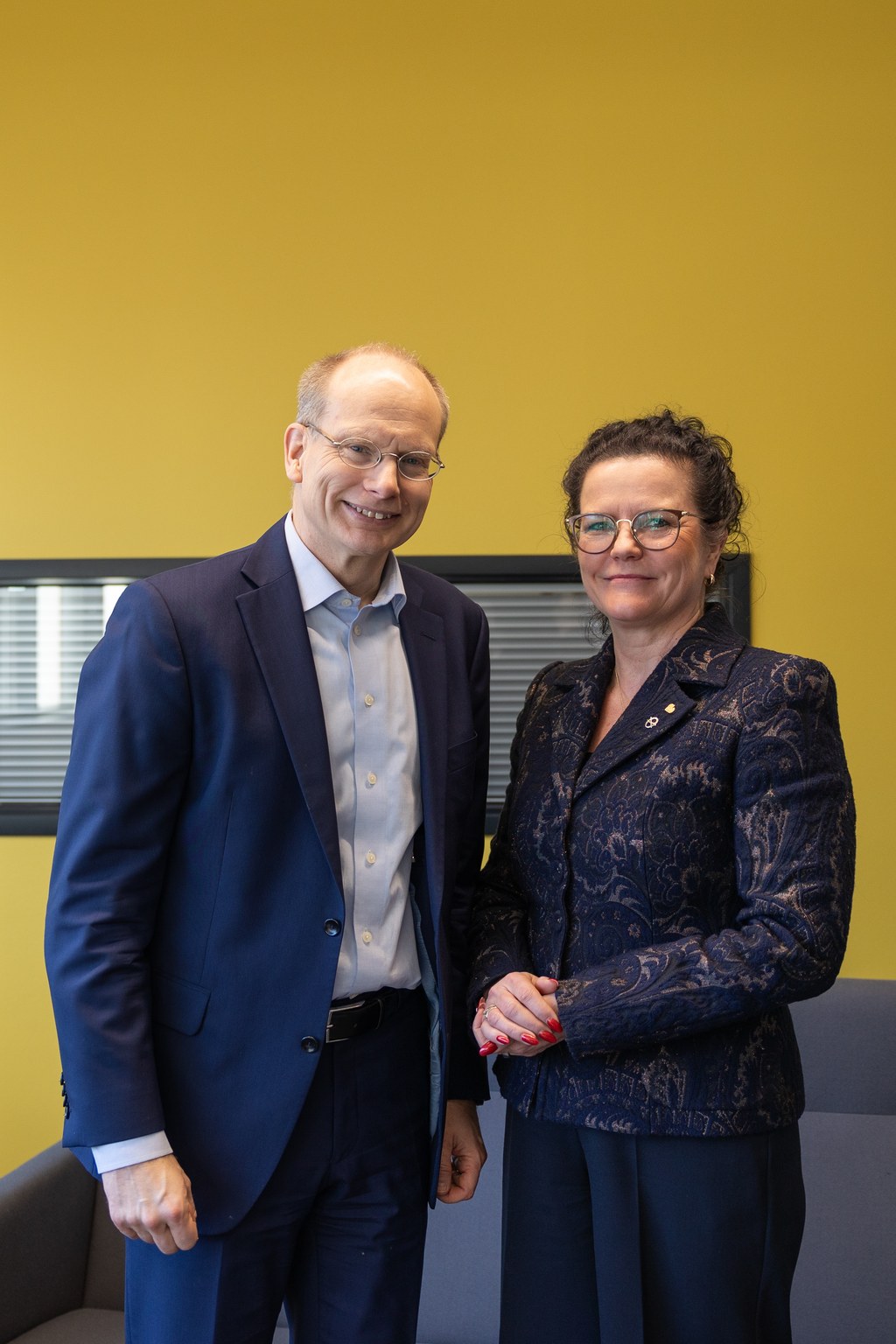
Agnevall’s visit was part of the long-standing strategic partnership between the University of Vaasa and Wärtsilä. During the day, discussions focused on both ongoing and future collaboration in research and education.
Rector Minna Martikainen highlighted the importance of the partnership and the role of shared research infrastructure.
– The Internal Combustion Engine Laboratory, with the four-cylinder and single-cylinder research engines, is at the very core of this collaboration. At this level, the University of Vaasa is truly unique, she said.
The single-cylinder research engine, known as the Joint Lab, is operated together with Wärtsilä, the University of Oulu and VTT. It supports research on advanced combustion technologies, including the hydrogen–argon cycle explored in the iHAPC project, from which first results are expected within a year.
– The key question of the day was how to develop this collaboration further – from engine research towards new applications. Agnevall highlighted in his lecture how quickly Wärtsilä has expanded into power generation in an entirely new market, data centres.
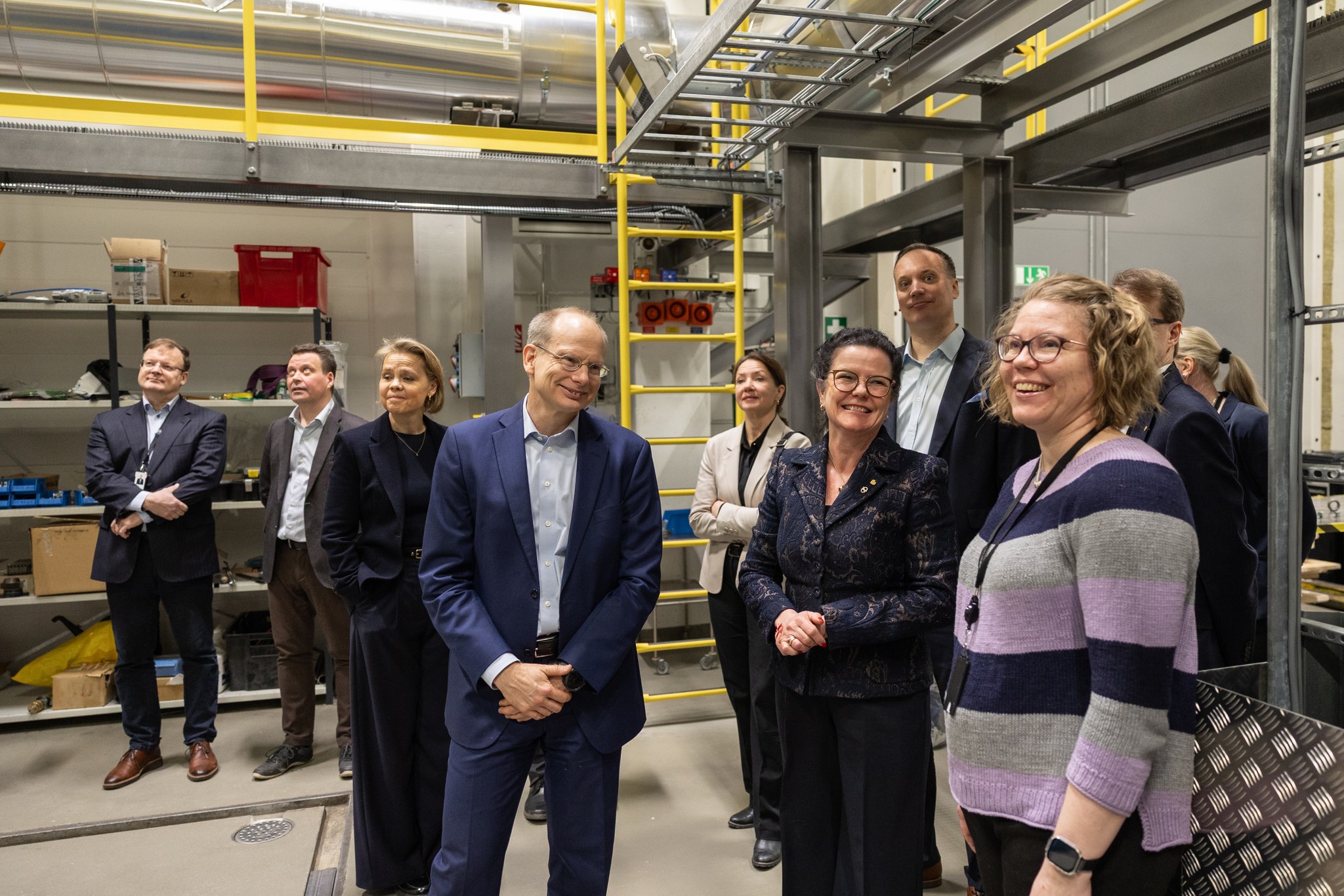
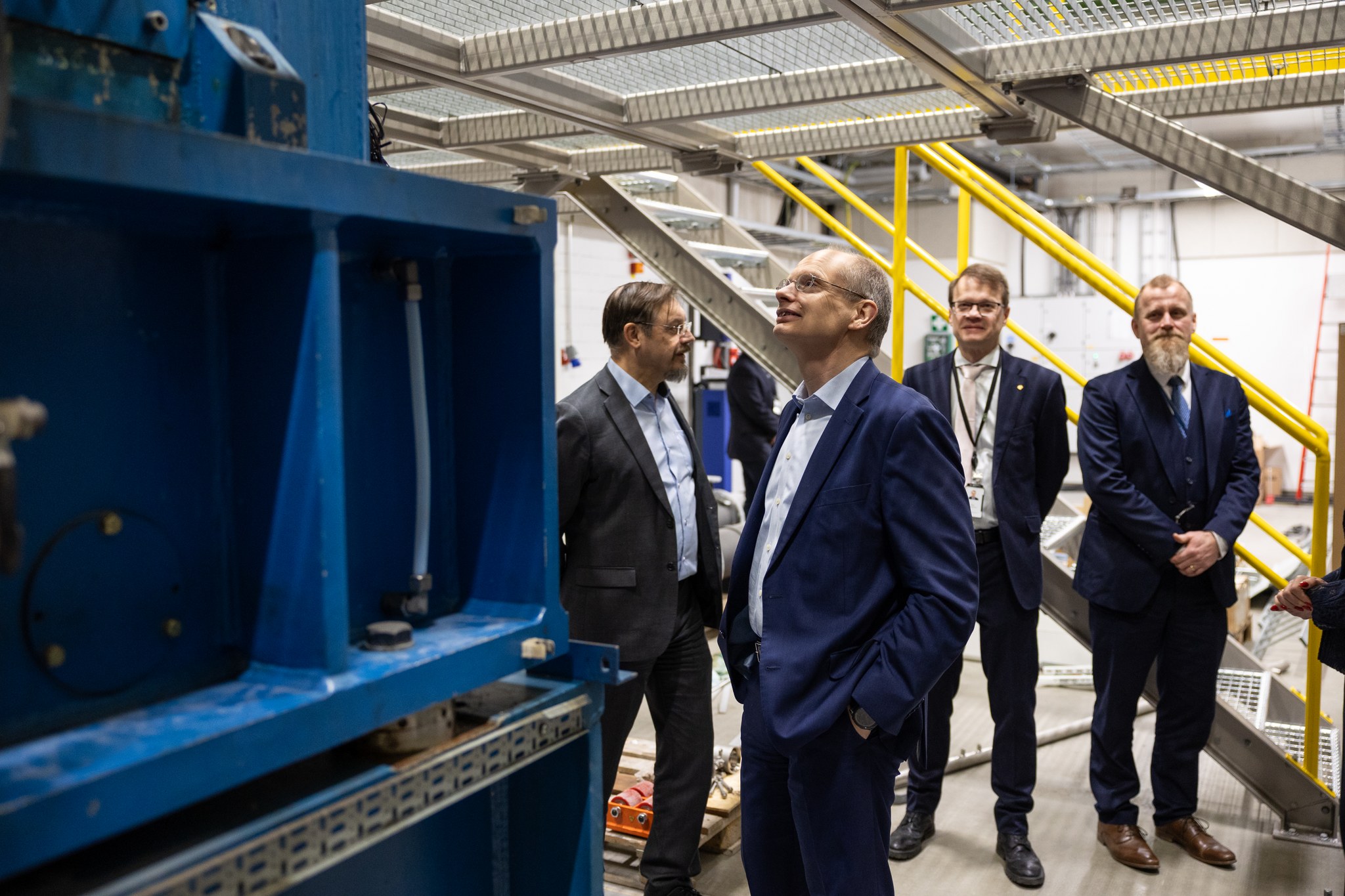
The visit also included a tour of Technobothnia and the WSTAR laboratory, which focuses on research related to low-emission data centres.
The collaboration between the University of Vaasa and Wärtsilä extends beyond research projects and shared infrastructure to hands-on cooperation across degree programmes. The university has also developed and launched a new form of industrial doctoral education together with Wärtsilä, with the first doctoral candidates already selected.
– Through its research and education, the University of Vaasa supports the ability of global companies like Wärtsilä to operate from Finland and succeed as export-driven businesses. Together, we are building the expertise that will shape future competitiveness and export products, Martikainen said.
Image
Image
Photos: University of Vaasa / Sami Pulkkinen