
Hydrogen takes a major step forward in maritime – University of Vaasa to coordinate ambitious European demonstration
Image
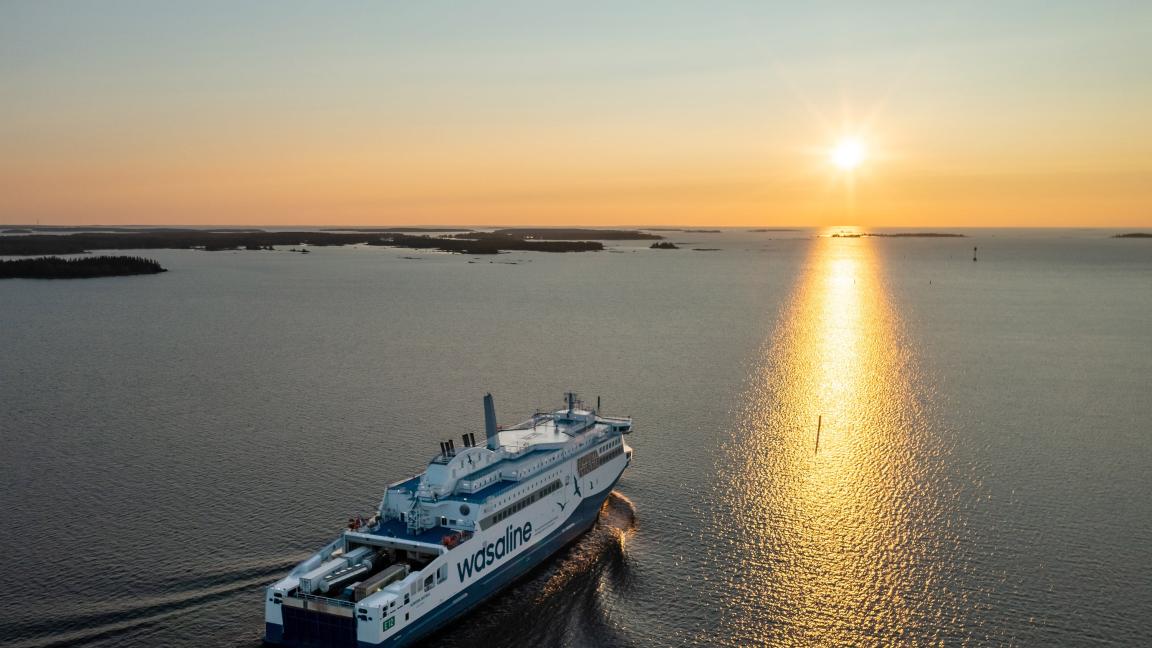
Photo by Kimmo Makkonen


A consortium led by the University of Vaasa has been awarded significant Horizon Europe funding for a major research and innovation project that moves long‑distance shipping closer to a zero‑carbon future. The H4PERION – Hydrogen FOR Performance Enhancement and Reliable Ice OperatioN – project will, for the first time, demonstrate in practice how a large vessel can operate with a hydrogen‑capable internal combustion engine (ICE). This marks an important milestone in clean maritime technology.
Long‑distance shipping remains one of the hardest sectors to decarbonise. Ships operating for weeks at a time need enormous amounts of energy and absolute reliability – requirements that today’s batteries and fuel cells cannot yet meet at scale. At the same time, global climate regulations for shipping are becoming much stricter, with the International Maritime Organization (IMO) calling for significant emission reductions this decade, increasing the need for new alternative fuels and propulsion technologies.
— Several low‑carbon fuels are being explored within the industry, and hydrogen is considered one potential zero‑carbon option. It produces no carbon emissions and can be used in familiar, reliable and fuel-flexible internal combustion engines, enabling a future-proof solution for decarbonisation to vessel owners. Yet hydrogen engines have not previously been demonstrated on large vessels, and key questions remain around fuel handling and supply, safety and regulations, says University of Vaasa’s Research and Development Director Henri Karimäki.
H4PERION directly addresses these challenges by drawing on Europe’s strong expertise in maritime engineering and accelerating the adoption of clean propulsion systems for large ships.
A first-of-its-kind demonstration at sea
During its four project years, H4PERION will develop and demonstrate the safe and reliable use of a hydrogen‑capable internal combustion engine on a large oceangoing vessel. The project combines three major innovations:
- A new engine concept capable of using hydrogen and biomethane, with the long‑term goal of full hydrogen operation.
- A modern fuel blending and supply system enabling flexible use of zero‑carbon fuels.
- A new exhaust aftertreatment approach for cleaner emissions across all operating conditions.
For the first time, this technology will be installed and tested on a large commercial vessel, Aurora Botnia. In parallel, a full‑scale engine identical to the one on board will be tested in a laboratory environment, allowing the team to mirror real sailing conditions and optimise performance further. Data from both demonstrations will feed into a digital twin model, supporting long‑term learning and future design work.
– H4PERION is about turning promising fuel concepts into solutions that can be operated safely at sea. By combining full-scale engine development with onboard demonstration and digital modelling, we can shorten the path from research to real-world impact for low- and zero-carbon shipping, adds Anders Öster, General Manager, Research Coordination & Funding at Wärtsilä Marine.
The project will also help shape the wider transition to hydrogen in maritime transport. It will produce open training materials for crew and port operators, contribute to safety guidelines and regulatory development, and explore how the technologies can be applied to different vessel types in the future.
Within the project, the University of Vaasa is exploring an innovative combustion concept known as Reactivity Controlled Compression Ignition (RCCI). The goal is to reach a 55 percent net efficiency with near‑zero emissions when combined with fully variable valve actuation and advanced aftertreatment solutions.
– This combustion concept is considered a promising way to integrate green hydrogen flexibly into existing natural gas and biogas supply chains. Achieving the targeted efficiency within the project timeline requires deep integration of simulation and testing environments with autonomous calibration routines, says Maciej Mikulski, Professor of Energy Technology at the University of Vaasa.
A strong European collaboration – with a notable Vaasa presence
H4PERION brings together 16 partners from seven European countries, representing the full maritime value chain from ship design and engine development to vessel operation, training, safety and academic research. Alongside the University of Vaasa as coordinator, the consortium includes leading industrial companies, innovative SMEs, major research institutes and a European network of maritime universities. The project partners include Wärtsilä, WEGEMT, NTUA, TalTech, the American Bureau of Shipping, Deltamarin, the University of Oulu, Åbo Akademi University, Meric Wave Computanics, DLR, BALance Technology Consulting, MEYER WERFT and Wasaline. Their combined expertise ensures that the technologies developed in the project can be brought into practical use quickly and safely.
For the Vaasa region, the project also showcases the strength of local collaboration. The University of Vaasa, Wärtsilä and Wasaline play central roles in the European effort to achieve zero‑carbon long‑distance shipping.
The project receives €11.2 million in funding from the European Union’s Horizon Europe programme until 2030, of which €3.2 million is allocated to the University of Vaasa.
Tietolaatikko
Further information
Research and Development Director Henri Karimäki, University of Vaasa, tel. +358 29 449 8706, henri.karimaki@uwasa.fi
Professor Maciej Mikulski, University of Vaasa, tel. +358 29 449 8591, maciej.mikulski@uwasa.fi