
Consumers want to know what they eat – Local food networks support sustainable consumption
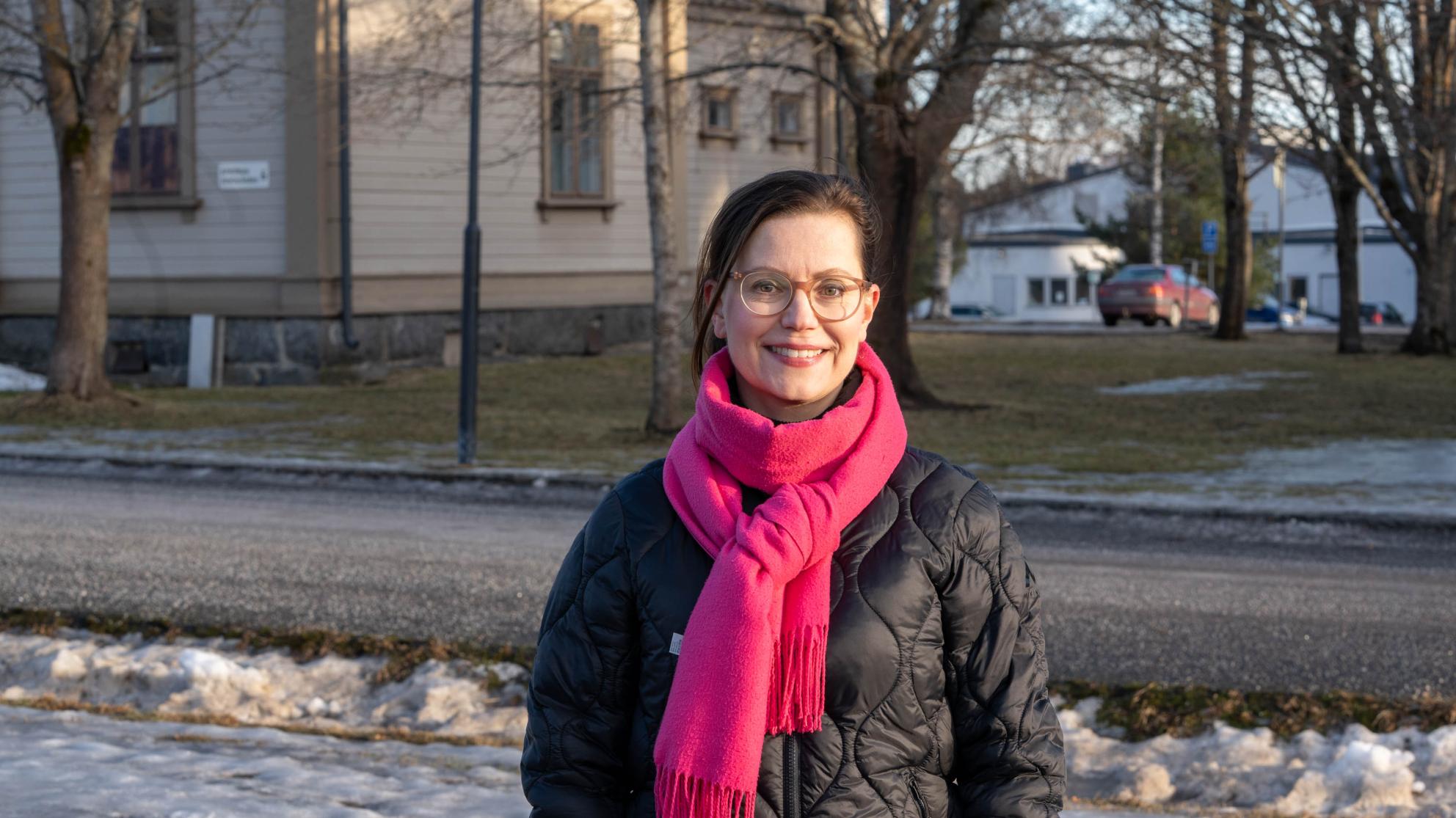


In the Organizing REKO project, researchers from the University of Vaasa and three other Nordic universities examine how REKO local food networks operate and are organised in Finland, Sweden and Latvia. REKO networks offer a model in which consumers can purchase food directly from producers without intermediaries. REKO originated in 2014 in the Pietarsaari–Vaasa region as a reaction to a situation in which food producers felt that their work was insufficiently valued and inadequately compensated financially. Since then, the model has spread widely across Europe and beyond.
– In the project, we focus particularly on how REKO networks are organised: which actors are involved and how collaboration is built so that local products can find buyers and consumers commit to the network, says Hanna Leipämaa‑Leskinen, Associate Professor of Consumer Marketing at the University of Vaasa.
Research reveals how REKO operates in different countries
The Organizing REKO project examines REKO networks operating in three countries in order to observe how networks established at different times and in different contexts function in practice. Finland and Sweden represent long-established and well-established networks, while in Latvia REKO activity has only begun to develop in recent years.
In Latvia, REKO distributions resemble traditional markets, with strong attention paid to product presentation, and municipalities also play an active role in supporting the activity. The Latvian example illustrates how REKO can be adapted to local culture and practices.
In Finland and Sweden, by contrast, REKO is largely based on closed Facebook groups where products are ordered in advance. This pre-ordering model facilitates producers’ work, but at the same time requires a degree of planning from consumers.
– It is precisely this need for planning that has emerged as a challenge to consumer commitment, Leipämaa‑Leskinen notes.
Local solutions to global challenges
Why do local food networks matter particularly now? The relevance of REKO is closely linked to changes in the broader societal context. Geopolitical uncertainty, concerns about food security and a growing appreciation of domestic food production have brought local food systems into sharper focus.
– When global food systems face sustainability challenges, many solutions need to be found at the local level. REKO offers a concrete example of how food systems can be organised differently, Leipämaa‑Leskinen says.
REKO offers a concrete example of how food systems can be organised differently.
The research project shows that REKO supports more sustainable consumption practices in multiple ways. For consumers, REKO offers transparency about the origin of food and opportunities for social interaction with producers.
– When consumers meet the producer and know where their food comes from, a very different relationship forms with the product. This can strengthen the desire to favour local and sustainably produced food, Leipämaa‑Leskinen explains.
Taste, freshness and locality guide consumer choices
According to Leipämaa‑Leskinen, consumers’ motivations for using REKO are not limited to sustainability values alone. For many, key factors are freshness, taste and quality. Summer and the harvest season are clearly the busiest times for REKO, but even in winter the network serves committed regular customers by offering products such as fish, meat and other staple foods.
One of the most significant findings of the research from the perspective of consumption and sustainability is the need to balance economic and environmental sustainability.
– Local food production is not sustainable if producers cannot make a living from their work. REKO does not challenge the mainstream food system, but it provides an alternative and supports regional vitality, Leipämaa‑Leskinen emphasises.
REKO has also strengthened local producers’ bargaining position in relation to large retail chains. Direct contact with customers increases recognition and appreciation and can open up new opportunities for selling products, for example in local grocery stores.
The challenge of consumers’ busy everyday lives
Although many committed consumers use REKO, sustaining activity requires retaining existing customers while also attracting new regular users. Consumers’ everyday lives are often busy, and food choices are frequently made quickly during routine grocery shopping. Weekly REKO distributions require advance planning, which not all consumers are able to manage in their daily lives. According to Leipämaa‑Leskinen, pricing also occasionally prompts discussion.
– Many wonder why REKO products cost the same as in supermarkets. The reason is that producers do all the work themselves. At the same time, many consumers feel they would be willing to pay even more for high-quality and responsibly produced food, she says.
Within REKO networks, solutions to support consumer commitment are developed locally. Distribution times and locations have been adjusted in response to consumer feedback, and in Vaasa, for instance, distribution has been divided between two locations at consumers’ request. Many producers also bring a limited amount of extra products to distribution events for spontaneous purchases. Ultimately, REKO is about cooperation: about how consumers, producers and communities can work together to build more sustainable ways of producing and consuming food.
Further information
Associate Professor Hanna Leipämaa-Leskinen
Puh. +358294498496
hanna.leipamaa-leskinen@uwasa.fi
The Organizing REKO project (2023–2026) involves the University of Vaasa, Södertörn University (the project’s home institution) and Linnaeus University in Sweden, as well as Roskilde University in Denmark. The project is funded by The Foundation for Baltic and East European Studies. The research team is currently finalising academic publications, and an international edited volume is also in preparation, bringing together scholars who examine alternative food systems from multiple perspectives.