
Foreign divestments can increase risk for multinationals – risk assessments are crucial
Image
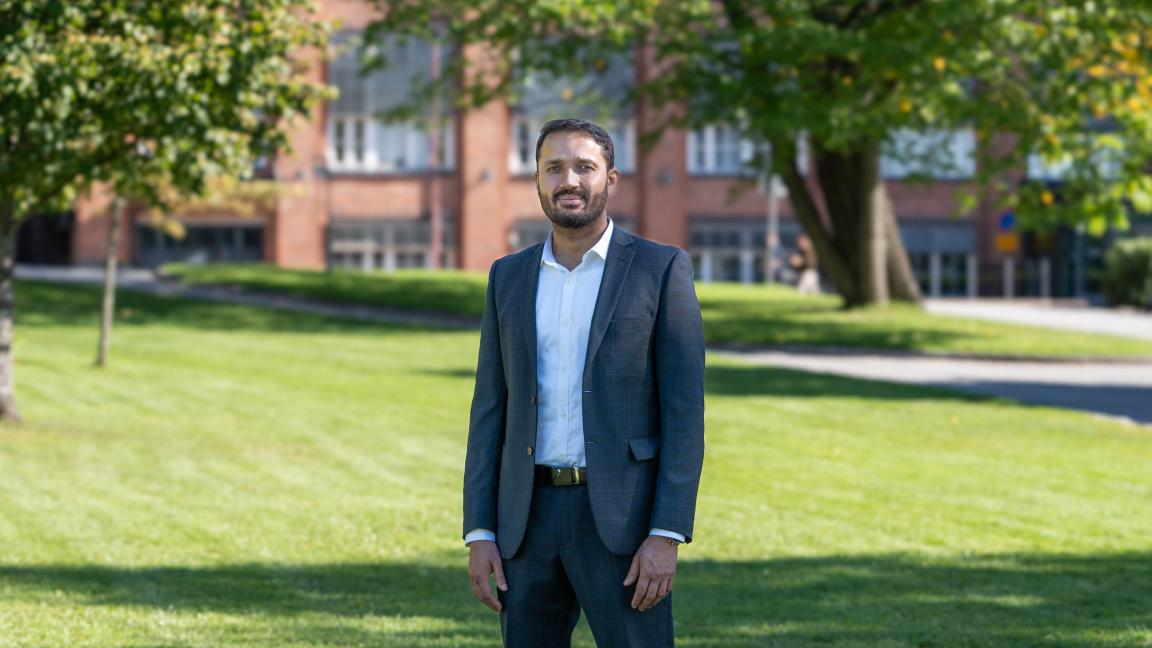


Foreign divestments can be costly, warns doctoral student Arshed Iqbal from the University of Vaasa. As the world around us becomes more challenging, risk assessments are also more important than ever.
Divestments of foreign subsidiaries, or the sale of foreign subsidiaries, may at first seem like an easy way to improve a company’s finances or reorient its operations, but divestments are not always beneficial for multinationals.
Divestments can sometimes increase financial risk, especially if valuable strategic resources are lost at the same time.
Arshed Iqbal says that while no company would normally divest a “cash cow”, the sale price or immediate cash flow alone should not determine the decision.
Iqbal's doctoral dissertation in international business, which is being examined at the University of Vaasa, highlights the importance of risk assessment in connection with divestments. He has studied foreign divestments from a long-term and Nordic perspective.
– Companies should assess in advance the costs of losing a subsidiary, as well as think about the long term – and draw up a plan for that period.
The importance of risk analyses has grown even more with increasing global uncertainty.
– Companies need to be more cautious because we live in a world with many changing factors, such as geopolitical tensions and trade conflicts.
Managerial capabilities are key
A foreign divestment in itself is not a success or a failure, but similar divestments can lead to very different outcomes.
– My most important piece of advice is that a foreign divestment should not be made solely based on the sale price or immediate cash flow. On the other hand, divestment can help a financially distressed parent company by releasing resources and reducing financial pressure, says Iqbal.
While previous research has largely focused on why companies sell off their businesses, Iqbal's doctoral dissertation provides insights into the impact of divestments on companies' financial risk, shareholder value, and the strategic role of executive management.
Experienced leaders are key to mitigating the risks.
– They are able to mitigate potential adverse effects, but successes and failures always depend on specific circumstances.
One of the most critical factors is open communication and cultural awareness. If trust is lost, divestment can take away a company's reputation, market share, and networks. There is also a risk in losing key employees in subsidiaries - they may, for example, start their own competing companies.
– In some cases, staff have been offered the opportunity to work in another country or help to find new jobs in their own country.
One of the most surprising findings of the study concerns corporate social responsibility (CSR).
– Extensive CSR commitments and investments can create additional financial pressure during foreign divestments, says Iqbal.
For his research, Iqbal analyzed panel data from over a hundred companies and interviewed seven senior executives with direct experience of foreign divestments. The interviews were conducted in 2024 and 2025.
Dissertation
Iqbal, Arshed (2026) Foreign divestment outcomes and risk mitigation: A Nordic perspective. Acta Wasaensia 590. Doctoral dissertation. University of Vaasa.
Public defence
The public examination of M.Sc. Arshed Iqbal’s doctoral dissertation “Foreign divestment outcomes and risk mitigation: A Nordic perspective”will be held on Friday 18 September 2026 at 12 at the University of Vaasa, auditorium Nissi.
It is possible to participate in the defence also online:
https://uwasa.zoom.us/j/62117067355?pwd=7TAJlvN8utU5KAltdYZ33HnwrbBPYc.1
Password: 910634
Professor Ulf Andersson (Mälardalen University) will act as opponent and Professor Arto Ojala as custos.
Tietolaatikko
Further information
Arshed Iqbal completed an MBA at the University of Central Punjab in Pakistan in 2009 and a Master’s degree in Economics and Business Administration at the University of Vaasa in 2015. He is currently a doctoral student at the University of Vaasa.