
Chair of the IFRS Foundation Trustees Erkki Liikanen: Accounting and sustainability disclosure standards strengthen investor confidence
Image
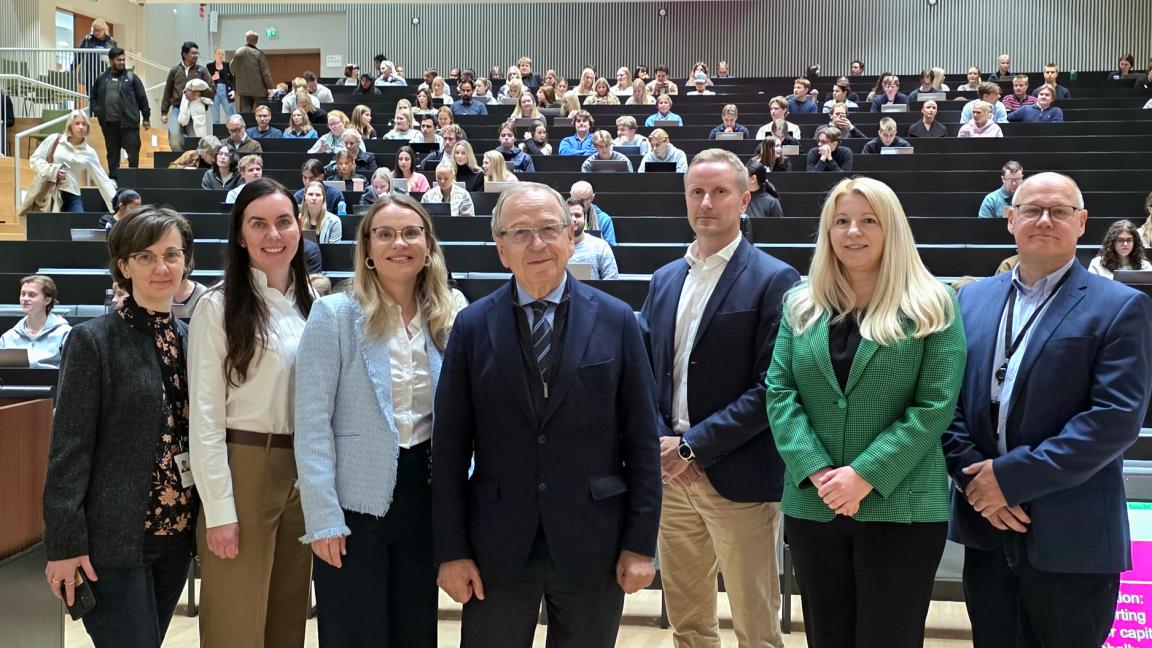
Investors cannot make informed decisions without reliable and comparable information about companies. In his guest lecture at the University of Vaasa on 1 October, Erkki Liikanen, Chair of the IFRS Foundation Trustees, highlighted the importance of common international reporting standards for trust, access to finance and a sustainable economy.
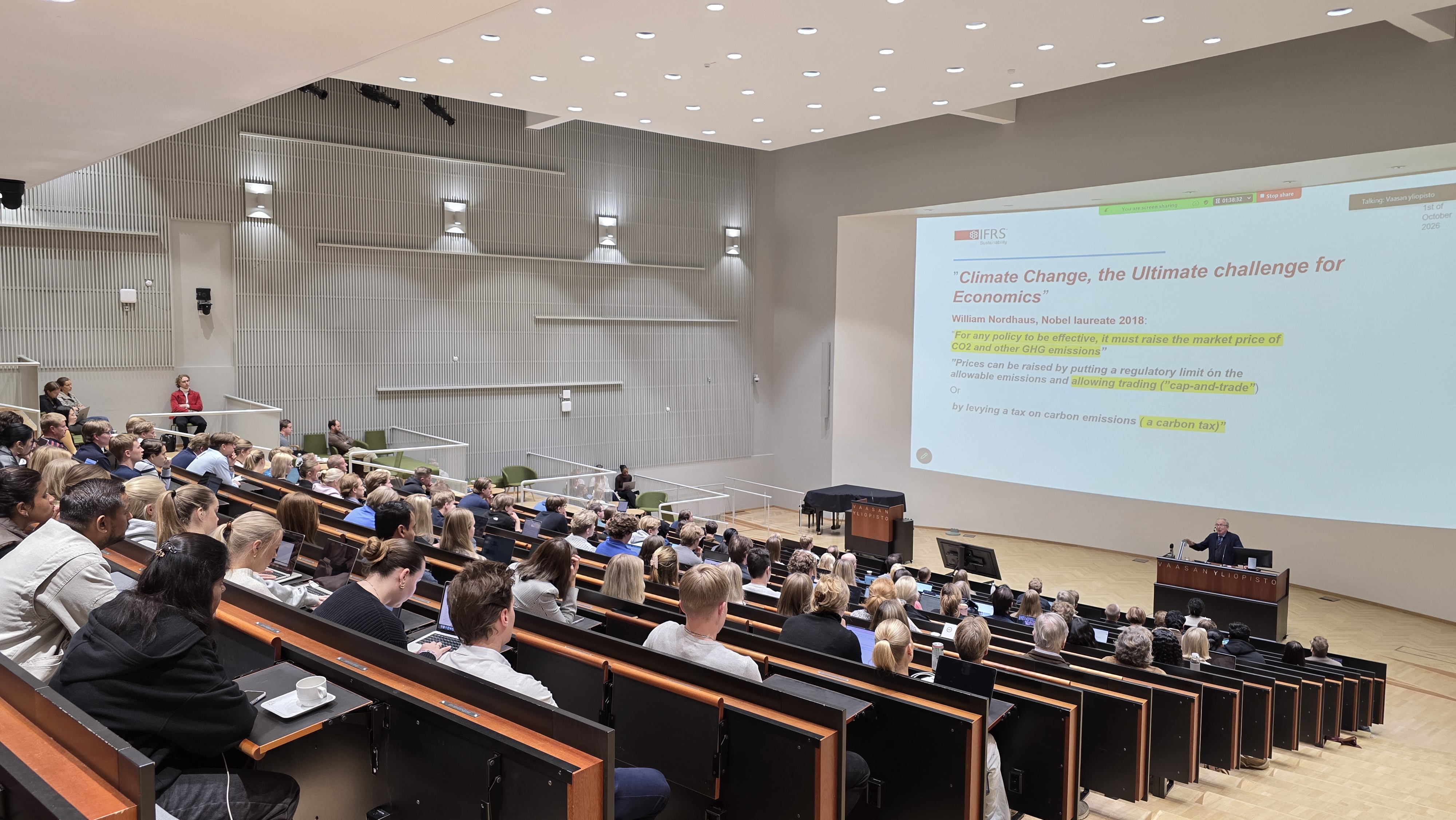
Rector Minna Martikainen opened the event and welcomed Erkki Liikanen and the audience. A large number of students gathered in the Levón auditorium to hear Liikanen, whose previous roles include Governor of the Bank of Finland, Member of the European Commission and Finland’s Minister of Finance.
A global reporting language builds trust
Image
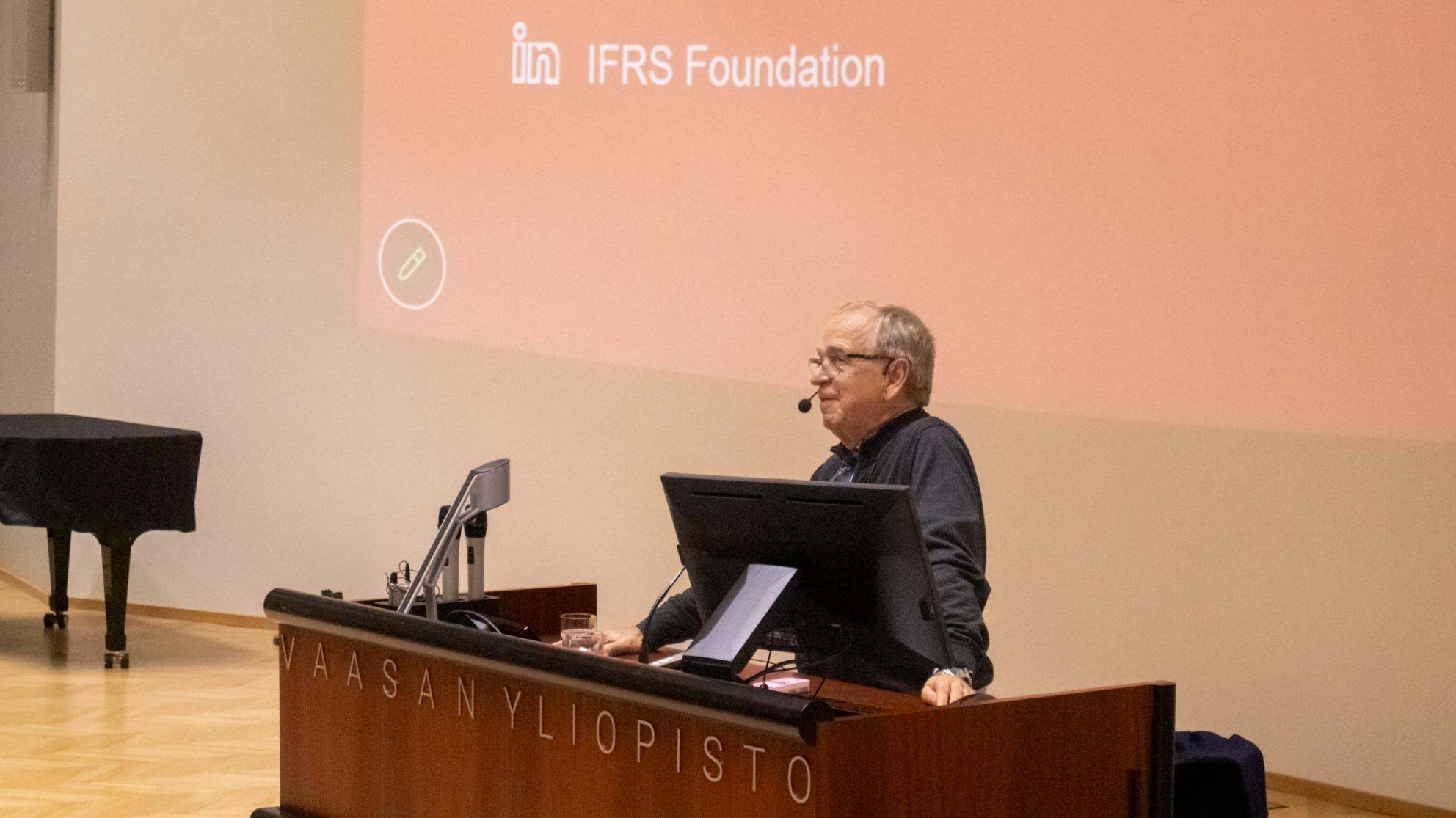
Liikanen serves as Chair of the IFRS Foundation Trustees. IFRS Foundation is a not-for-profit, public interest organisation established to develop globally accepted accounting and sustainability disclosure standards. Liikanen described how major corporate scandals in the early 2000s, including Enron, WorldCom and Parmalat, highlighted the need to strengthen the reliability of corporate financial reporting. International capital markets need common standards that allow investors to assess and compare companies across countries.
– If you have the same rules, same disclosure, same openness, then the investors can trust them and they can give money at a cheaper price, Liikanen said.
IFRS Accounting Standards are now required in more than 140 jurisdictions.
Climate risks are also financial risks
Liikanen explored the relationship between climate change and financial markets. Climate risks affect companies’ prospects, which is why investors need information about their risks, targets and actions.
He referred to economist William Nordhaus’s argument that effective climate policy must raise the price of emissions. This can be achieved through emissions trading or a carbon tax.
Finland’s introduction of a carbon tax in 1990 was Liikanen’s example of how research can inform policymaking. As Minister of Finance at the time, he proposed the tax at a ministry staff meeting. The idea initially met with scepticism, but a young civil servant began preparing a proposal. The government and Parliament eventually approved the legislation, making Finland the first country to introduce a carbon tax.
Building a global baseline through IFRS Sustainability Disclosure Standards
The IFRS Foundation has two standard-setting boards: the International Accounting Standards Board, IASB, and the International Sustainability Standards Board, ISSB. They develop IFRS Accounting Standards and IFRS Sustainability Disclosure Standards respectively.
Before the development of common sustainability disclosure standards, there were numerous reporting frameworks and acronyms. Companies followed different frameworks, making their disclosures difficult to understand and compare.
The ISSB was established in 2021 to develop a comprehensive global baseline of sustainability disclosures that meets investors’ information needs. Liikanen advocated a common global baseline that jurisdictions can supplement with their own requirements. This would avoid companies having to redo their reporting from the beginning for different systems.
For example, the EU takes a broader approach than the ISSB. It considers both how sustainability matters affect a company’s financial performance and how the company affects people and the environment. The ISSB focuses on sustainability-related risks and opportunities that could reasonably be expected to affect a company’s cash flows, access to finance or cost of capital.
Liikanen also highlighted progress in emerging markets towards adopting sustainability disclosure standards, mentioning Brazil and Mexico as well as several countries in Asia and Africa. In African countries, for example, adopting common standards is also intended to build foreign investors’ confidence and attract investment.
In Asia, Liikanen drew particular attention to China’s role in climate action and the development of technologies to reduce emissions. He recalled the poor air quality in Beijing in 1995 and described the country’s subsequent change of direction. Europe cannot address climate change alone: major countries such as China and India also need to be involved.
Image
Common standards require international cooperation
Geopolitical change and tensions between countries make international cooperation more difficult. Global solutions nevertheless remain necessary in areas such as finance and climate change.
Liikanen discussed the United States’ changing approach to climate issues. He said he did not expect the country to adopt common sustainability disclosure standards under its current political direction. The work must nevertheless continue, with other countries remaining involved. He also stressed the importance of maintaining common international accounting standards.
– When a problem is global, it doesn’t stop at the borders. You need to have global solutions, Liikanen said.
Research on reporting, investment and sustainable growth
The themes of Liikanen’s visit are connected to the University of Vaasa’s strategic priorities: sustainable business, energy and society. Reliable financial and sustainability information supports sustainable investment, growth and competitiveness.
Research at the University of Vaasa covers corporate reporting, auditing, sustainability reporting and responsible investment, including their implications for corporate decision-making and financial markets.
The Finland Investment Institute, FII, began its activities in May 2026. It strengthens research-based understanding of Finland’s investment environment and brings together researchers, businesses and policymakers to identify ways to improve the conditions for investment.
Before the lecture, Liikanen joined a roundtable with the University of Vaasa’s finance and accounting researchers.
Meeting again in Vaasa
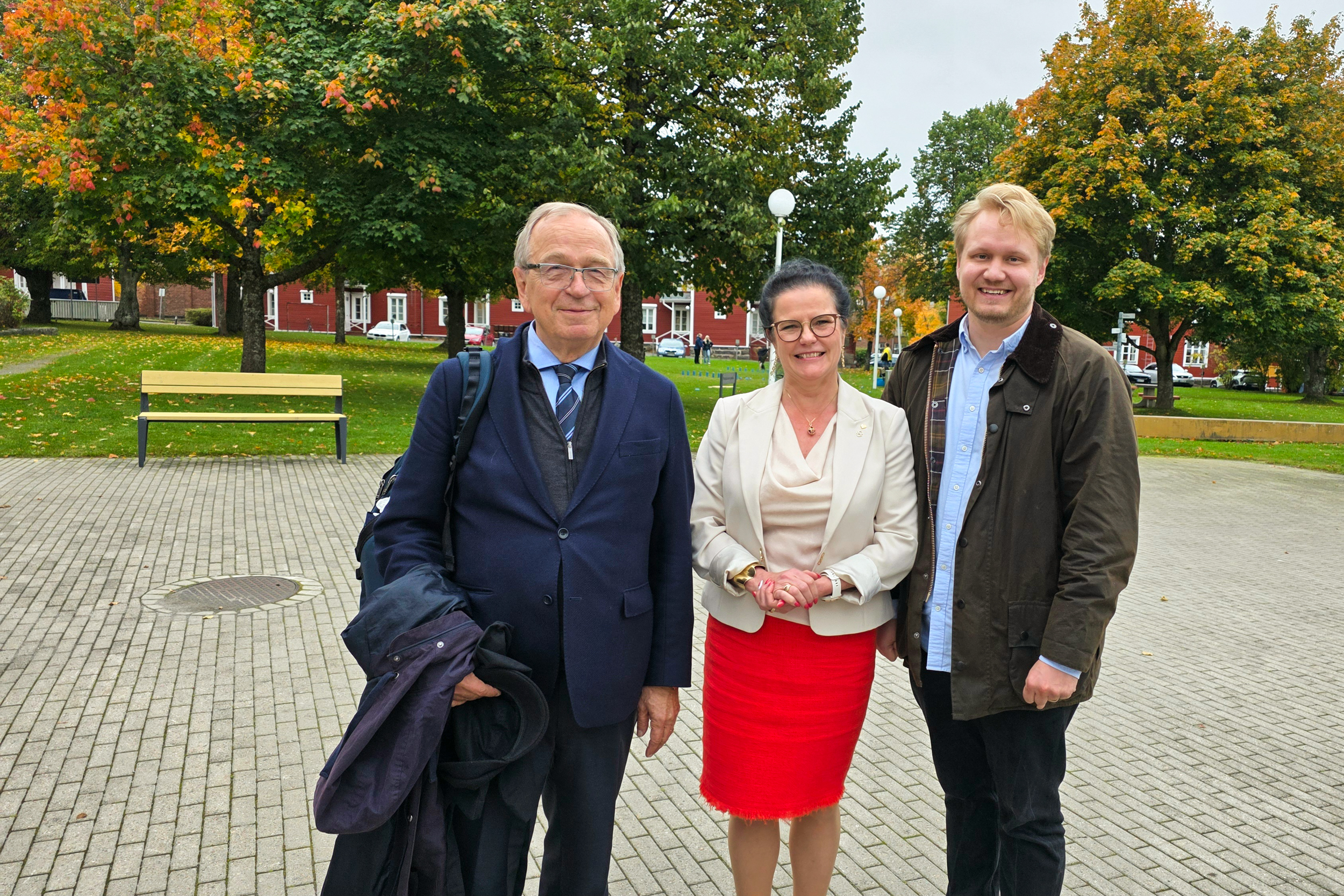
Teemu Pekkarinen, who took up his position as Assistant Professor of Economics at the University of Vaasa on 1 October, received personal congratulations from Liikanen during the lecture.
They first met on a train twelve years ago, when Pekkarinen was still a student. Having attended Liikanen’s lecture at the university, he approached him for a conversation during the journey. .
Liikanen joked that students should come and talk to him on a train: they might later find themselves becoming professors.
After the lecture, students and researchers actively questioned Liikanen about transparency in reporting, changing regulation, the links between research and policymaking, and how companies can respond to new reporting requirements.
Image
Visiting lectures
The University of Vaasa’s Uutta energiaa (New Energy) visiting lectures bring influential figures from society, business and the public sector, as well as the university’s honorary doctors and alumni, to campus to discuss topical issues. The lectures offer insights into decision-making and changes in the economy and society, while providing opportunities to explore sustainable business, energy and society from new perspectives.