
Building an academic career – Insights from two University of Vaasa researchers
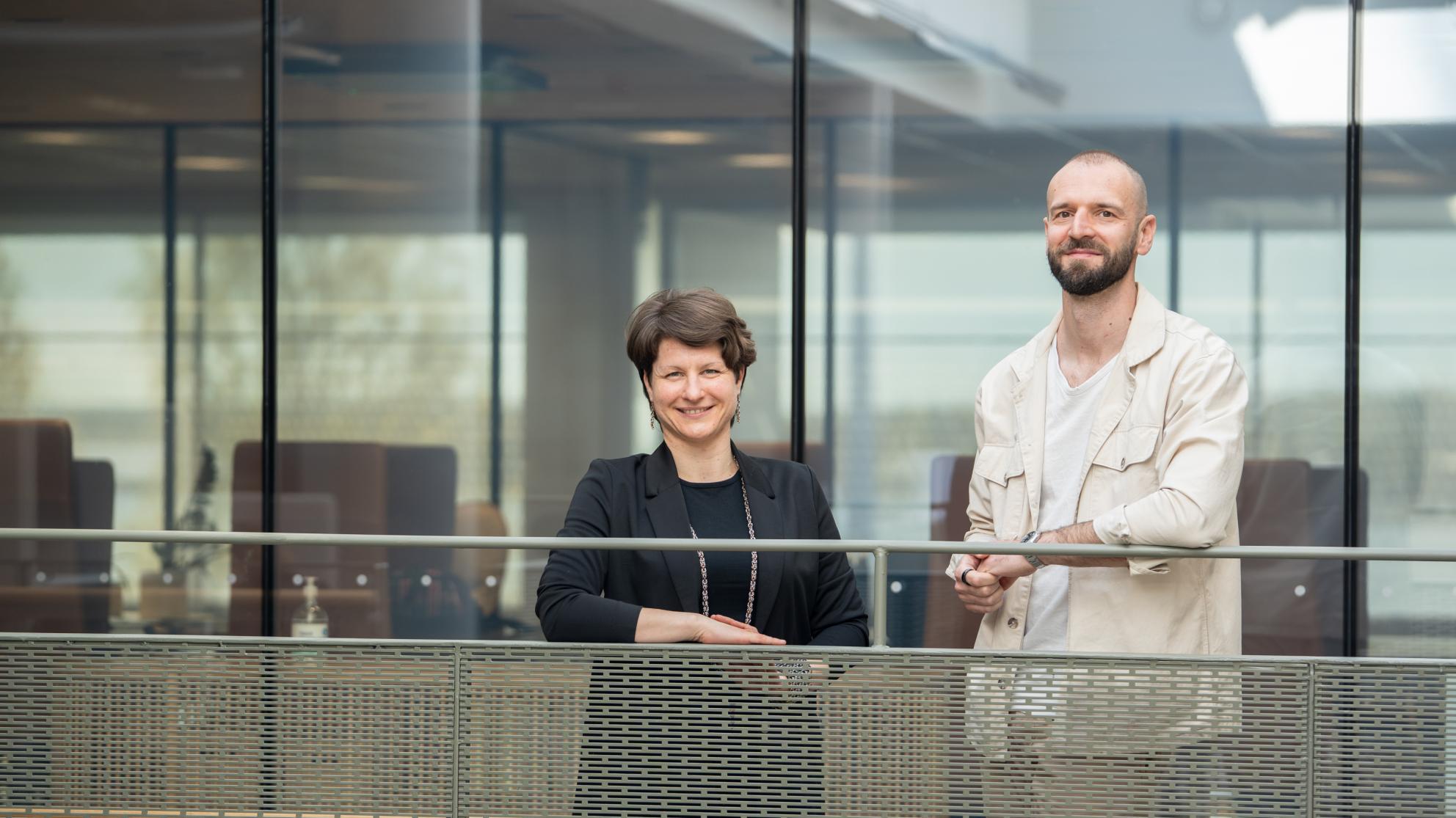
For Aušrine Šilenskytė, Assistant Professor of Strategic Management, and Nebojsa Dimic, Assistant Professor of Finance, academic career was not something they initially envisioned, but the year 2010 was a pivotal moment where their academic journey began. Both came to the University of Vaasa 15 years ago to pursue their master’s degrees. At the time, neither could have imagined building an academic career or living in Finland for a long term. Through excelling in studies, being active, and keeping doors open for emerging opportunities, they progressed from master’s studies to doctoral studies, and their academic career has successfully unfolded.
Adjusting to Finnish culture during the first months
Aušrine, originally from Lithuania, worked in the real estate sector in Egypt before moving to Finland. While collaborating with a Finnish client, she discovered high-quality study programmes offered by the University of Vaasa and applied to the University of Vaasa’s Master’s Programme in International Business.
Nebojsa, from Serbia, had completed his bachelor’s degree in the United States. Wishing to return to Europe, he applied to the Master’s Programme in Finance at the University of Vaasa, having heard much about Finland’s high-quality education system. Both Aušrine and Nebojsa recall that adapting to a new country and culture took some time.
– When I came to Finland, I knew it would be cold in the autumn and winter compared to Southern Europe or Memphis, where I had studied before. But the weather was still a shock. It took me about six months to adjust to Finland and its culture, Nebojsa recalls.
Staying in Finland was not self-evident. However, after actively engaging with Finnish classmates and getting to know locals better, Nebojsa settled quickly and began to enjoy life in Vaasa. Today, he is learning Finnish with support from his wife and children, who speak the language at home.
Aušrine also needed time to adapt. She initially planned to leave Finland after her first year, but emerging opportunities kept drawing her back.
Different paths to doctoral studies
Aušrine never dreamed of becoming a researcher, her goal was to either return to business or teach at the university. Growing up in an entrepreneurial family and having worked before further studies, she did not immediately find ways to combine perspectives from business and academia.
She was active in her master’s studies, and during them also briefly worked in the university’s international services. Her activeness and strong work ethic were noticed, leading to an opportunity to work as a research assistant and eventually to start doctoral studies. During that time, Aušrine discovered her passion for research.
The breakthrough came when I started collecting data for my dissertation in India, Russia and Finland. I found a way to combine business and research by implementing my own research project.
Today, Aušrine is highly satisfied with her work. Her earlier work experience and pedagogical studies have proved valuable, and after completing her doctorate in 2020, she has continued to teach, do research and lead various international projects.
Nebojsa, on the other hand, initially envisioned a career as a professional basketball player. While studying in the US, he played at a professional level, but after an injury, he has focused on coaching. Balancing studies and sport were demanding, yet he excelled in both. After completing his thesis, his supervisor suggested doctoral studies, given his strong academic performance.
– My attitude is to try rather than regret later, so, I applied for doctoral studies. I enjoyed presenting and speaking to people, and as my studies progressed, I began to appreciate academia and its processes – writing articles and teaching, says Nebojsa, who earned his doctorate in 2017.
Research and teaching are matters of heart
Since completing their doctorates, both have been deeply engaged in research and teaching. Aušrine’s research focuses on international strategic management, advanced technologies (e.g., blockchain, AI, SaaS), and social sustainability. She is also interested in innovations in business education, particularly related to diversity and other issues falling under social sustainability.
Aušrine has served as Programme Manager for the Bachelor’s in International Business and has led international projects and many other initiatives. She has developed innovative courses and received recognition for her educational leadership, being the first foreigner to receive the Teaching Act of the Year.
– This autumn, I began my tenure track path towards a professorship, which means I will focus even more on research and international collaboration projects, says Aušrine.
Nebojsa’s research centres on responsible finance, a topic that sparked his interest when he was creating a master’s level course on the subject. He is Programme Manager for the Master’s Programme in Finance and acts as a thesis supervisor, among other things.
His research combines financial efficiency with social responsibility. Speaking about his career, Nebojsa emphasises his ambition to publish high-quality, socially relevant research. Earlier this year, the Ostrobothnia Chamber of Commerce awarded Nebojsa and his colleague Vanja Piljak a €5,000 prize for a scientific article related to the energy sector, focusing on SPACs (Special Purpose Acquisition Companies).
A clear goal and passion for your field are important
What advice would Nebojsa and Aušrine give to students aspiring to an academic career? Both encourage to be brave and open to possibilities. On the video, they share even more tips.
Nebojsa reminds that, whatever the career, the key is to be satisfied with what you do. An academic career requires mental resilience and a genuine passion for your field.
– Academic life is fantastic, but certainly not the easiest path. You need to be prepared to work on your topic for a long time and cope with uncertainty. Everything becomes easier when you find a subject you truly care about, Nebojsa says.
Aušrine firmly believes that academia is not just a job but a way of life. She compares research to entrepreneurship, as securing funding, developing research projects and teaching are the researcher’s own responsibility.
– My tip is to find a good reason why you want to apply for doctoral studies or continue in academia afterwards. For me, it was the desire to teach. When you have a clear motivation, academic career is less challenging and you can recognise more opportunities, Aušrine says.
Interested in doctoral studies and an academic career? Learn more about doctoral education at the University of Vaasa.