
University of Vaasa highlighted research impact and collaboration at EnergyWeek – Energy transition, resilience and innovative solutions at the core of the week’s discussions
Image
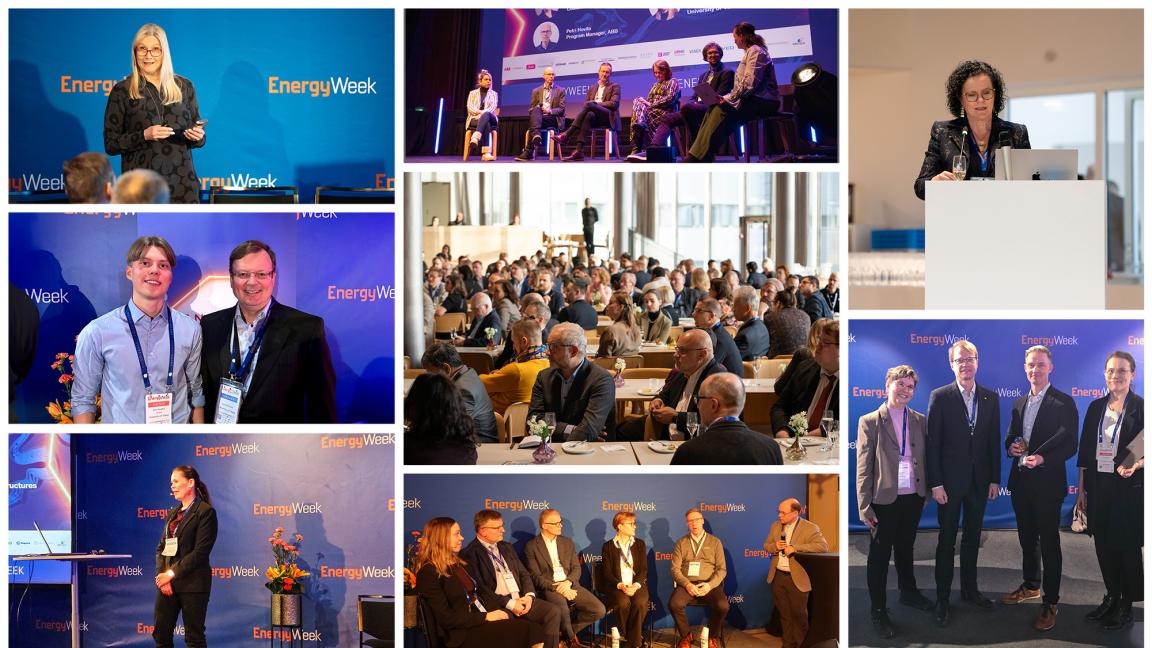


EnergyWeek, the Nordic region’s most significant international energy event, brought energy experts, policymakers, industry leaders and international media to Vaasa on 16–19 March 2026. As an official partner of EnergyWeek, the University of Vaasa was highly visible throughout the week with its presentations, seminars and research showcases. Discussions focused on themes such as energy transition innovations, resilience, the use of space based data and the future of data centers. Collaboration and research impact were strongly highlighted throughout the week.
Energy transition requires new innovation and collaboration – EnergyWeek evening seminar brought experts together at the University of Vaasa
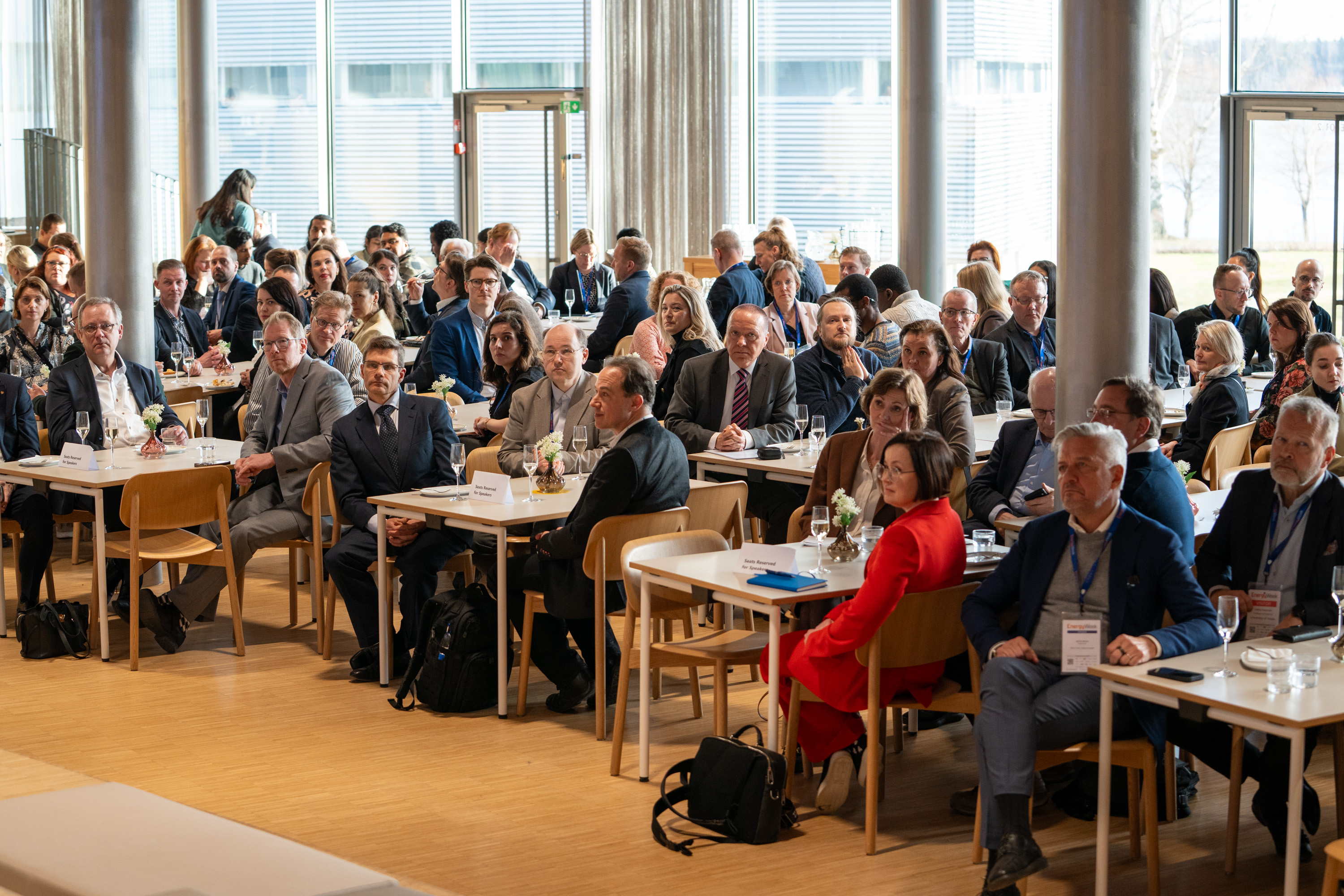
Europe’s energy transition and resilience require new innovation and close collaboration between academia, industry and the public sector. This was the key message of the European Energy Transition & Resilient Sovereignty evening seminar at the University of Vaasa, bringing European policymakers, industry leaders and researchers together.
Image
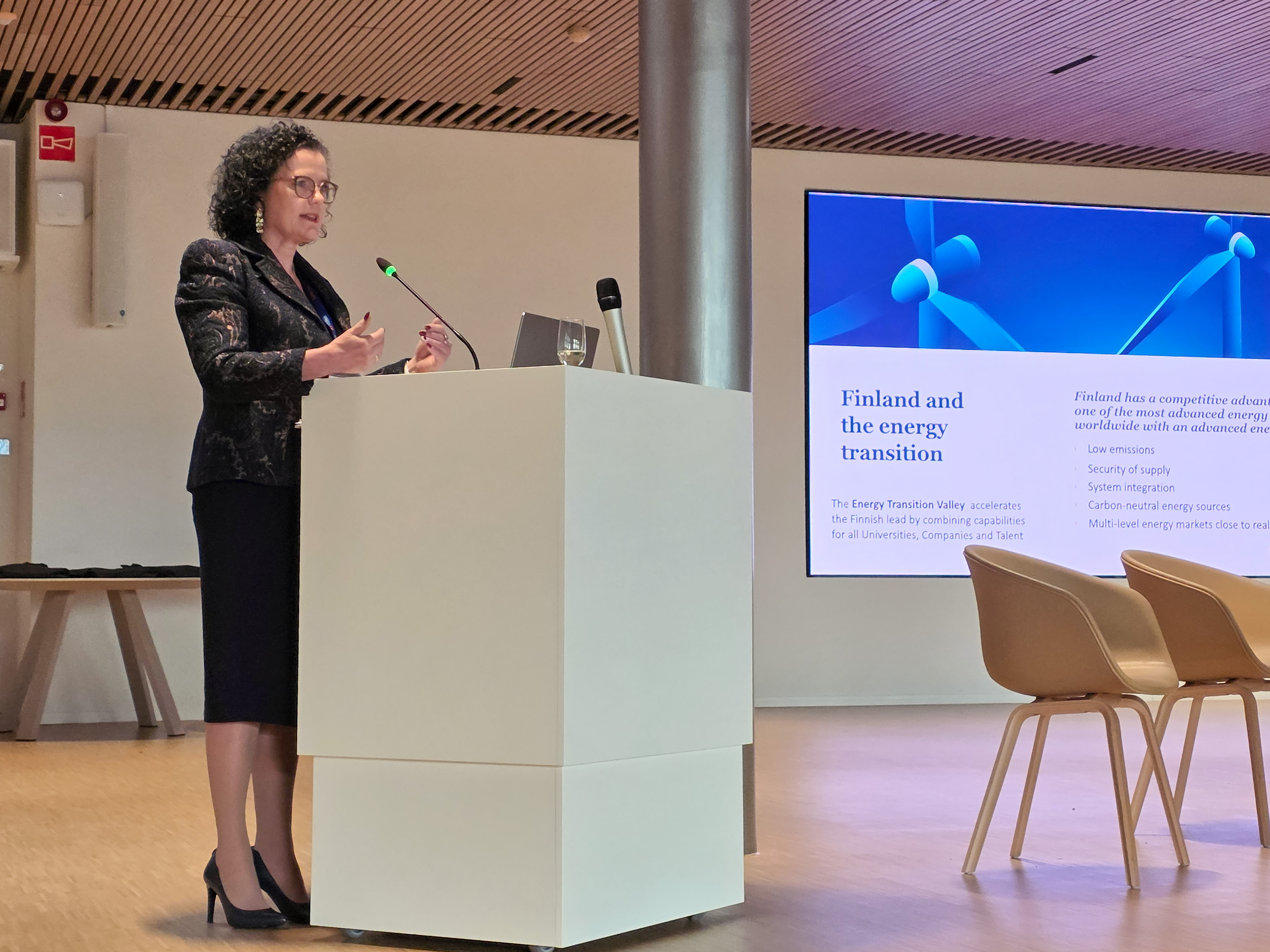
Rector Minna Martikainen emphasised the importance of research and collaboration with industry in advancing the energy transition.
– Science only becomes meaningful when it connects with companies and society and creates impact, said Rector Minna Martikainen.
Ambassador of Belgium to Finland and Estonia, Karel Tousseyn, noted that energy crises have often accelerated new solutions and investments.
The keynote speaker, former EU Commissioner for Energy Kadri Simson discussed how Russia’s war in Ukraine triggered an energy crisis that has significantly reshaped European energy policy.
– We diversified our supply, we reduced dependency, we accelerated renewables, and we made sure that no single supplier can hold the continent hostage again, said Kadri Simson.
Image
Space data plays a growing role in energy security
At Tuesday’s Nordic Pathways to Resilient and Decarbonised Energy Systems seminar, participants explored how the Nordic countries can strengthen grid resilience, expand cross-border energy integration, and accelerate decarbonisation through collaboration.
Postdoctoral Researcher Giovanna Pinilla De La Cruz presented University of Vaasa projects collectively contribute to the Nordic vision of strong, efficient, integrated and decarbonized energy systems. She emphasised that the need for regional cooperation is now greater than ever.
Image
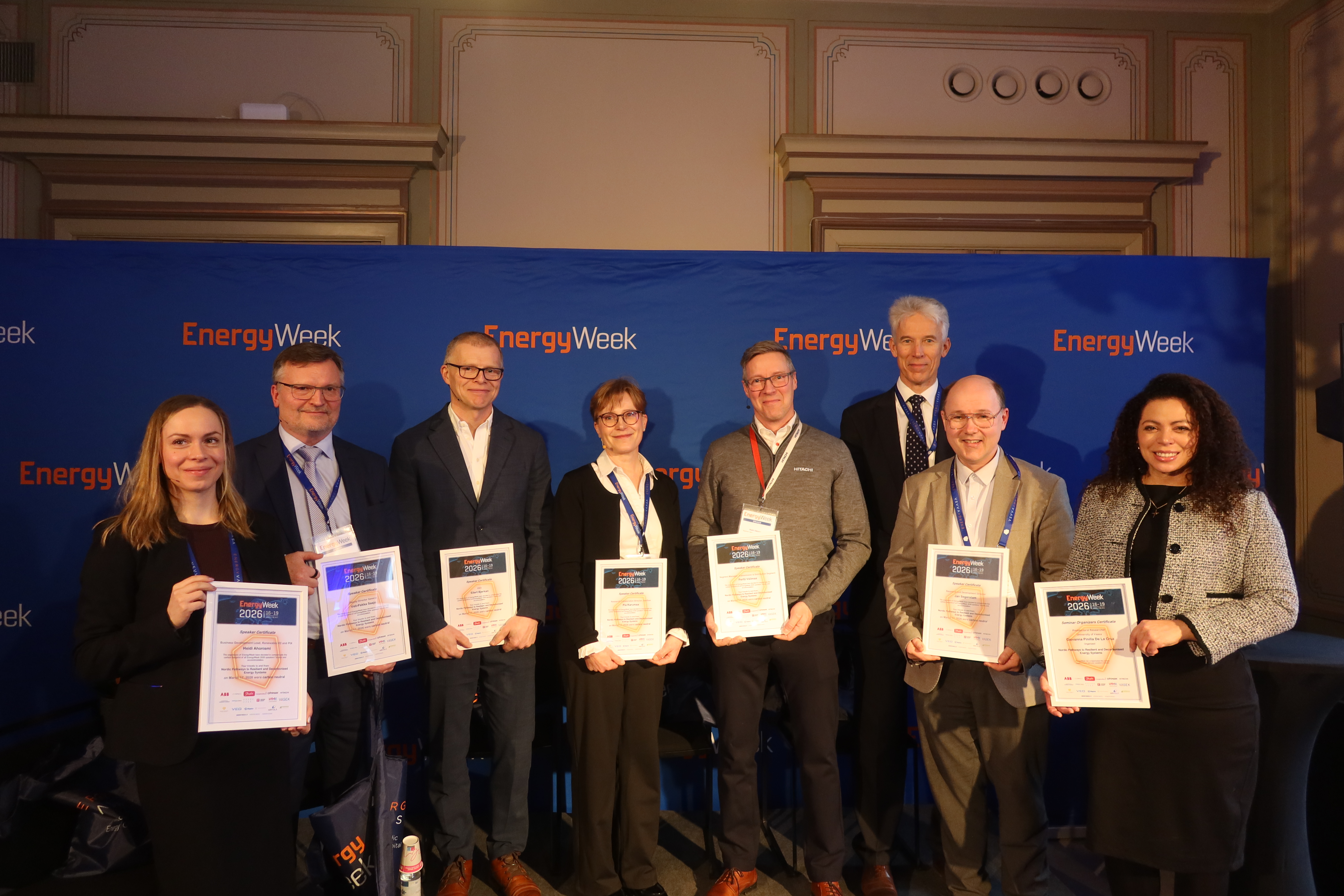
The seminar also featured remarks from Magtech CEO Eilert Bjerkan, Deputy Director General at the Energy Authority Veli‑Pekka Saajo and Eero Ailio, Energy Transition and Local Governance at the European Commission, who discussed accelerating the adoption of new technologies, the role of regulation in the energy transition, and the Nordic countries’ position as European frontrunners. The seminar concluded with a panel discussion moderated by Jan Segerstam, Research and Development Director at the University of Vaasa. The event was hosted by research platform VEBIC, University of Vaasa.
How can space-based data strengthen the resilience of energy systems? This question was discussed at the EnergyWeek session Powered by Space: Building Resilient Energy Systems held on Tuesday at Ritz in Vaasa.
The session opened with an introduction by Professor Ali Nadir Arslan from the University of Vaasa, who told about the role of space technologies in modern energy systems. Satellite-based data enables monitoring, precise timing and connectivity, all of which are increasingly important for the operation of energy infrastructure.
Image
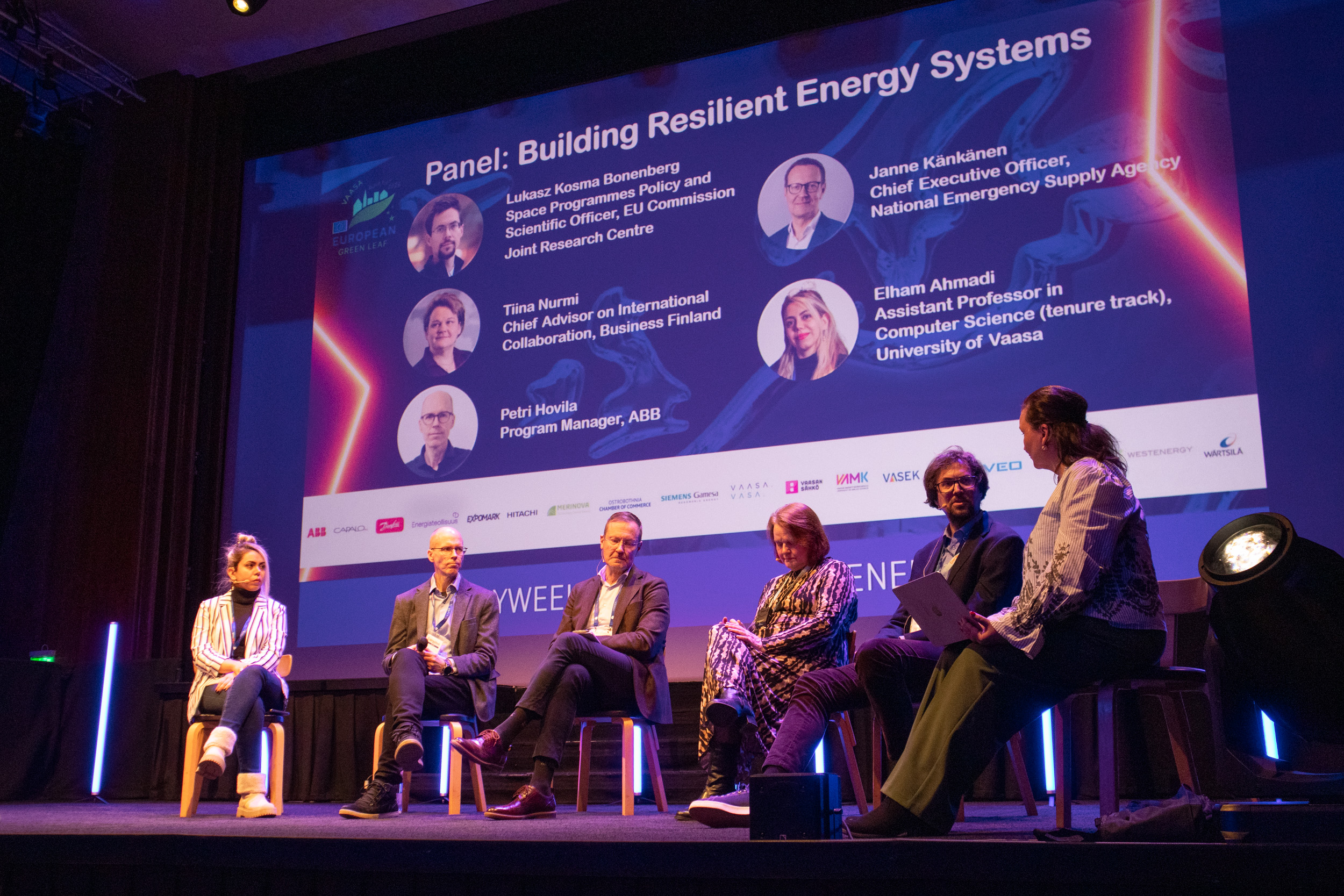
– Space is not just supporting energy systems, it is a part of the operational backbone, said Arslan.
The panel discussion, moderated by Professor of Practice Hanna Smith, focused on how the security and resilience of energy systems can be enhanced – and how space technology and space data contribute to this. The panel included, among others, Tiina Nurmi from Business Finland, Janne Känkänen from the National Emergency Supply Agency, Petri Hovila from ABB, Lukasz Kosma Bonenberg from the European Commission’s Joint Research Centre, and ElhamAhmadi from the University of Vaasa.
In the Tuesday afternoon session, Senior Researcher Katja Sirviö presented the early-stage Novel Power Infra concept, an initiative jointly developed with EnergyVaasa to overcoming gaps in today’s device‑ and system‑level verification, validation and certification practices across the evolving power system. Experts highlighted the need for system-level, simulation based validation for flexible, sustainable and cybersecure energy systems.
Data centers and system‑level simulation are shaping the future of energy
At the EnergySampo Forum, one of the key themes was how system-level simulation is becoming increasingly significant as energy systems evolve rapidly and grow more complex. In her presentation, Katja Sirviö, Senior Researcher, emphasised the impact of simulation and how it enables us to explore how complex systems behave before implementing solutions in the real world.
– Simulation is no longer just a research tool. It is becoming a strategic capability for understanding and managing complex energy systems, Sirviö noted.
Image
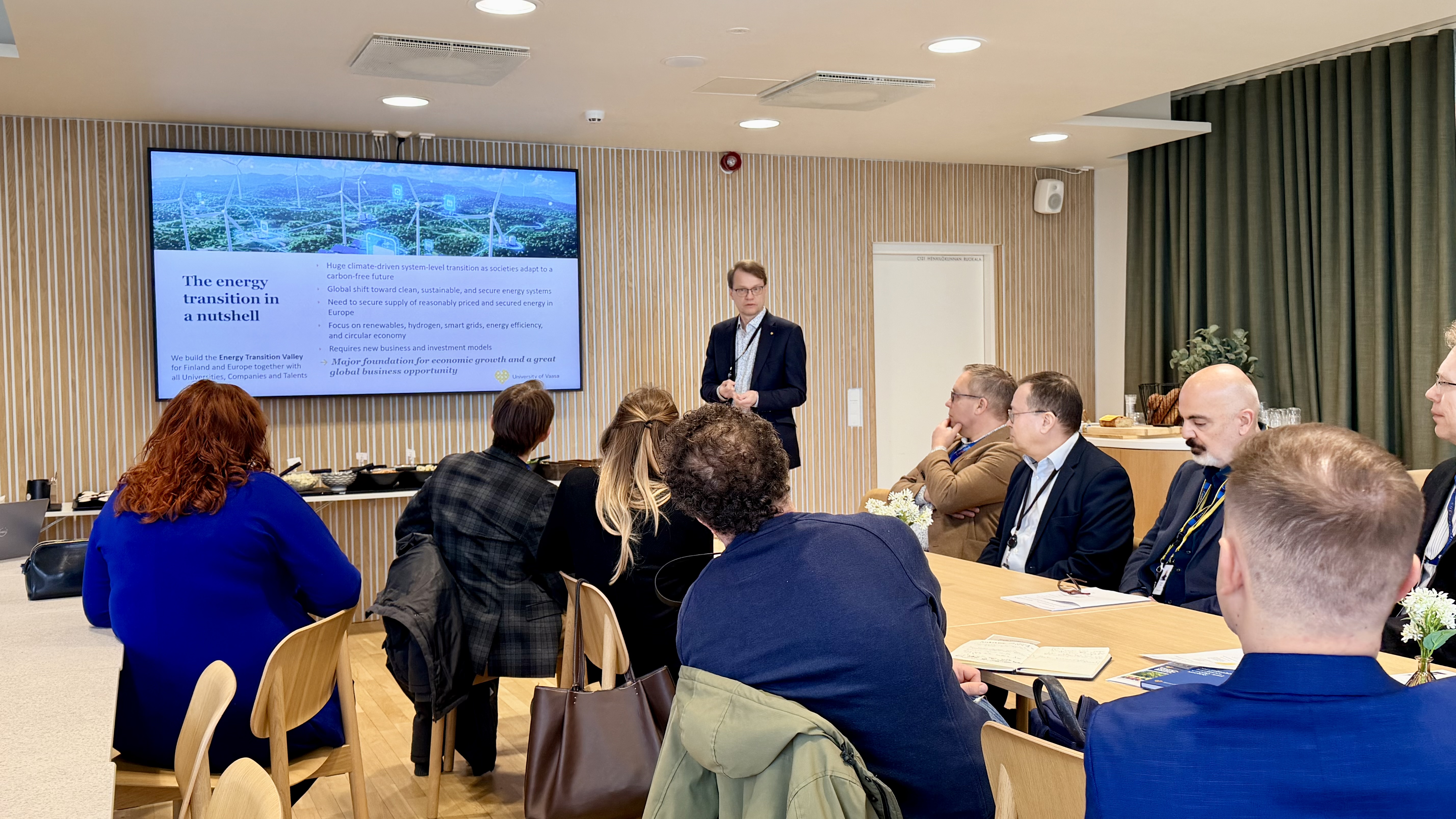
As part of EnergyWeek's Media Tour, the university hosted a group of international journalists. Rector Minna Martikainen and vice-rector Mika Grundström presented the university's research collaboration and strategic initiatives such as the Energy Transition Valley, that supports the transition towards a carbon-neutral and energy-independent energy system. The tour also included a tour in the university’s research facilities.
At the Future Data Centers seminar organised on Wednesday by the University of Vaasa, Åbo Akademi University, Vaasa University of Applied Sciences (VAMK) and Novia University of Applied Sciences, participants explored the cutting-edge technologies shaping the next generation of AI-driven data centers. As AI workloads grow, so does the demand for high energy density solutions. The seminar and the following panel discussion brought together industry leaders and researchers to discuss innovations in power, cooling, heat reuse and collaborative infrastructure that will define the future of sustainable and efficient data centers.
At Wednesday’s session Robocoast EDIH – AI and Industrial Cybersecurity, organised by Postdoctoral Researcher Bahaa Eltahawy, participants explored the needs of SMEs in an era defined by AI and cybersecurity challenges. The keynote presentations highlighted, among other things, the story of Robocoast EDIH as a service and advisory partner, the Robocoast 2.0 project, as well as the key AI and cybersecurity challenges faced by SMEs.
Image
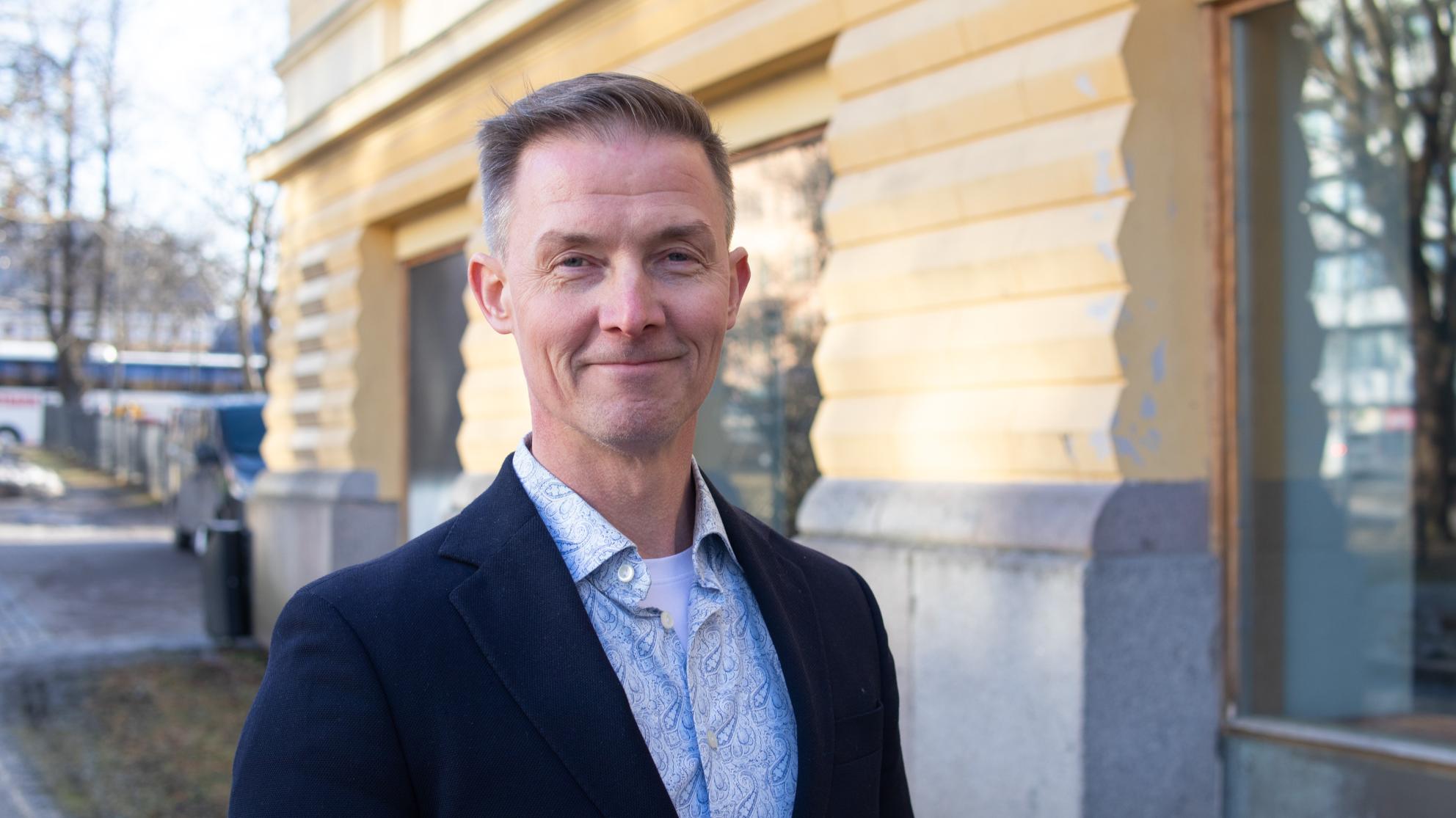
The University of Vaasa has granted the Science Communication Award to Professor Marko Kohtamäki. Honorary mentions were awarded to Postdoctoral Researcher Essi Vesterinen and Professor of Telecommunications Engineering Mohammed Elmusrati. The awards were presented during the Research Exhibition of Energy, organised by the University of Vaasa as part of EnergyWeek.
The jury highlighted active science communication and engagement with diverse audiences. Kohtamäki communicates his research widely – on social media, with companies and decision-makers, and in public debate.
– Without impact, research is pointless. Research must be useful, and to be useful, it must have an impact within the scientific community and in society, says Kohtamäki.
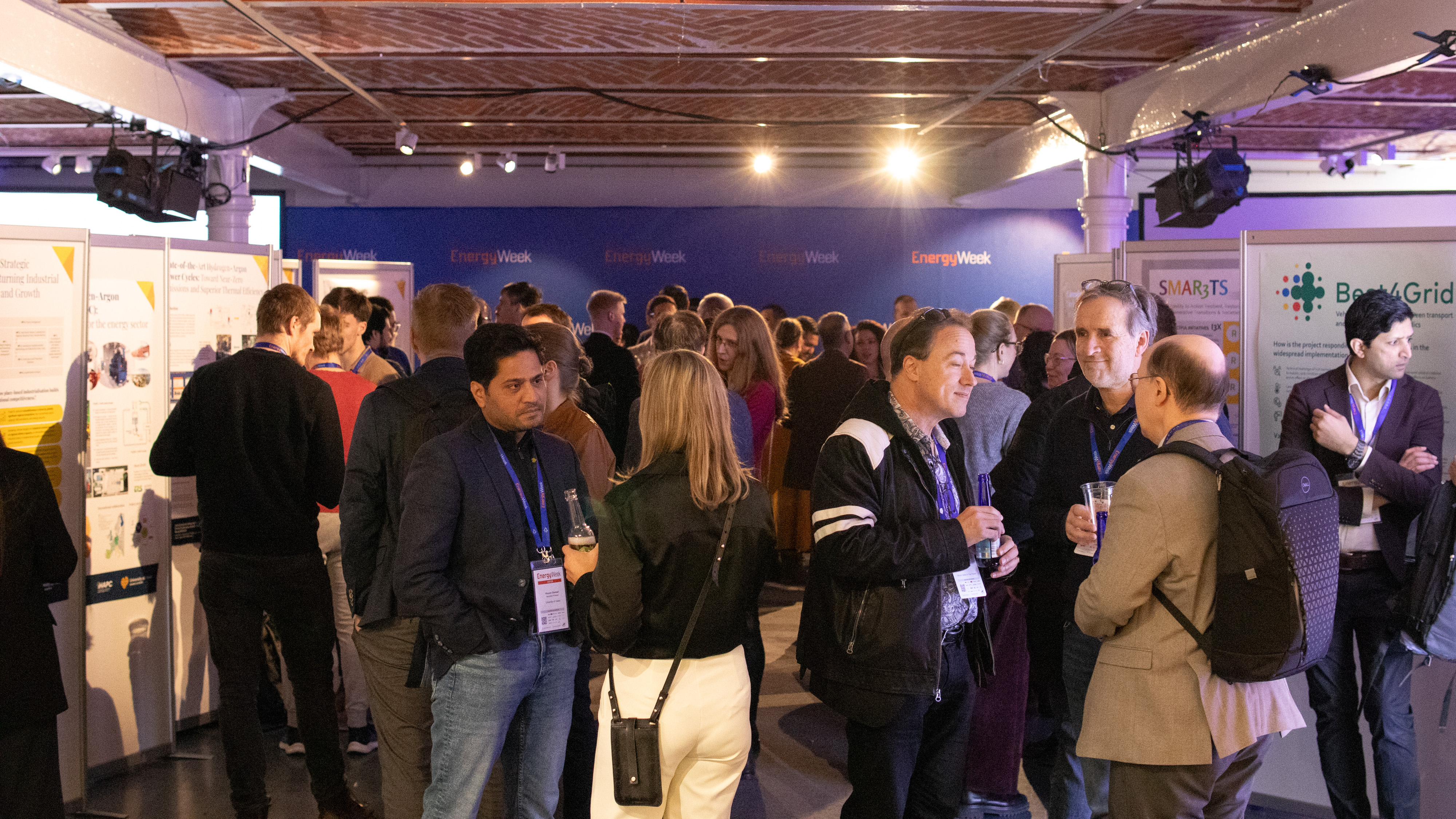
The Research Exhibition of Energy attracted a large audience to Vaasa Art Hall, where visitors explored the wide range of research conducted at the University of Vaasa. Around 40 research posters were on display, offering insights into ongoing research and its results. In addition to the posters, the exhibition provided an excellent opportunity for attendees to engage directly with researchers, ask questions, and discuss their work. The event was held as part of EnergyWeek and was organised by the University of Vaasa together with its four research platforms: VEBIC, Digital Economy, Resilience, and InnoLab.
Image
University and industry representatives challenged by students
Image
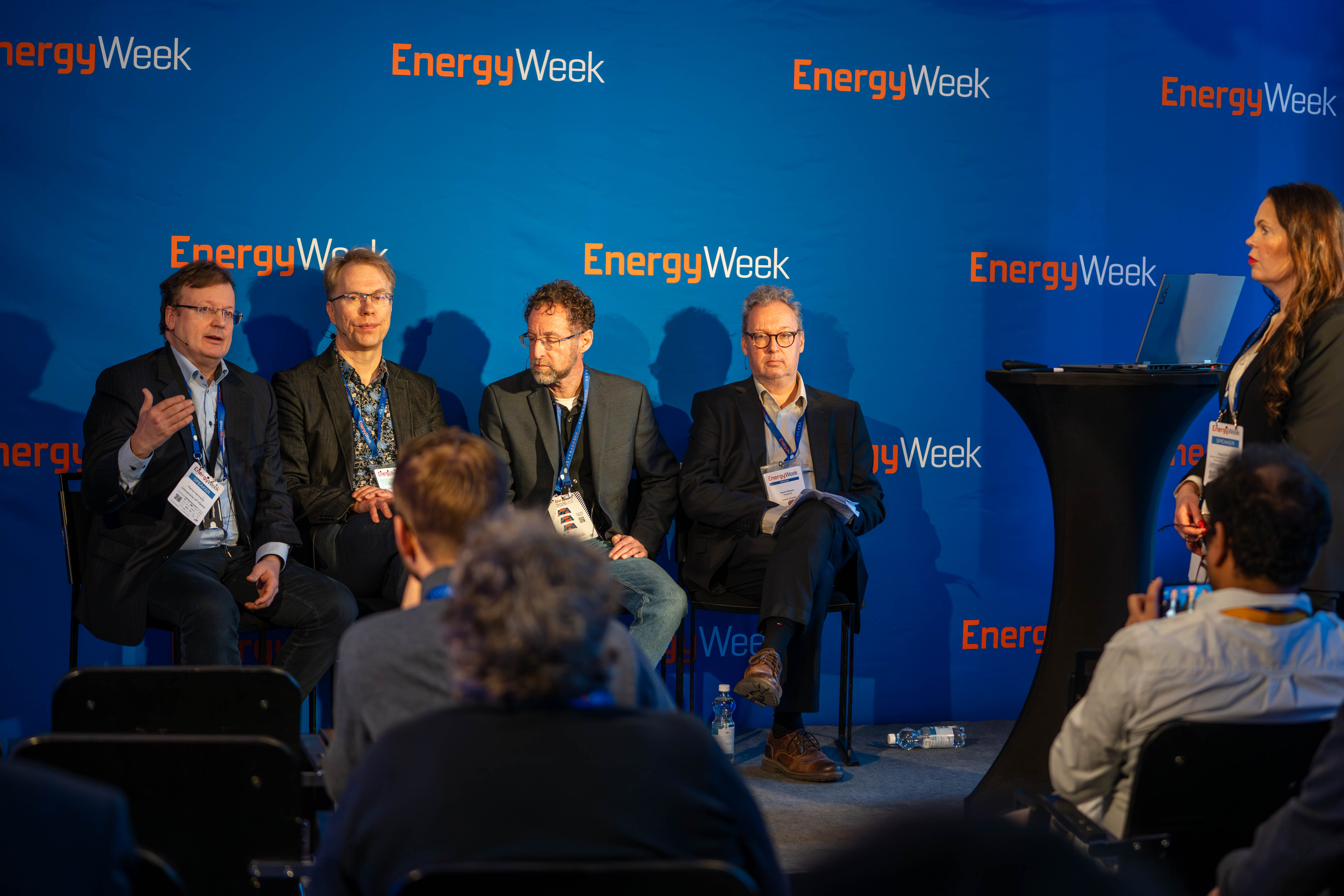
In Thursday’s morning seminars, Data Center Technology Disruption Points and Research Roadmap and Achieving a Sustainable Future with Fossil‑Free Solutions, the focus was on how data centers can be made more sustainable, resilient and future‑proof.
In the session on data center technology disruption points and research roadmap, the University of Vaasa team – Senior Researcher Katja Sirviö, Dean Raine Hermans, Professor of Practice Seth Miller, Researcher Henrik Sievers and Professor Petri Välisuo – presented their latest findings on disruption points emerging across data center value chains. A central question in the presentation was why technology disruption so often comes as a surprise, even though it should not. The team concluded by inviting companies and other stakeholders to join research collaboration.
Image
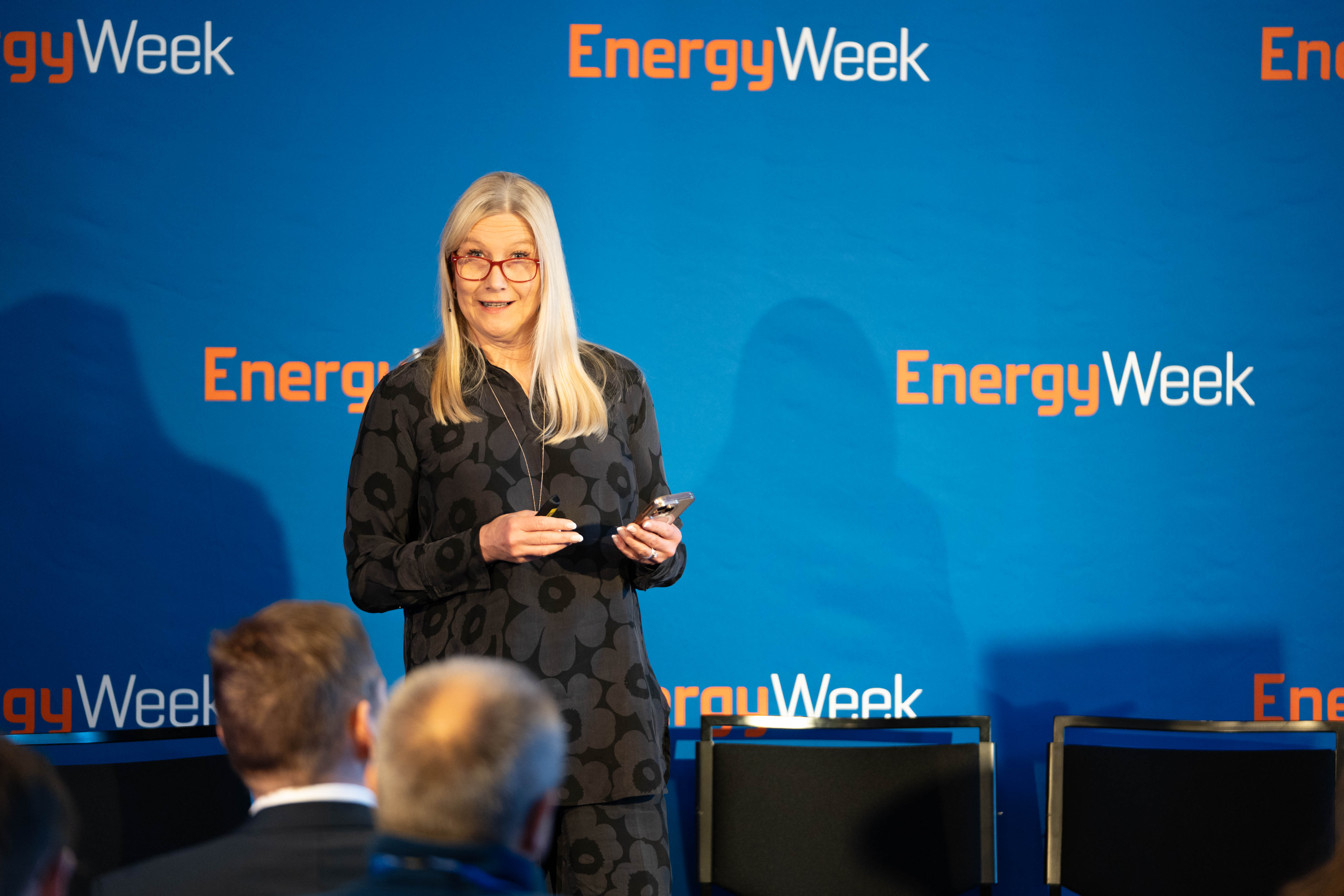
In the second session, Research Director Taina Tukiainen contributed to the discussion on Finland’s potential to become a hub for sustainable data centers. She outlined how Europe can move toward a fossil‑free society, highlighting the region’s strengths – such as the growth of renewable energy – as well as challenges like bottlenecks in the electricity grid. Tukiainen emphasised that EU policy has shifted from focusing solely on climate targets to a broader transformation agenda in which energy, digitalisation and society are closely interconnected, with people at the centre of the transition.
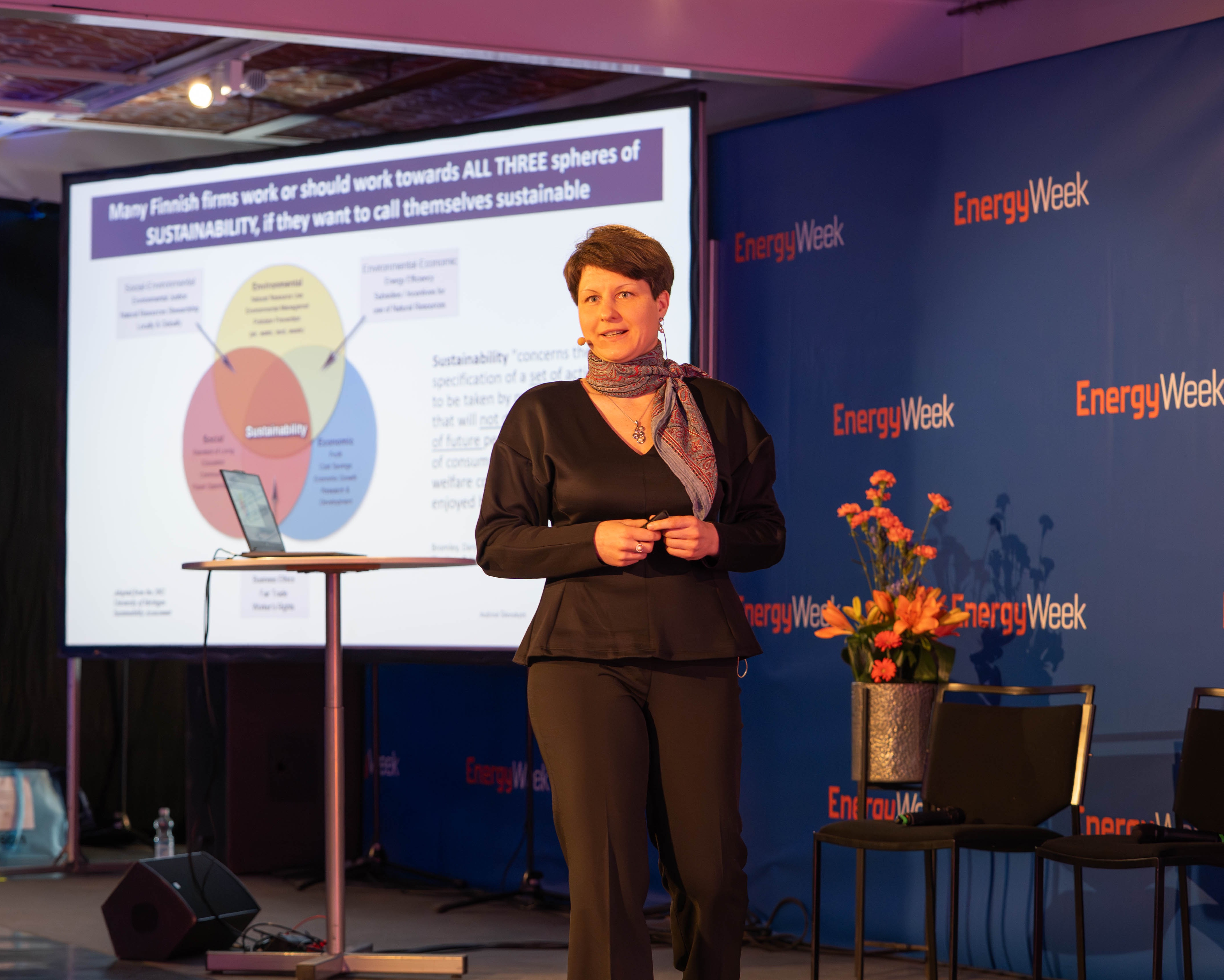
The Building Competitive Advantage with DEI seminar highlighted how diversity, equity and inclusion (DEI) strengthen organisational competitiveness. Assistant Professor Aušrinė Šilenskytė emphasised that social sustainability is just as essential as environmental and economic aspects. She outlined three core elements: safety, learning and community. Through company examples, she demonstrated how DEI creates value and opens strategic opportunities in everyday business, rather than being viewed solely as an HR asset.
Image
In the panel discussion, Doctoral Researcher Devendra Jayawardane addressed the biggest barriers companies face when recruiting international talent. Jayawardane noted that EnergyVaasa is one of the most globally connected industrial ecosystems in the Nordics, yet research shows that skill shortages will be the biggest challenge for companies in the coming years. Jayawardane concluded that the direction is right, even though much work remains ahead.
Image
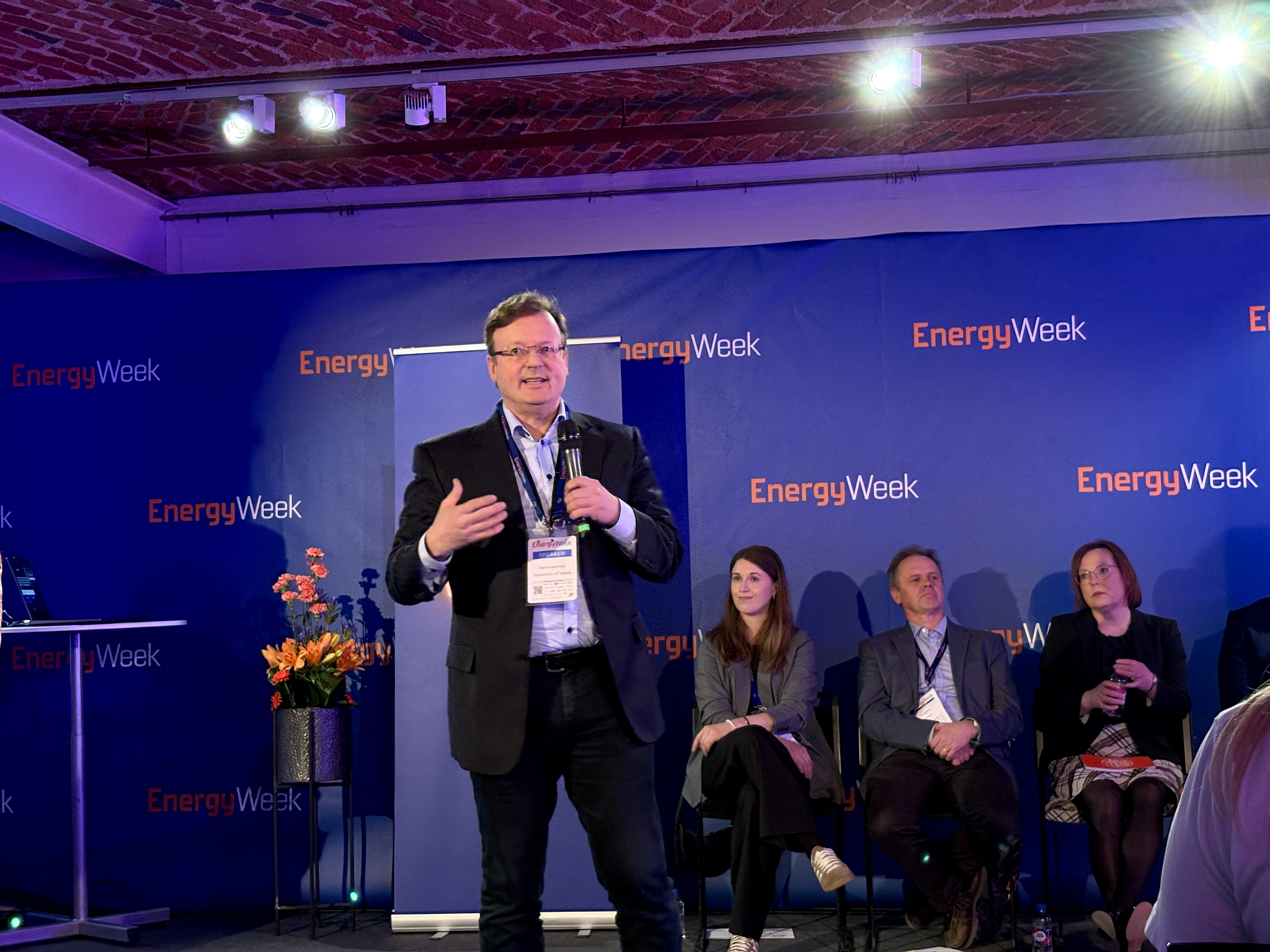
At the Energy Academy's Back to the Future Roast! event, representatives from universities and local companies had the chance to answer students' tricky questions. Raine Hermans, Dean of the School of Technology and Innovations, was among those being roasted. Students asked challenging questions about data centres, hydrogen, and resilience and several other topics. Energy Academy is a cooperation model between universities and leading companies in the Vaasa region. It aims to increase the area's attractiveness to students and graduates, and to strengthen connections with working life.
At Thursday’s Bubbling and Sector Coupling session, participants enjoyed the dialogue between industry, community, academia and government about smart energy systems. Together with the University of Vaasa, EPV Energy, Vaasan Sähkö and the City of Vaasa, the discussion explored how renewable energy sources can be integrated into energy production, and how data‑based solutions for sector coupling can foster collaboration, energy efficiency and optimization of district heating. The University of Vaasa was represented by Professor Petri Välisuo, Assistant Professor Antti Mäenpää and Postdoctoral Researcher Morteza Vahid Ghavidel.
Image
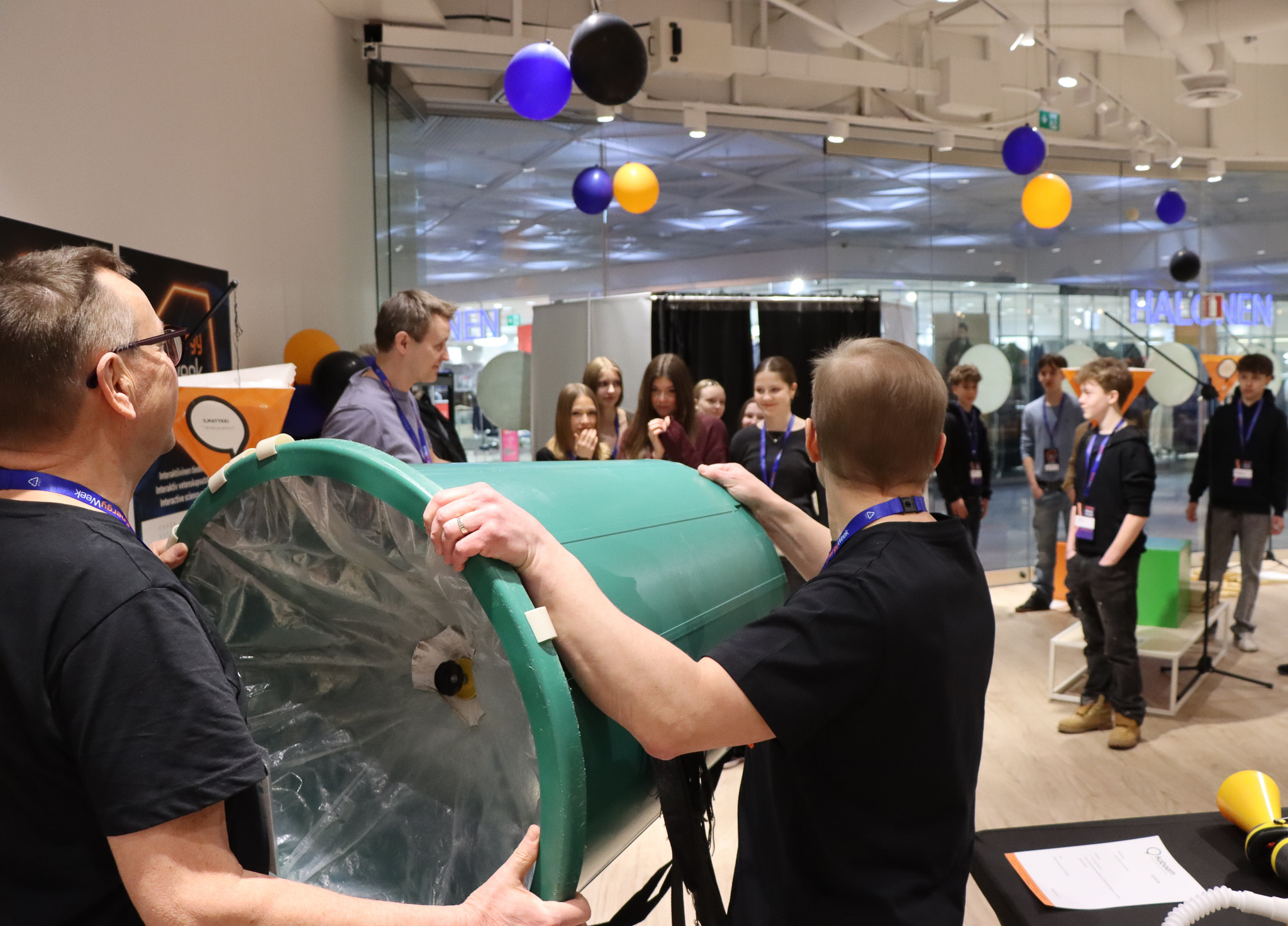
The university’s LUMA Centre Ostrobothnia, that provides science education for children and youth, took part in the EnergyWeek NextGen event, offering an interactive science exhibition for early childhood education groups and school classes throughout the week. Educators and teachers had the opportunity to explore energy-themed teaching materials, equipment, and educational projects from the region. A panel discussion was also organised, where schools and industry representatives reflected together on how to inspire young people to pursue STEM fields. The interactive, experiential science exhibition will open its doors to families on Saturday, 21 March 2026.