
Transparency in earnings calls does not guarantee equal access to information
Image
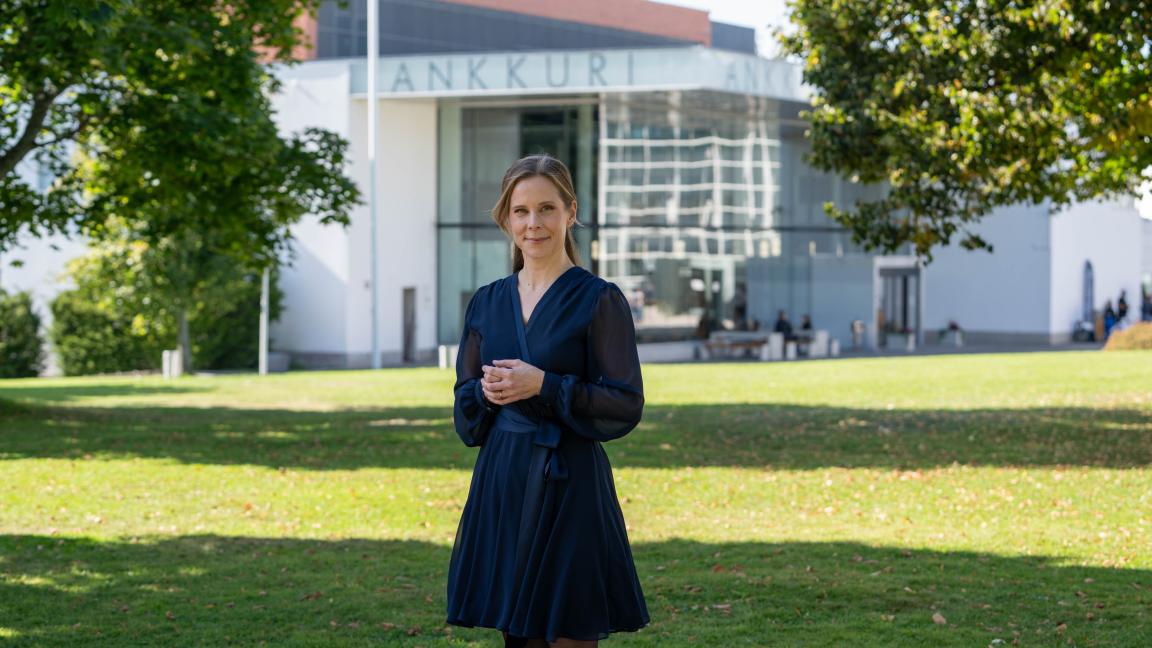
The specialised language used by analysts and management in listed companies' Q&A sessions can be challenging for individual investors to follow. However, Kaisa Penttinen's doctoral dissertation in Accounting at the University of Vaasa shows these sessions still deliver useful information beyond what is disclosed in written reports alone.
Whilst listed companies' financial reports are prepared purely from the companies' perspective, the Q&A sessions of earning calls give participants the opportunity to negotiate over information, adjust the level of detail and also obtain incomplete, unstructured and unfinished information.
However, Q&A sessions do not automatically make it easier to make investment decisions.
– The professional language used by analysts and company executives can take the discussion to a level that the audience does not fully understand. It may also be beneficial for the investors to carry out further background research in order to follow the discussion in the Q&A better, says PhD candidate Kaisa Penttinen.
Penttinen's study suggests that audience may have difficulty interpreting communication in Q&A sessions when analysts' questions refer to discussions previously held with company management in private meetings. On the other hand, Q&A sessions can also bring to light previously unpublished information that is useful to investors.
– In Q&A sessions, the communication of information is freer than in written disclosures, which are subject to legal requirements, and company executives can formulate their answers more spontaneously.
The study analysed transcripts from the Q&A sections of a total of seven companies listed on Nasdaq Helsinki.
Participants negotiate over information
According to the researcher, it is positive that alongside formal reports, other channels of financial communication have also emerged. Earnings calls are a relatively new phenomenon in the public communications of listed companies, as they only became established alongside written disclosures in the early 2000s.
Penttinen's study, based on discourse analysis, shows that tensions can sometimes arise between analysts and management. The study ties in with the current discussion on transparency and reliable communication of information in financial markets.
– Company executives may, for example, seek to evade or obscure their answers, or respond to questions with a long-term perspective, even if the question was intended to concern the short term.
Analysts, on the other hand, seek above all to obtain information that supports informed investment decisions.
– Analysts wish to maintain a constructive relationship with companies, but sometimes, in order to get essential information, they need to pose confronting questions to company executives. Analysts may also, for example, present their own conclusions in order to prompt management to comment on their accuracy.
Two-way communication with analysts is valuable for companies, as it enables them to better understand how analysts assess the company's performance.
– The very fact that management appears before the public reinforces the impression of openness and transparency. Rather than remaining silent, managers often prefer to explain to the audience that the company is unwilling to comment on a particular matter, for example due to competitive reasons.
Dissertation
Penttinen, Kaisa (2026) Financial Communication in Earnings Calls: Disclosure Practices in the Q&A. Acta Wasaensia 592. Doctoral dissertation. University of Vaasa.
Public defence
The public examination of M.Sc. Kaisa Penttinen’s doctoral dissertation “Financial Communication in Earnings Calls: Disclosure Practices in the Q&A”will be held on Friday 11 September 2026 at 12at the University of Vaasa, auditorium Nissi.
It is possible to participate in the defence also online:
https://uwasa.zoom.us/j/67017551520?pwd=BmmbEQHlQJ7gvbJRMuy7DhM7u9vJKr.1
Password: 704447
Professor Kirsi-Mari Kallio (University of Turku) will act as opponent and Professor Annukka Jokipii as custos.
The defence will be held in Finnish.
Tietolaatikko
Further information
Kaisa Penttinen holds a Master of Arts degree from the University of Oulu in 2011 and a Master of Science in Economics and Business Administration from the University of Vaasa in 2016. She is currently working as a doctoral researcher in the Department of Accounting and Finance at the University of Vaasa.