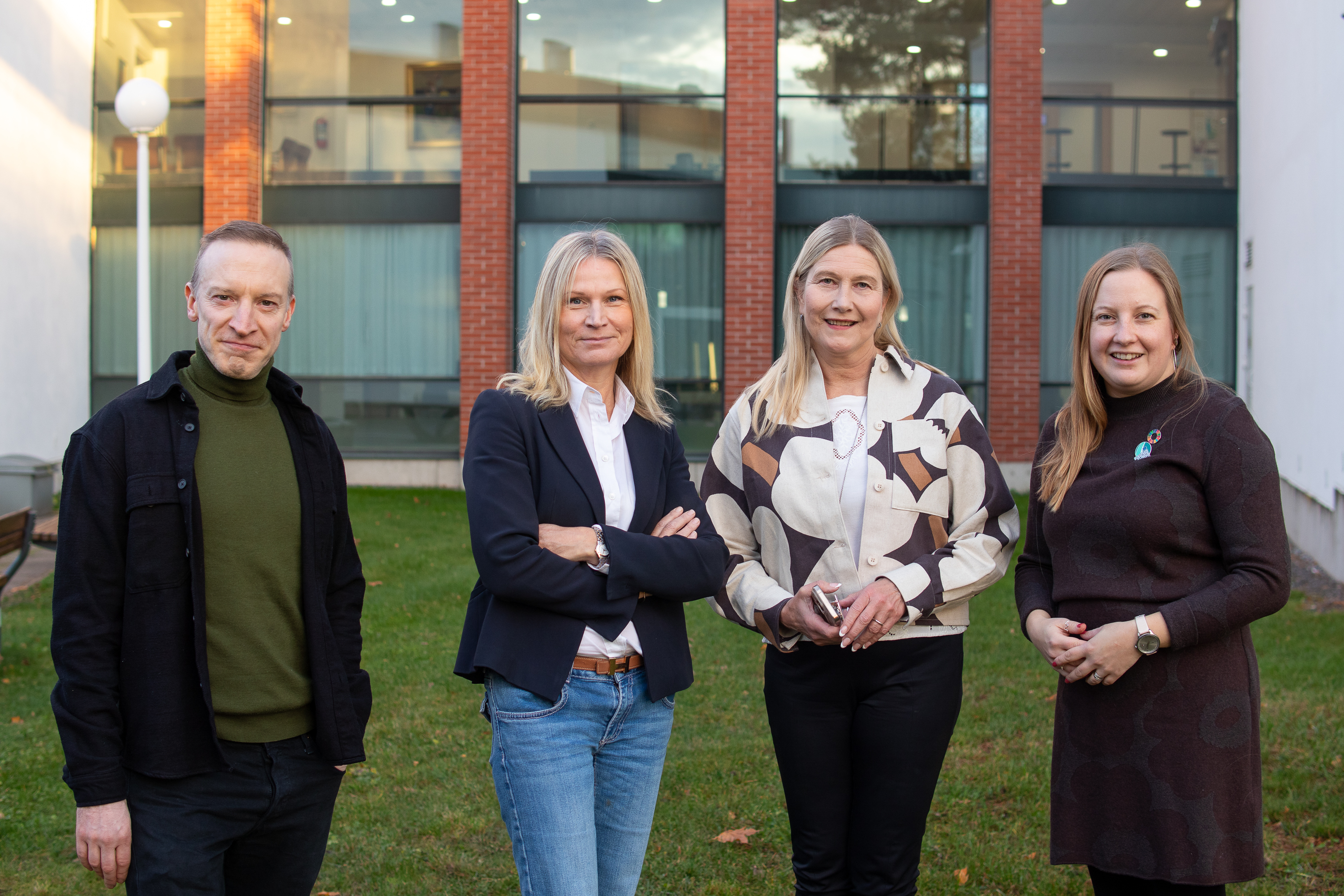
Alumna of the Year Elina Bardram: Climate action strengthens Europe’s competitiveness and security
Image
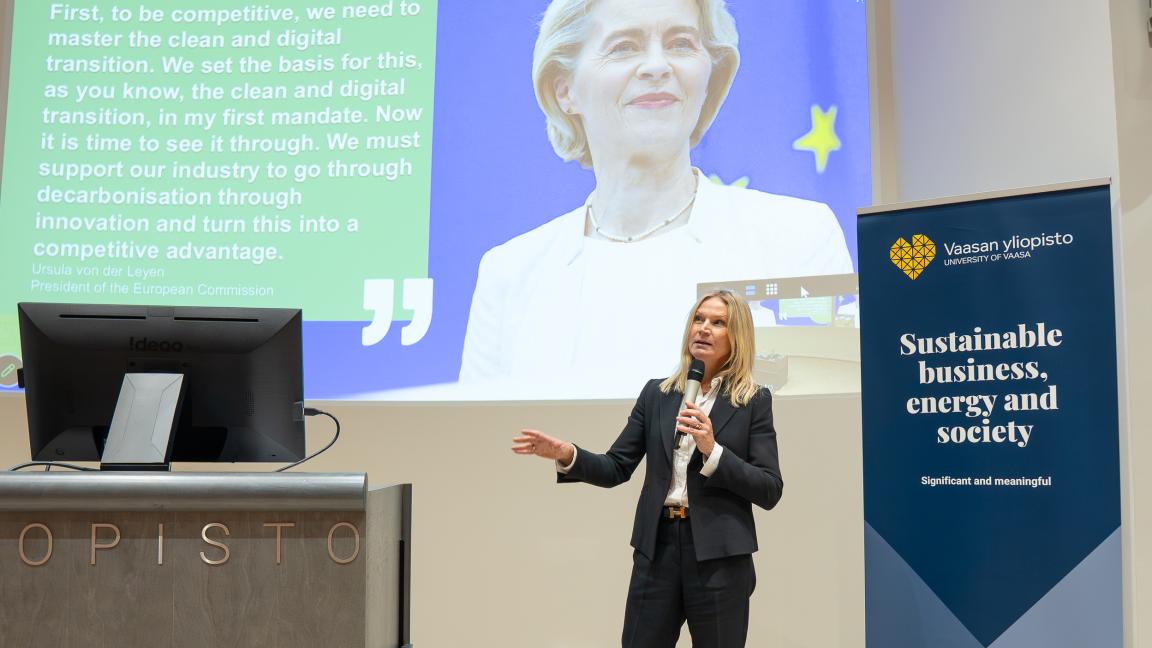

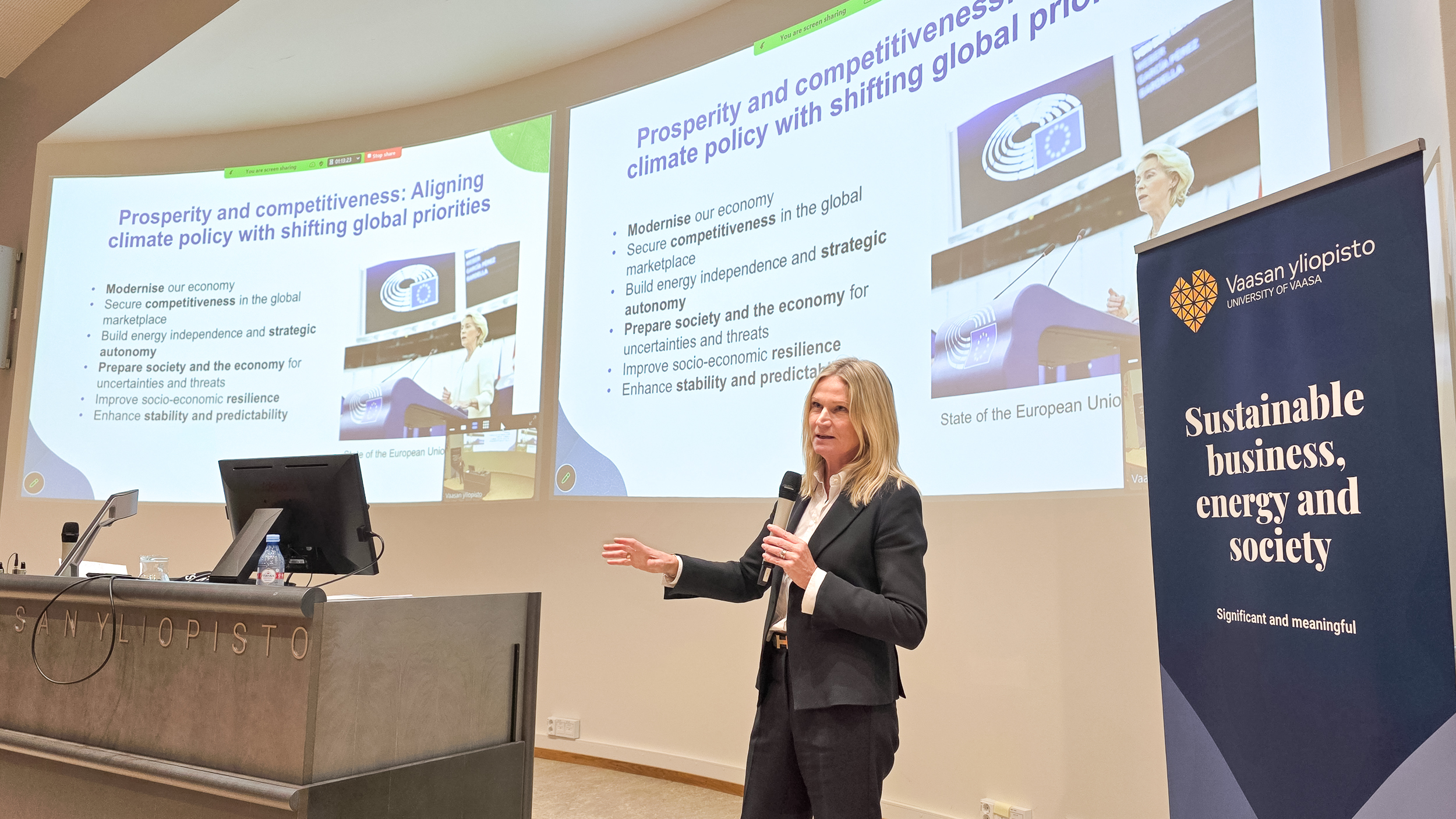
Mitigating climate change and preparing for its impacts are increasingly matters of economic policy, competitiveness and security. In her guest lecture, the University of Vaasa’s Alumna of the Year Elina Bardram stressed that Europe must remain committed to its climate targets while ensuring that businesses and citizens have the means to take part in the transition.
Elina Bardram, Director for Climate Resilience and Information Management at the European Commission’s Directorate-General for Climate Action and the University of Vaasa’s Alumna of the Year, visited the university this week. In her guest lecture on Tuesday, she discussed climate policy and politics in times of global turbulence.
Rector Minna Martikainen opened the lecture, describing Bardram’s international career as an inspiring example for students. Bardram graduated from the University of Vaasa in 1994 with a Master of Science degree in Economics and Business Administration, majoring in Economics. She subsequently earned her doctorate in Vienna and has extensive experience in international climate policy. She headed the EU delegation in negotiations that led to the Paris Agreement, among other international climate negotiations.
Image
– Elina’s career is a wonderful, promising and encouraging example of what a career can be when you really dedicate yourself, use the knowledge you learn at the beginning and then learn new things throughout your career, Martikainen said.
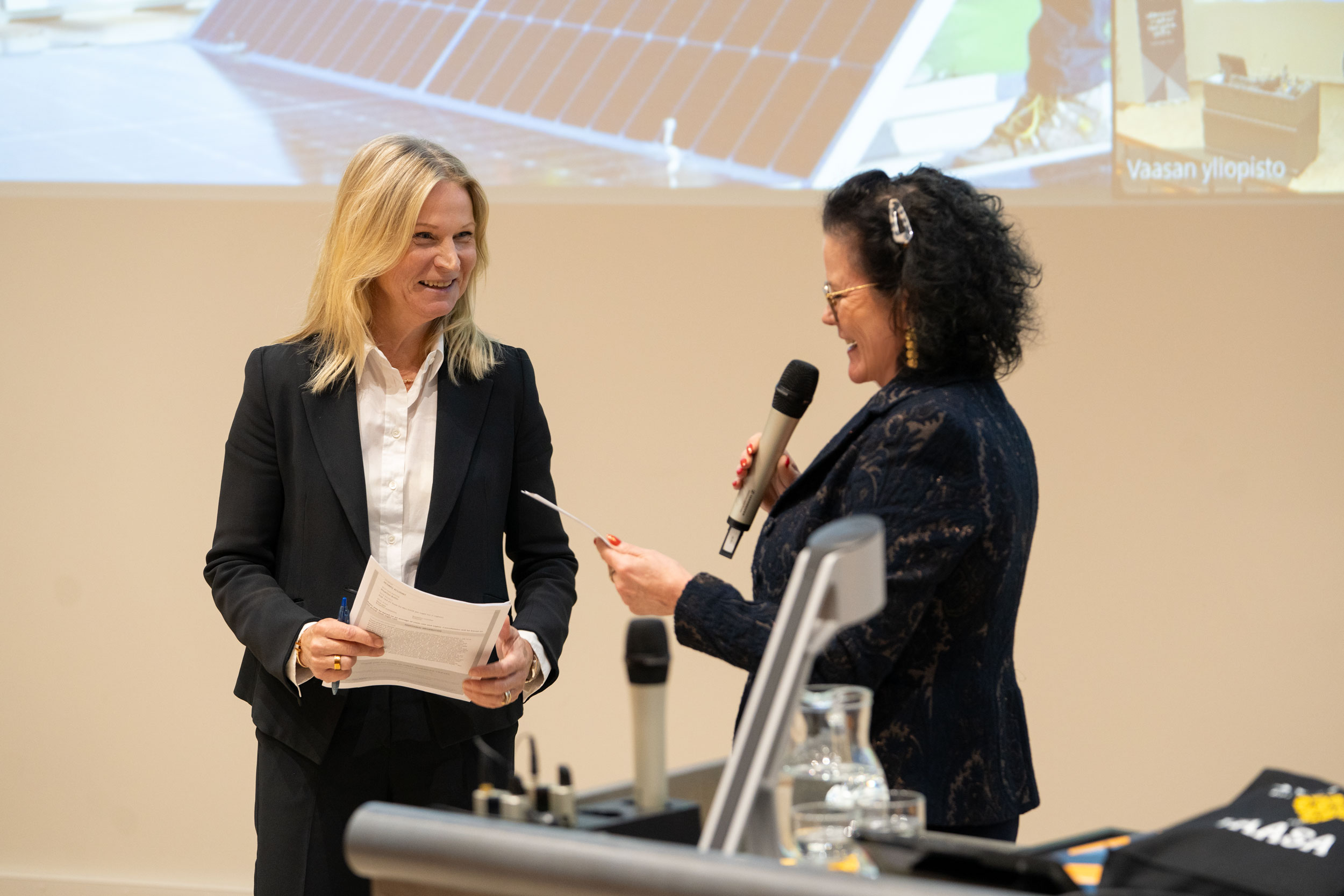
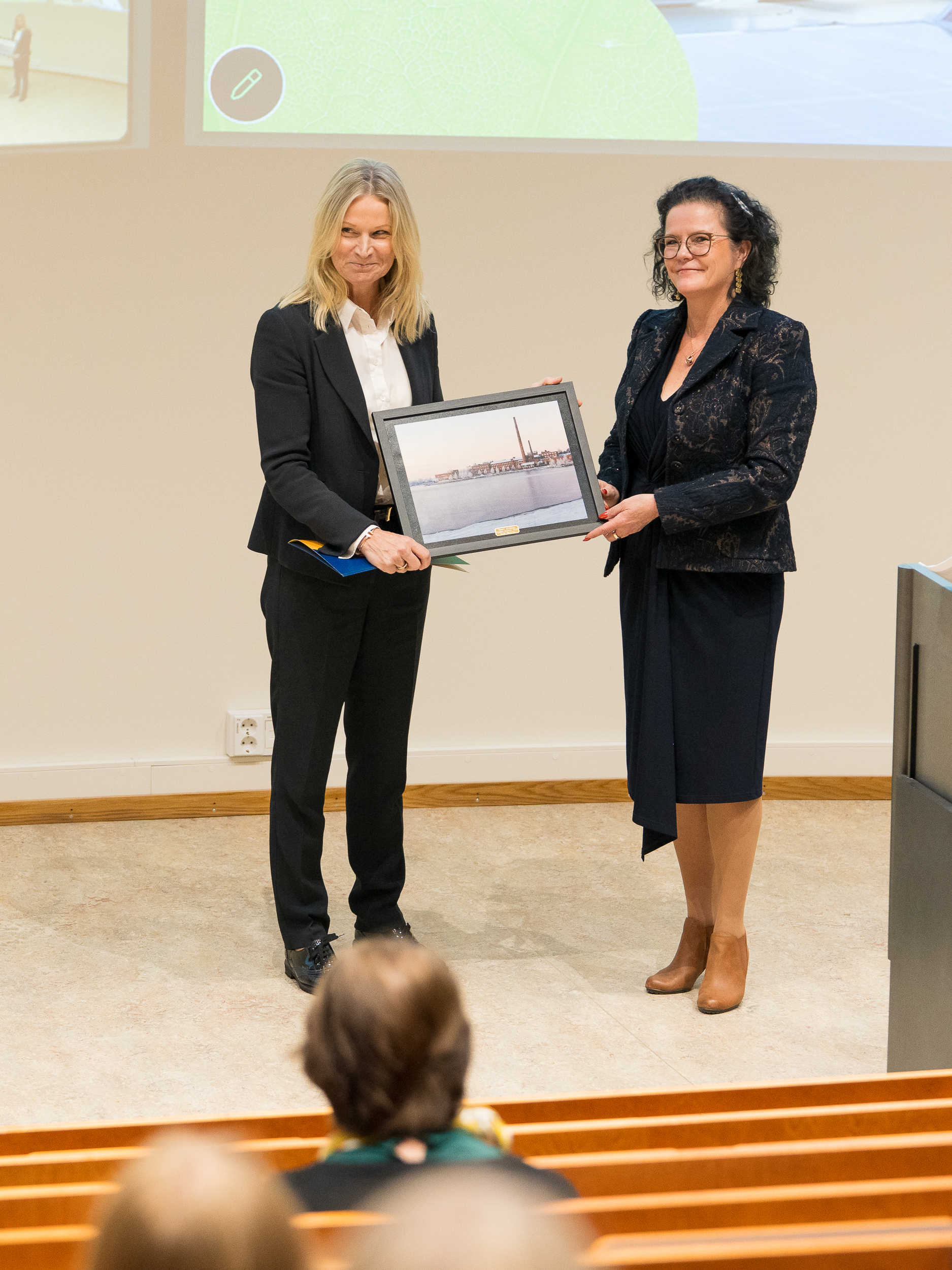
Martikainen linked Bardram’s work to the university’s strategy and its ambitions for the energy transition, business renewal and building a sustainable society. At the beginning of the event, Bardram received her Alumna of the Year certificate.
Economic growth and emissions reductions can go hand in hand
Image
According to Bardram, the context for climate policy has changed rapidly. The pandemic, Russia’s war of aggression and energy crises have pushed competitiveness and security higher up the EU agenda.
Climate action is closely connected to these priorities. Reducing dependence on imported fossil fuels strengthens Europe’s energy independence and reduces its exposure to international disruptions. Clean technology, in turn, offers businesses new markets.
Bardram illustrated her lecture with the EU’s development, showing that an economy can grow while emissions fall. She also highlighted intensifying international competition: China and India are advancing electrification and low-carbon solutions because they recognise the opportunities in changing markets.
– This is really a juncture in the road where we decide if we’re going to be followers or stay in the competition for low-carbon technologies and resilience technologies, Bardram said.
She emphasised that the EU’s long-term direction remains unchanged despite the changing political environment. Reaching climate neutrality by 2050 nevertheless requires a predictable operating environment and a pragmatic approach to implementing the transition.
Citizens’ concerns about energy costs must be taken seriously
Bardram stressed that climate policy can only succeed with the support of citizens and businesses. The benefits of climate action must also be demonstrated to people for whom environmental issues are not the primary concern.
Listening to people worried about energy prices and everyday living costs is therefore an essential part of climate policy. The costs of the transition must also be shared fairly. Bardram mentioned the EU’s Social Climate Fund, which is intended to support vulnerable households and small businesses as emissions trading is extended to buildings and road transport.
– We need to relate to the maximum number of constituencies in order to ensure that our agendas remain supported, that they are not used to further polarise the conversation, Bardram said.
She emphasised the importance of sustained dialogue. There must be room for citizen participation and critical discussion so that people’s experiences and concerns inform policymaking.
Image
Preparing for climate risks must be part of all decision-making
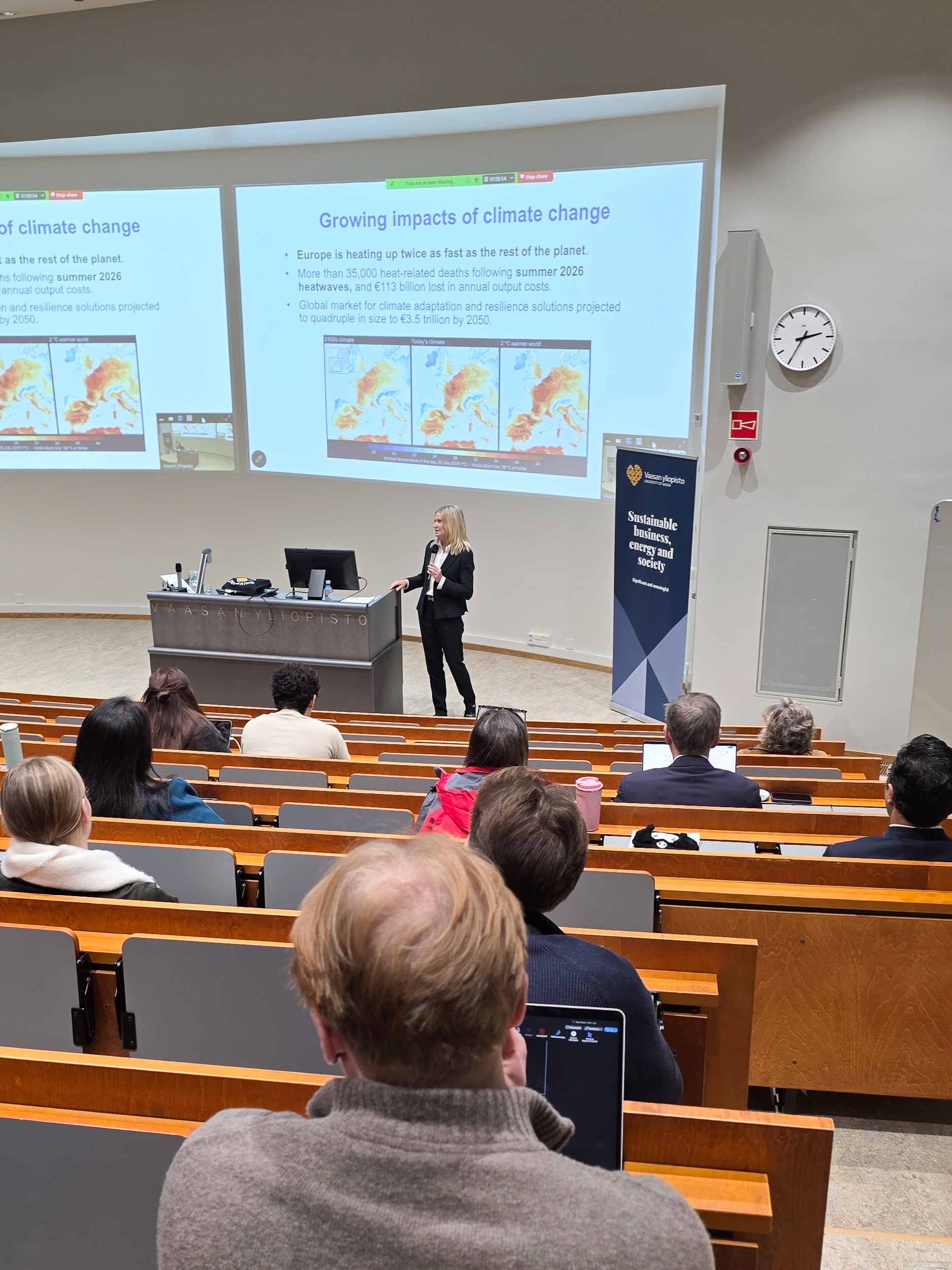
Climate resilience means the ability to prepare for and cope with the impacts of climate change. Its importance is growing as heatwaves, floods and droughts become more frequent. The damage extends beyond buildings and infrastructure to health, production and public finances.
According to Bardram, climate risks must be considered from the outset when planning investments and the systems on which society depends. Decisions concerning construction, transport networks and water services, for example, require information about the conditions in which they will need to operate decades from now.
– To me, climate resilience is first and foremost about solid macroeconomic management and preparedness, ensuring our prosperity, ensuring business continuity for the EU as a whole, Bardram said.
Preparedness requires cooperation across government departments. Climate risks affect agriculture, transport and healthcare, among other sectors, so responsibility for managing them extends across society.
Climate diplomacy continues in a challenging international environment
According to Bardram, multilateral cooperation and the Paris Agreement remain at the heart of the EU’s international climate action. Alongside these, the EU is building partnerships with individual countries and groups of countries.
She described cooperation with China on emissions trading, as well as technology cooperation with Japan, South Korea and India.
Responding to a question from the audience, Bardram described climate cooperation with the current US administration as extremely difficult.
– To be quite honest, it’s practically impossible to engage with the Trump administration at the moment on climate, Bardram said.
She nevertheless stressed that cooperation with US businesses, cities and states continues. Many remain committed to ambitious climate action.
Cooperation in Vaasa inspired optimism
Image
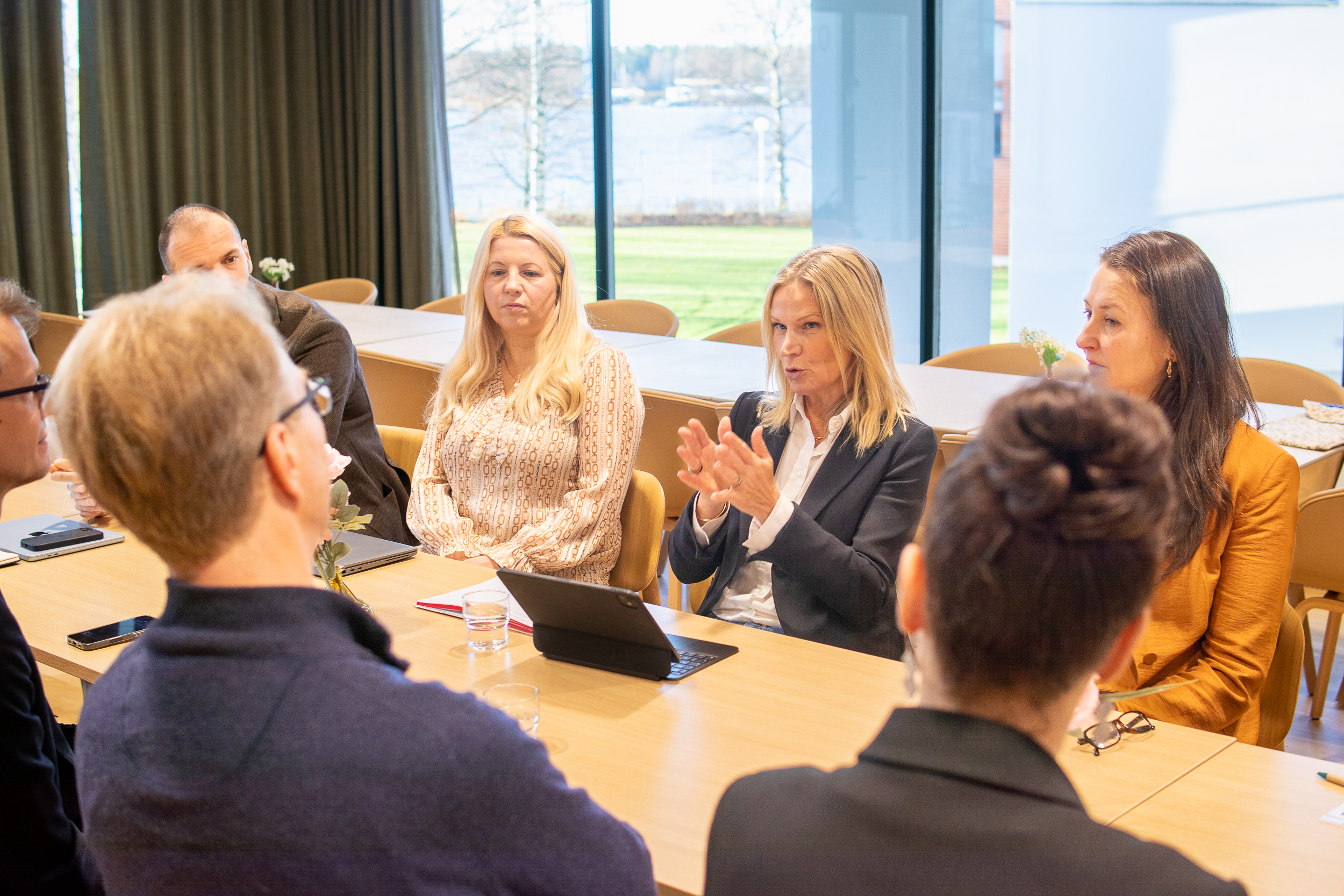
At the end of her lecture, Bardram emphasised the importance of cooperation and said that what she had seen in Vaasa had strengthened her confidence in the future.
– Everything that I’ve seen here in Vaasa gives me great confidence and optimism about how we can beat the defeatism and resignation that we often see in society. When all the different actors – the city, academia, industry, innovators and investors – pull together, the sum of these contributions is bigger and more impactful, Bardram said.
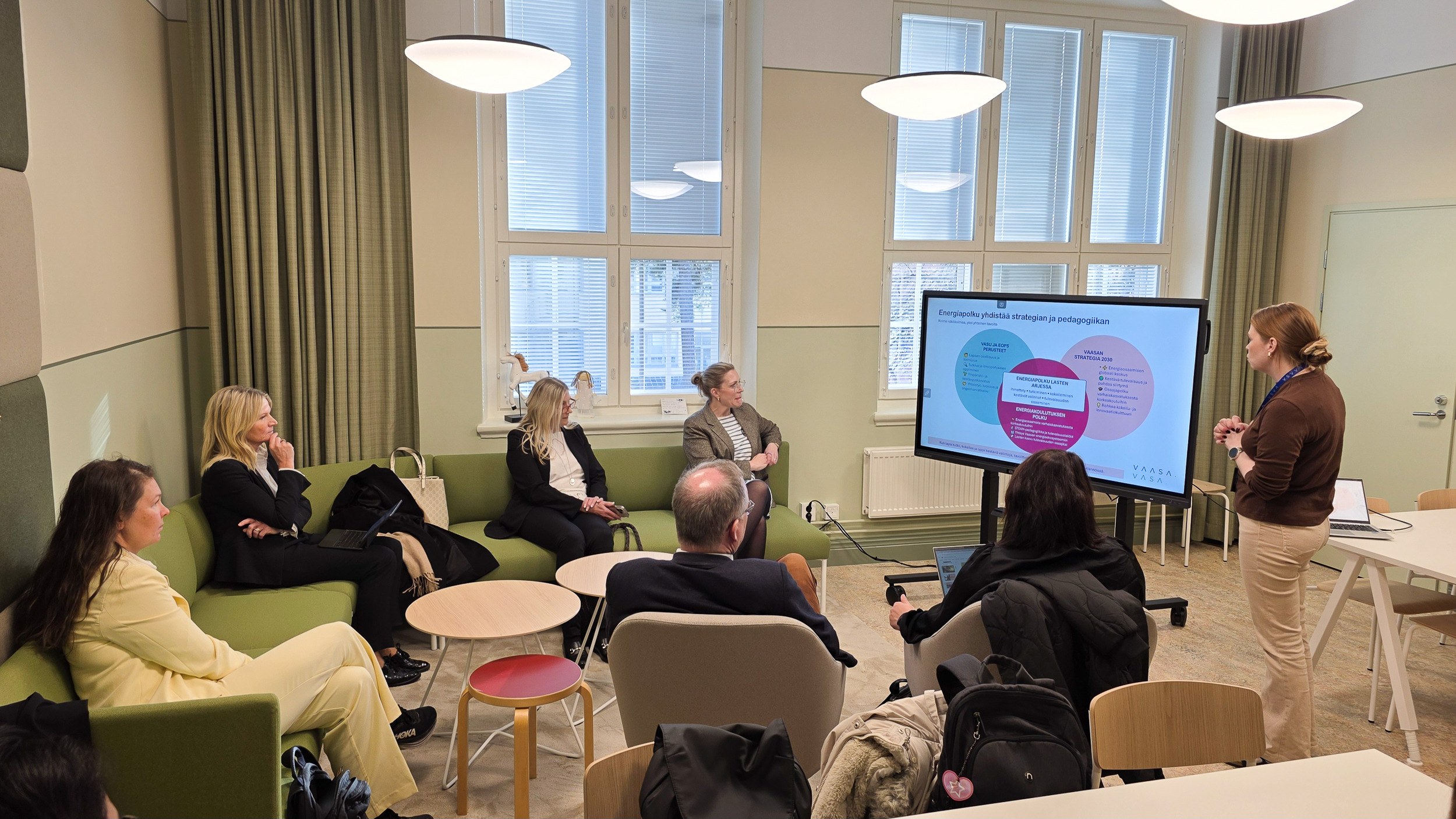
Bardram’s visit on 2–4 November included a speaking engagement at the ABB × University Collaboration Day, as well as meetings and visits with university leadership, regional businesses and other stakeholders. A meeting organised by the City of Vaasa covered topics including energy education, the energy cluster and the city’s climate solutions.
On Wednesday, Bardram joined a research roundtable chaired by Vice-Rector Mika Grundström. Researchers had the opportunity to present their work on topics including climate resilience, sustainable finance, the energy transition, climate attitudes and sustainable development. She also met European Climate Pact Ambassadors living in Ostrobothnia.
Students asked about nuclear power and the future of industry
Following the guest lecture, students and other audience members asked about topics including the role of nuclear power in reducing emissions and the effects of emissions trading on Europe’s energy-intensive industries.
Bardram was asked, for example, whether climate targets could renew interest in nuclear power in Europe. In her view, fossil fuels cannot be replaced by renewables alone within the required timeframe, so nuclear power also needs to be part of the energy mix. The choice of energy sources nevertheless remains a national competence.
An economics student from Italy asked about the future of emissions trading as industry struggles with competitiveness challenges. Bardram emphasised the importance of using emissions trading revenues to support low-carbon technology and industrial transformation.
An audience member also asked what advice she would give young people interested in careers in climate policy. Bardram encouraged them to consider which skills and technologies would be needed in the future.
– We all need to be clear in projecting ourselves into the future as it’s likely to be, not how we would like it to be, she said.
Image
Image
Image