
Exhausted supervisors pose a financial risk to companies – cynical leadership suppresses team work engagement
Image
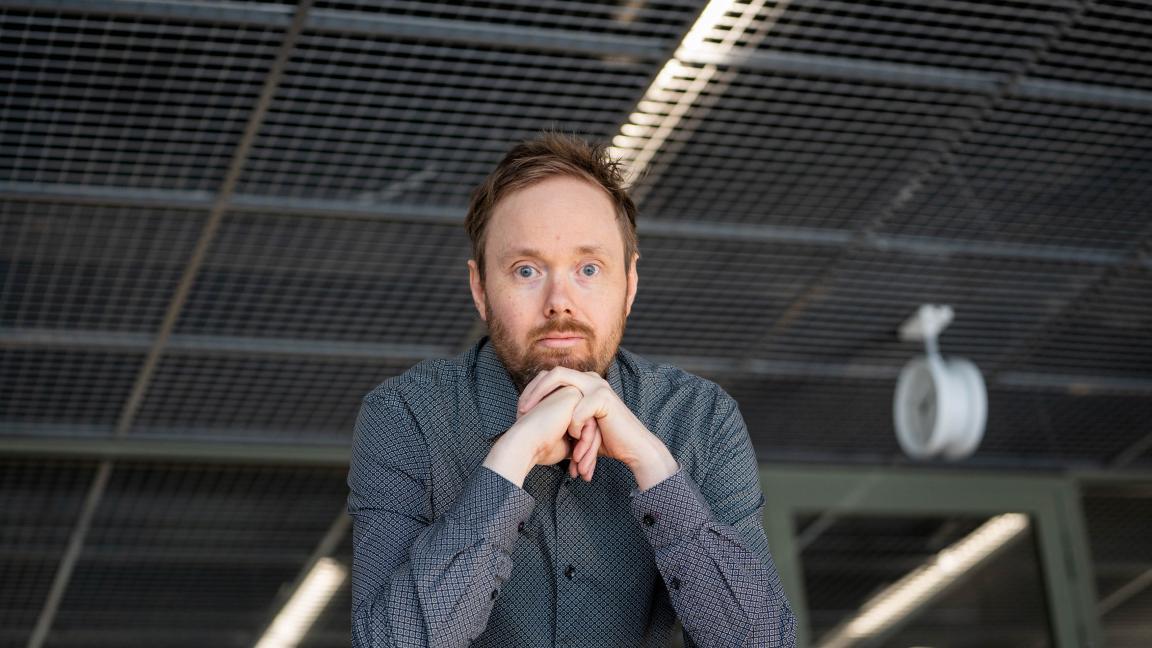

The well-being of a supervisor is reflected through supervisor-subordinate relationships in employee motivation and performance, and consequently, in the company’s competitiveness. In his doctoral research at the University of Vaasa, Project Researcher Jussi Tanskanen demonstrates that an exhausted leader lacks the resources to maintain high-quality relationships with subordinates, leading to a collapse in employee dedication. This phenomenon is particularly pronounced in today’s intensive work environment and remote work settings.
The continuous intensification and change in working life place heavy pressure on organisations. Jussi Tanskanen’s doctoral research in the field of management provides new insights into how investing in the quality of supervisor-subordinate relationships is an effective way for organisations to improve performance and employee well-being. This can be achieved, for example, by supporting the well-being of managers. High-quality relationships with subordinates create work engagement, which has far-reaching effects.
– At its best, work engagement is the feeling that it is a pleasure to tackle one's tasks and that the work provides energy. However, the study reveals a harsh chain reaction: a supervisor’s exhaustion and cynicism reflect directly onto their relationships with subordinates. When a supervisor lacks the resources for genuine interaction and compassion, work engagement fades throughout the entire team. This cycle of ill-being eventually weakens the performance of the entire organisation, Tanskanen describes.
High-quality relationships buffer against work intensity
The research shows that a high-quality bilateral relationship with a supervisor is a significant resource for an employee. Thanks to a good relationship, work efforts are perceived as lighter and rewards as greater. In a poor relationship, communication remains formal, which can lead to perceptions of unfairness and a divided team.
Tanskanen emphasises that organisations must support the well-being of supervisors and grant them sufficient decision-making power regarding rewards.
– Supervisors must have the resources to reward their subordinates with more than just money, such as through appreciation and autonomy. If a supervisor is merely a middle-management executor without room to maneuver, trust in the relationship suffers. Remote work further highlights this need; as peer relationships among colleagues become thinner, the supervisor becomes the employee's primary link to the entire organisation.
Dissertation
Tanskanen, Jussi (2026) High-quality leader-member exchange relationship as a key to employee work engagement. Acta Wasaensia 581. Doctoral dissertation. University of Vaasa.
Public defence
The public examination of M.Soc.Sc., MA Jussi Tanskanen’s doctoral dissertation ”High-quality leader-member exchange relationship as a key to employee work engagement” will be held on Friday 17 April 2026 at 12 at the University of Vaasa, auditorium Nissi.
It is possible to participate in the defence also online:
https://uwasa.zoom.us/j/67560122369?pwd=3c67PqTBmw5UwCAzva7stN6MeOmc86.1
Password: 211814
Professor Olli-Pekka Kauppila (Hanken School of Economics) will act as opponent and Professor Liisa Mäkelä as custos.
The defence will be held in Finnish.
Tietolaatikko
Additional information
Jussi Tanskanen, tel. +358 40 779 1842, jussi.tanskanen@uwasa.fi
Jussi Tanskanen graduated from the University of Jyväskylä with a Master of Social Sciences in 2010 and a Master of Arts in 2017. Tanskanen works as a Project Researcher at the University of Vaasa. His doctoral dissertation delves into the connection between the quality of bilateral leader-member exchange relationships and work engagement in today’s demanding working life.