
What to keep, what to change? The renewal of an industrial company requires both preserving the old and undergoing digital transformation
Image
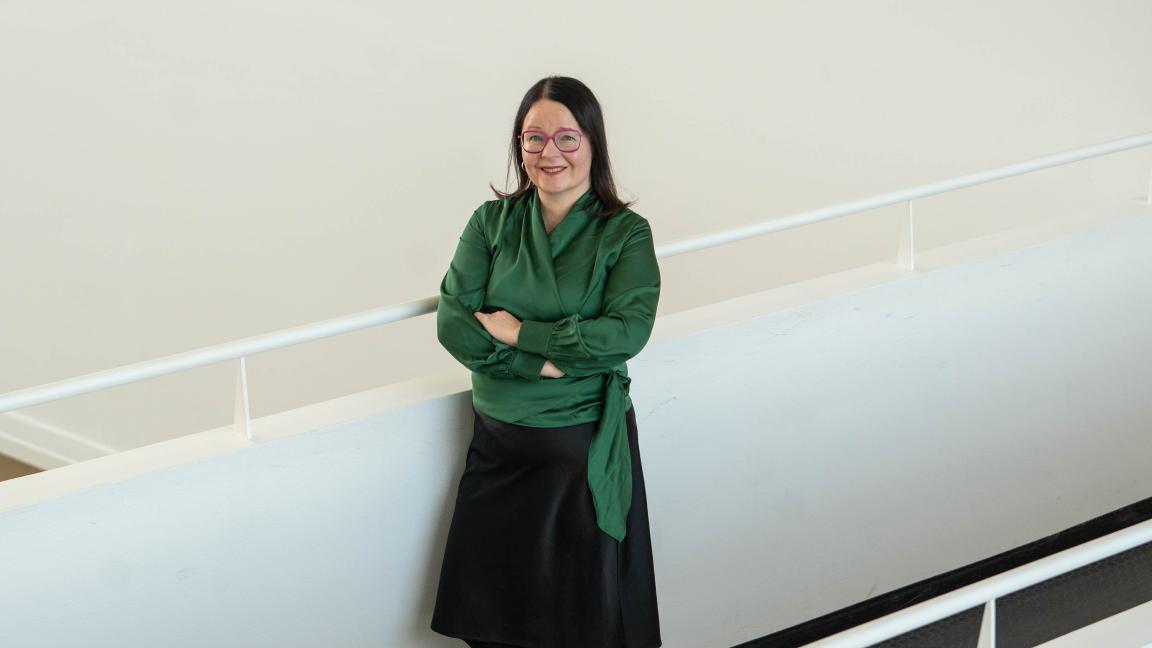


A doctoral dissertation to be examined at the University of Vaasa explores digital transformation in established industrial companies. Pirjo Yli-Viitala’s dissertation in industrial management demonstrates that a company’s existing practices can both support and constrain its renewal.
Technological and market shifts are challenging many established ways of working in long-standing industrial companies. Pirjo Yli-Viitala’s doctoral dissertation examines the relationship between path dependence and strategic renewal as a continuous organisational tension in established industrial companies during digital transformation.
– Companies must respond to technological and market changes and develop their operations, while simultaneously ensuring business continuity. I was particularly interested in how a company's past development affects its opportunities for renewal, says Yli-Viitala.
According to the doctoral research, a company's previous investments, technologies, and practices can reinforce established development paths and hinder change. On the other hand, existing practices can also support renewal.
– Companies have to balance between continuity and renewal. Long-established industrial companies cannot start their transformation from a clean slate, because their existing production machinery and IT systems are not necessarily compatible with new technology. If a manufacturing company wants to develop new services, it may require new expertise and the development of operational practices.
In path dependence, a company's past decisions can become self-reinforcing over time and narrow its subsequent options. When operations have been built around specific technologies, investments, and ways of working, changing direction can be difficult.
The findings help identify opportunities for and barriers to renewal
According to Yli-Viitala, the research reinforces the understanding of just how broad an undertaking digital transformation truly is. At the same time, it contributes to the current debate on the competitiveness of Finnish industry.
The manufacturing industry plays a major role in the Finnish economy, and digitalisation offers companies opportunities to develop their operations. However, not all companies are able to utilise it in the same way.
– When the impacts of a company's past development are recognised, it becomes easier to assess which current practices support renewal and what needs to be changed.
The findings of Yli-Viitala’s dissertation offer company management perspectives on how existing practices, expertise, and investments can be evaluated from the standpoint of renewal. A key conclusion is that the tension between continuity and renewal does not necessarily need to be resolved by choosing one over the other. Both can be important to a company simultaneously, and the tension between them can persist even as the company renews itself.
Doctoral dissertation
Yli-Viitala, Pirjo (2026) Managing the tension between path dependence and strategic renewal in established manufacturing firms within the context of digital transformation. Acta Wasaensia 602. Doctoral Dissertation. University of Vaasa.
Doctoral defence
The public examination of M.Sc.(tech.) Pirjo Yli-Viitala’s doctoral dissertation “Managing the tension between path dependence and strategic renewal in established manufacturing firms within the context of digital transformation” will be held on Friday 4 December 2026 at 12 in Seinäjoki (Kampustalo, auditorium C0062, Kalevankatu 35, Seinäjoki).
It is possible to participate in the defence also online:
https://uwasa.zoom.us/j/63099032733?pwd=bcWiPEJC4NtOkoR6DcQuS3DTbaQWan.1
Password: 597907
Docent, Principal Scientist Katri Valkokari (VTT) will act as opponent and Professor Petri Helo as custos. The defence will be held in Finnish.
Tietolaatikko
Further information
Pirjo Yli-Viitala holds a Master of Science (Technology) degree in process engineering. She works as a researcher in the School of Technology and Innovations at the University of Vaasa, where her research focuses on the digitalisation and renewal of SMEs in the manufacturing industry, among other topics.