
Urban innovation projects can deepen inequality – inclusive innovation policy as a solution
Image
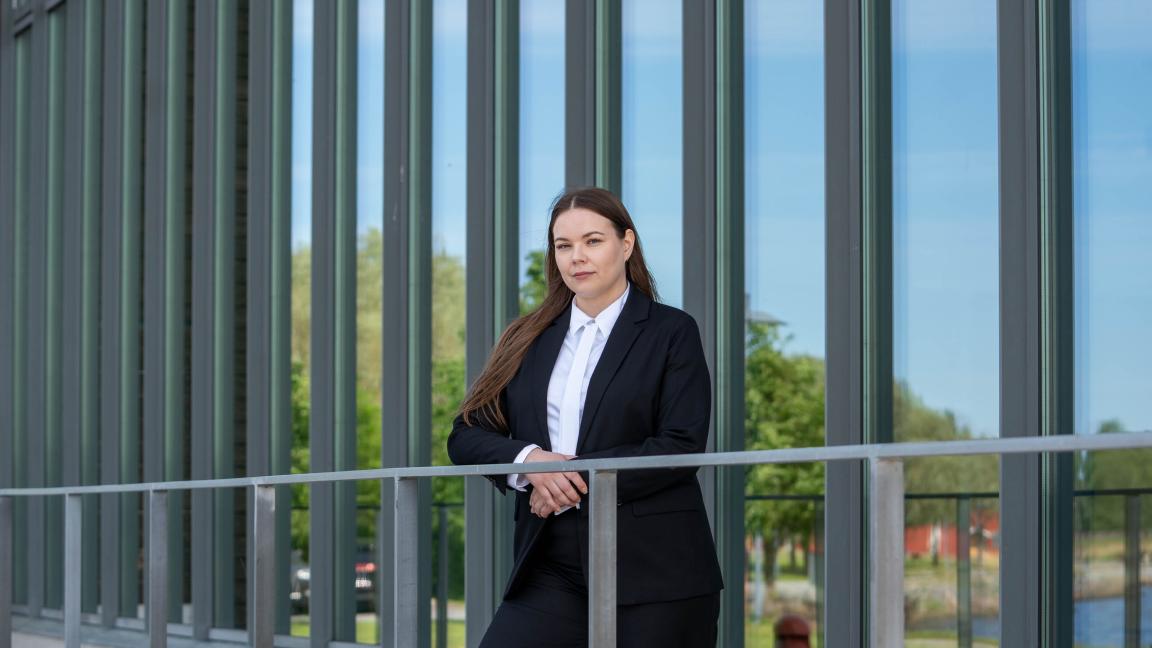


Promoting innovation through urban development has grown in popularity around the world. However, urban development centered on economy and technology can unintentionally increase social inequality and marginalise low-income residents. In her doctoral dissertation from the University of Vaasa, Johanna Kalliokoski presents inclusive innovation policy as a solution.
Urban development across the globe relies increasingly on innovation policies aimed at attracting companies and educated talent, as well as seeking solutions to the major challenges of our time. The doctoral research in regional studies by Johanna Kalliokoski (MSc), points out that technology- and business-driven development can lead to various unintended side effects.
– Innovation is important, but innovation-driven development may nevertheless lead to deepening social inequality. For instance, it can polarise the labour market, and increase housing costs in the area.
To prevent this trend, cities should pay closer attention to the social dimension in their innovation policies. This can be achieved, for example, through cross-sectoral actions and cooperation with civil society.
From Australian innovation districts to neighborhoods in Vaasa
The dissertation examines, among other cases, an innovation district located in Australia. Innovation districts are areas in city centres where companies, universities, and the public sector operate together, alongside residential housing and other functions.
– The basic idea of these urban innovation districts is to bring people and ideas together, but at the same time, they can exclude certain groups. Active measures of various kinds are needed to ensure that vulnerable residents can be part of the development. Innovation districts can improve social inclusion through measures such as science education, Kalliokoski says.
In addition, Kalliokoski’s research examines two residential areas in Vaasa, Ristinummi and Olympiakortteli, which are subject to negative stereotyping. This was done in the Suburban Innovation project as part of a programme coordinated by the Ministry of the Environment.
– The study revealed a clear discrepancy in how the areas are perceived: in the discourse of officials and administrative narratives, the areas are viewed as challenging, whereas the residents themselves report enjoying their neighbourhoods.
With the advent of battery factory projects, the development of Ristinummi has gained new momentum. Kalliokoski emphasises that the benefits brought by industrial projects should also work to the advantage of the area's current residents.
Dissertation
Kalliokoski, Johanna (2026) Inclusive Innovation Policy in Cities: A Relational Perspective. Acta Wasaensia 587. Doctoral dissertation. University of Vaasa.
Public defence
The public examination of M.Sc. (Admin.) Johanna Kalliokoski’s doctoral dissertation ”Inclusive Innovation Policy in Cities: A Relational Perspective” will be held on Thursday 18 June 2026 at 12 at the University of Vaasa, auditorium Nissi.
It is possible to participate in the defence also online:
https://uwasa.zoom.us/j/63587384574?pwd=dilVQRU1tzg2R4GuqjR9W43vxmxbuJ.1
Password: 243552
University Lecturer Markus Laine (Tampere University) will act as opponent and Professor Helka Kalliomäki as custos.
The defence will be held in Finnish.
Tietolaatikko
Further information
Johanna Kalliokoski, tel. +358 29 449 8462, johanna.kalliokoski@uwasa.fi
Johanna Kalliokoski, Master of Administrative Sciences, works as a project researcher at the University of Vaasa.