
Rebekah Rousi, the new professor at the University of Vaasa, studies the interaction between humans and technology: “Values guide decisions even in the age of AI”
Image
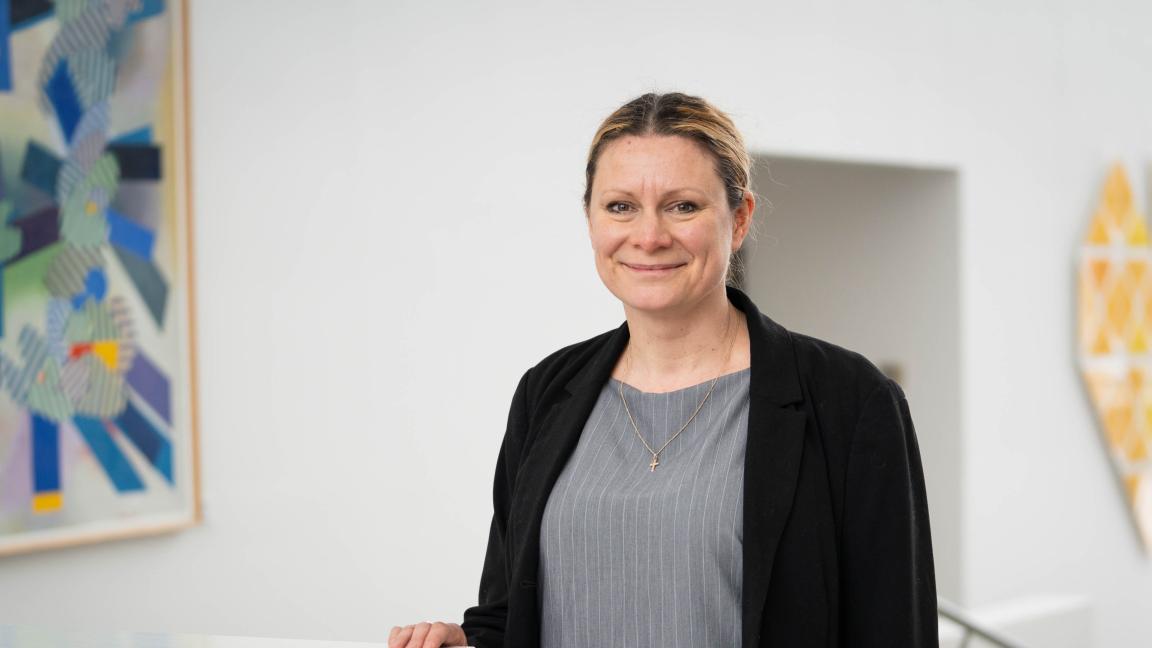

Doctor of Philosophy Rebekah Rousi has started as Professor of Communication and Digital Economy at the University of Vaasa in January. Originally from Australia, Rousi researches the interaction between humans and technology – including computers, robots, and artificial intelligence (AI).
– Human technology interaction is all about communication. We are still at the dawn of mainstream artificial intelligence use, and its main influence on society is still unraveling. For this reason, we need more research that focuses on what technology and its effects ‘communicate’ to humans and their established systems. In turn, we need to find more vocabularies to express these newly emerging modes of existence, Rousi states.
Rousi’s research takes a human-centred approach to AI and robotics and examines their impact on human life and society. She explores human experience and interaction with technology from a cognitive science perspective. Her work spans multiple areas, including how AI influences sustainable energy and its consumption, where humans should remain ‘in-the-loop’ to ensure oversight, accountability and responsibility, and how creativity and innovation may be re-imagined in human–AI collaboration.
– These are the technologies we are beginning to live with – and will continue to live with. It’s not enough to simply understand what’s happening or criticise it; we need to dissect their components, identify the challenges, and steer them toward the future we want. What fascinates me about AI and robotics is their role in mimicking human beings as information processors – the word is everything. Thus, the very nature of humanity and what it will be in the future is at stake if we fail to seize this unique moment.
According to Rousi, much more empirical investigation is needed, particularly in real-life situations where humans encounter AI and robots. This need will be addressed through the new HUMAIN infrastructure, which aims to increase responsibility and accountability among researchers, corporations and policymakers in how autonomous systems are developed and used – ensuring benefits for society as a whole.
– I’m passionate about the ethics of technology and how our notions of good and evil shape the way we experience and understand technology – from everyday life to corporate decision-making, because values drive decisions. What is particularly interesting is how ‘thinking machines’ might choose between good and evil. This is where we need the ‘human-in-the-loop’, and this is also an aspect that needs to be taken seriously from the perspective of resilience and preparedness, Rousi says.
Before her appointment, Rousi worked at the University of Vaasa as Associate Professor and advanced to Professor through the tenure track system. She has a diverse background, having worked as a visual and performance artist, teacher, lecturer, researcher, and arts coordinator.
Rousi first trained in visual arts before moving to Finland in 2005. She completed a Master’s degree in Nordic Arts and Cultural Studies, majoring in Digital Culture, at the University of Jyväskylä in 2007, and earned her PhD in Cognitive Science from the University of Jyväskylä in 2013. She also has a strong background in design, critical theory, and contemporary art, and has worked as a performance artist and printmaker since 2003.
– Art brings agility, imagination and the ability to make sense of fragmented information – something common in academic work. Technology is communication, and art communicates, Rousi emphasises.