
Professionals’ workload in the social and healthcare sector reflects on clients – supporting professionals increases retention and improves public trust in public services
Image
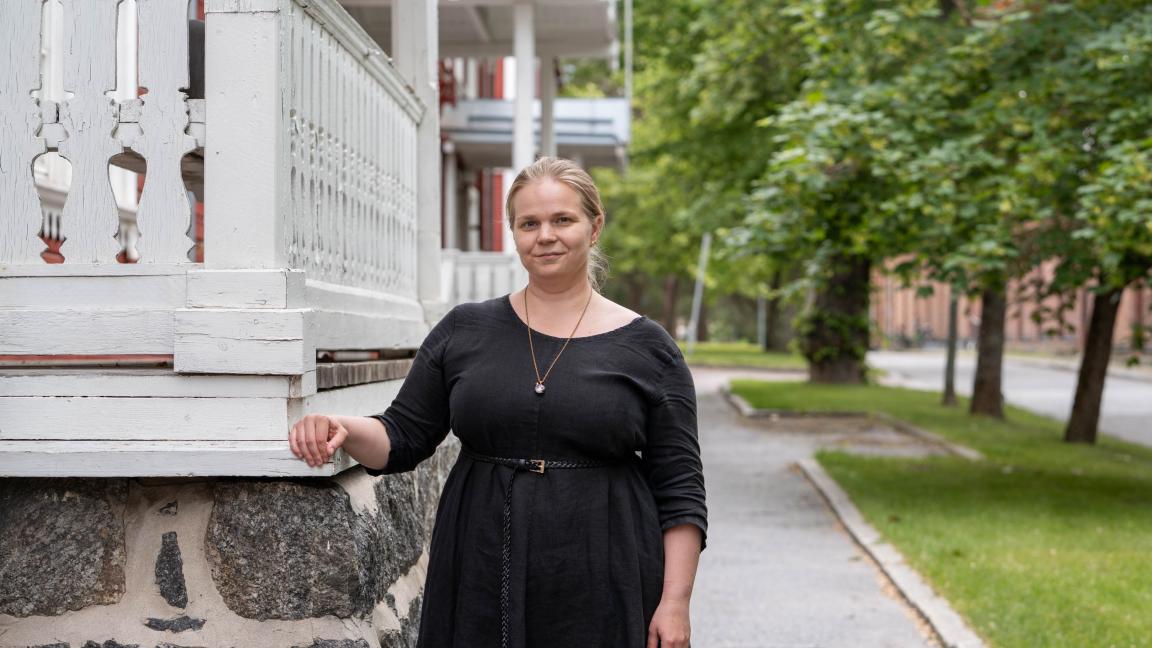


A doctoral dissertation defended at the University of Vaasa maps the stressors of public service professionals at a time when the transformation of the social and healthcare sector has made work more interactive and complex. Salla Maijala’s doctoral dissertation in social and health management provides research-based knowledge to develop management within the sector.
Salla Maijala’s doctoral research shows that the work stressors of social and healthcare professionals working in public services is not something that can be solved by the individual alone, nor should they be held solely responsible for securing sufficient support. Maijala’s doctoral research examines value co-creation in public services from the perspective of professional work.
– I am a registered nurse by training, and my doctoral research stemmed from my observation that the work of professionals seems to have become heavier. Digitalisation has accelerated and changed reporting methods, for example. At the same time, major structural reforms have been implemented, such as the wellbeing services county reform that entered into force in 2023, which transferred services from municipalities to the wellbeing services counties. Regarding the social and healthcare sector, there is a lot of talk about workforce attraction, but attention should also be paid to the retention in the sector. In my dissertation, I wanted to find out what makes the professionals’ work so burdensome and whether something can be done about it, Maijala says.
The doctoral dissertation examines value co-creation in public services from the perspective of relationality that affects professional work. In this context, value co-creation initiates in moments when the service user and the professional meet.
– In the case of public services, it is often thought that the primary goal is to create value for the service user, i.e. the client, but at the same time, successful encounters also create value for the professional providing the service. Furthermore, value is not confined to the encounter alone – it is transmitted to stakeholders and society.
One of the findings in Maijala’s dissertation is that the strain experienced by professionals does not arise from a single factor. Instead, it is a matter of multi-level pressure that makes the work of social and healthcare professionals demanding and ethically burdensome. The professionals face a variety of expectations: the client’s needs, the strategic and financial pressures of the organisation, as well as organisational values and their own professional ethics.
– One professional working with families with children, who was interviewed for the dissertation, spoke about an encounter where she saw that the family was truly overburdened. However, even though the professional is on the family’s side and wants to help, the process can consume more resources than the ultimate help it provides to the client – meaning value may end up being destroyed, even if the service itself is good. This frustrates professionals and challenges professional ethics.
Stressors of social and healthcare professionals can be addressed through management
The results of Maijala’s dissertation show that it is possible to do a great deal about the workload of social and healthcare professionals. Maijala hopes that the findings will be used to support management and leadership.
– The interviews revealed that coping and managing one’s work was particularly supported by access to peers easily and immediately, allowing a challenging situation to be defused straight away. Directing management actions so that the demanding nature of the professionals’ work is understood at that level, as well, was also highlighted.
Maijala says that the better the stressors of social and healthcare professionals’ work are understood and recognised, the higher the probability that special attention will be paid to occupational well-being. Balancing the workload, in turn, is linked to the retention of professionals in the sector.
– It is not just about the professionals feeling better. Public services also benefit when those working in the sector are copying well. It reflects on the work done, which benefits the service users. At the same time, it dispels people’s distrust towards public services.
Dissertation
Maijala, Salla (2026) Relational approach to public service professionals in value co-creation. Acta Wasaensia 589. Doctoral dissertation. University of Vaasa.
Tietolaatikko
Further information
Salla Maijala, tel. +358 29 449 8780, salla.maijala@uwasa.fi
Salla Maijala holds a Master of Healthcare Administration (MHA). In the healthcare field, she has specialised in gerontology as well as the development and management of the social and healthcare sector. Maijala works as a researcher at the University of Vaasa in the discipline of Social and Health Management.