
Patient safety emerges from interaction, not just operational rules
Image
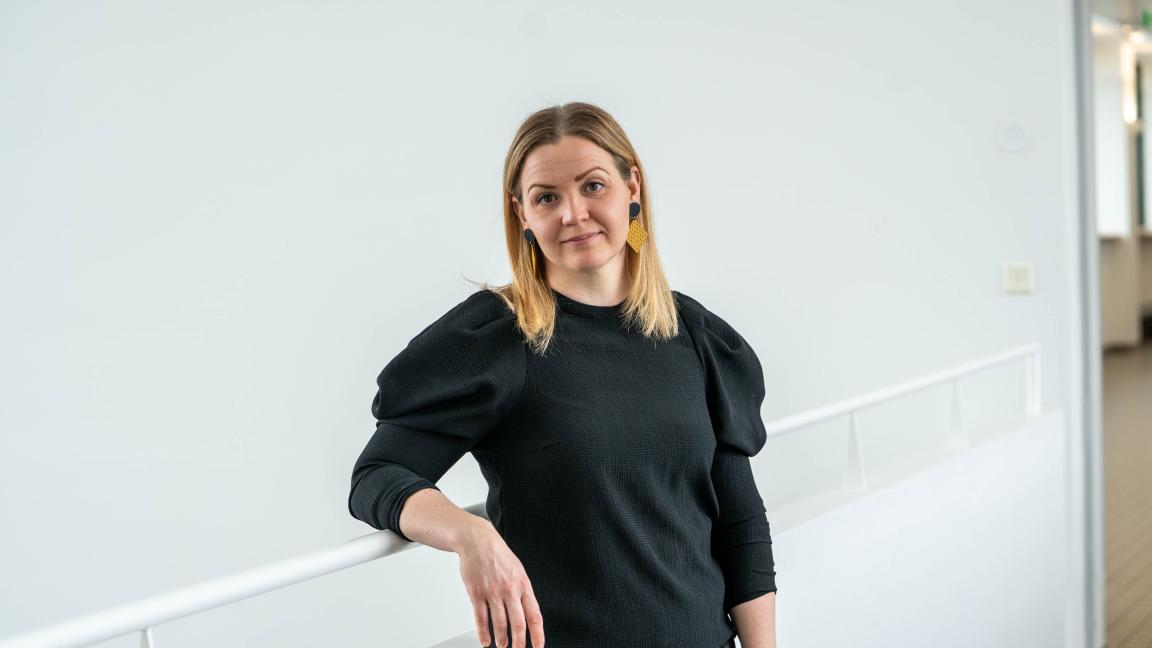
Rules and guidelines for healthcare professionals alone are not enough to ensure patient safety. In her doctoral dissertation for the University of Vaasa, Riikka Lehesvuo suggests that a healthcare professional’s ability to adapt to changing situations and communicate with the patient can be significant factors in providing safe services.
Patient safety has often been sought through structures such as rules, instructions, and supervision. However, Riikka Lehesvuo’s recent doctoral research in social and health administration presents that structures alone do not guarantee safety. Ultimately, safety is ensured during practical work through the encounter between the patient and the healthcare professional.
The study complements the traditional view, which often sees humans as a risk factor, by highlighting the human role as a producer and enabler of safety.
– Healthcare operations are often predictable and routine, yet they also involve surprising and unforeseen situations, particularly in critical areas such as emergency care and surgery. In these situations, a healthcare professional’s ability to adjust and make situational adaptations is emphasised, as no guideline can fully cover every practical scenario, Lehesvuo states.
Patients can contribute to ensuring safety
Refining rules is not enough for safety work. It is also vital to understand how safety is created in practice, as healthcare is a complex system where people, structures, and situations constantly interact. Both safety and its lapses emerge from this interaction. Consequently, the study challenges the idea that patient safety incidents can always be traced back to a single cause.
One of the study's most interesting findings is the patient's significance in ensuring patient safety.
– According to the study, fluent communication between the professional and the patient can act as a protective mechanism that can, at best, prevent harm to the patient. Patients are the best experts on their own condition, and their observations can be invaluable in identifying potential hazards, says Lehesvuo.
While operational structures provide a stable foundation for patient safety, they must be accompanied by the professionals' ability to act flexibly and remain sensitive to the situation. In unexpected circumstances, safety is often generated through human expertise and adaptation.
– Management’s task is to find a balance between rules and the needs of practical work. Frameworks must be established, but there must also be trust in the professionals' skill to act correctly in changing situations.
Dissertation
Lehesvuo, Riikka (2026) Systeeminen näkökulma terveydenhuollon potilasturvallisuuteen. Acta Wasaensia 583. Doctoral dissertation. University of Vaasa.
Public defense
The public examination of M.Sc. (Admin.) Riikka Lehesvuo’s doctoral dissertation ”Systeeminen näkökulma terveydenhuollon potilasturvallisuuteen” will be held on Friday 22 May 2026 at 12 at the University of Vaasa, auditorium Nissi.
It is possible to participate in the defence also online:
https://uwasa.zoom.us/j/65802661426?pwd=02x1MHwKPayM7UjU5we0nBoVkRdblC.1
Password: 772335
Professor of Practice, Docent Hanna Tiirinki (University of Turku) will act as opponent and Professor Harri Jalonen as custos.
The defence will be held in Finnish.
Tietolaatikko
Further information
Riikka Lehesvuo is a registered nurse and holds a Master of Administrative Sciences. She works as a Senior Lecturer in Nursing at Vaasa University of Applied Sciences.