
Ostrobothnia Chamber of Commerce Award presented to Seyedehsahar Seyedbarhagh – sector coupling enhances energy system flexibility
Image
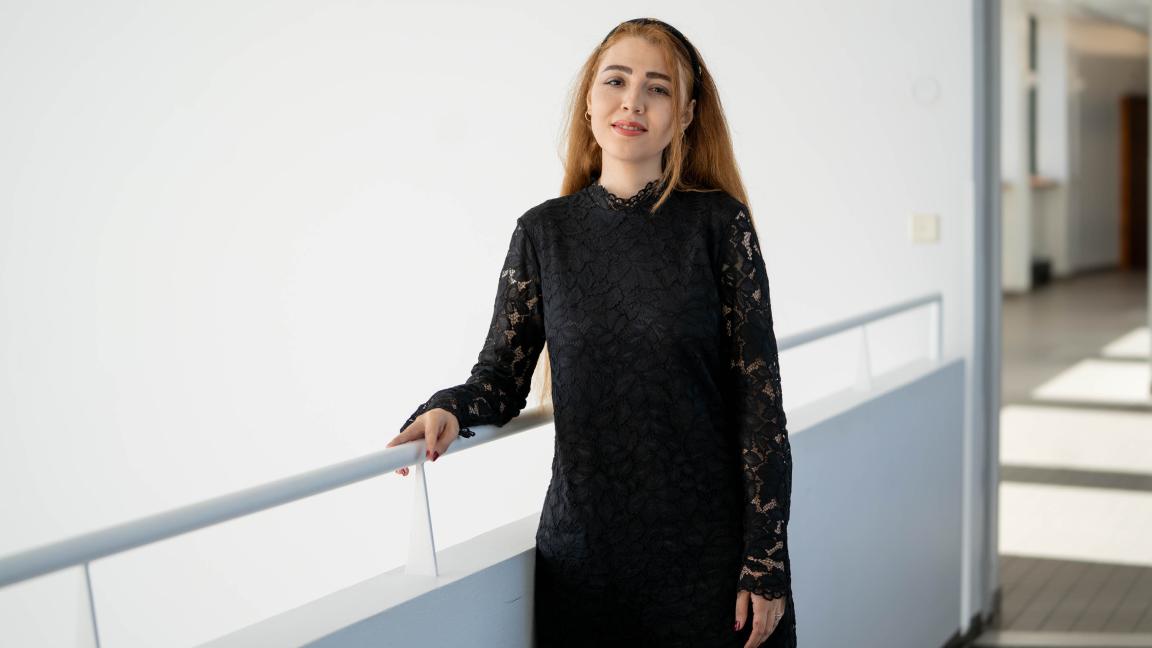
The Ostrobothnia Chamber of Commerce has awarded University of Vaasa Project Researcher Seyedehsahar Seyedbarhagh a prize of EUR 5,000 for energy-related research. The award was presented at the University of Vaasa’s opening ceremony for the academic year on Monday 7 September.
The award-winning review article examines sector coupling as a way to increase energy system flexibility. Sector coupling connects different systems such as electricity, heating, gas and transportation. This allows energy to be transferred between sectors, stored and used more flexibly as wind and solar power generation fluctuates.
– The energy transition cannot be achieved efficiently by considering the electricity sector alone. We need to look at the energy system as an integrated whole, where electricity, heating, transport, hydrogen, gas and energy storage can interact and support each other, says Seyedehsahar Seyedbarhagh.
The article brings together existing research on sector coupling and presents a range of technological solutions. It also examines the changes needed in markets, regulation and finance.
Finland can make use of its existing district heating infrastructure
Finland is well positioned to benefit from sector coupling. As renewable electricity production grows, surplus electricity can be converted into heat or hydrogen instead of being curtailed.
Seyedbarhagh is particularly interested in linking electricity and thermal energy systems through heat pumps, district heating and thermal energy storage.
– Thermal systems can provide significant flexibility by storing energy for later use and shifting electricity consumption away from critical periods. In Finland, where district heating systems are already well developed, there is considerable potential to use this existing infrastructure as part of a more flexible and integrated energy system, says Seyedbarhagh.
The Vaasa region also offers opportunities to develop and demonstrate sector-coupling solutions.
– I believe the Vaasa region is particularly well positioned to demonstrate these solutions because of its strong energy technology ecosystem and close collaboration between industry, academia and other stakeholders, says Seyedbarhagh.
According to Seyedbarhagh, the greatest barriers to sector coupling are no longer purely technological. Energy sectors are still largely regulated and operated separately, while current market structures do not always reward the flexibility created across different sectors.
The award-winning article, A Comprehensive Review of Sector Coupling as a Strategy for Power System Flexibility, was published in the international journal Renewable and Sustainable Energy Reviews. In addition to Seyedbarhagh, the authors are Hosna Khajeh, Hannu Laaksonen, Behnam Mohammadi-Ivatloo and Nikos Hatziargyriou.
– As a doctoral researcher, it is very encouraging to see that our research is recognised not only academically but also for its relevance to the energy sector and the region. The award also gives me even more motivation to continue working on power system flexibility, sector coupling, thermal energy storage and integrated energy systems, says Seyedbarhagh.
Supporting energy-related research
The Ostrobothnia Chamber of Commerce Award is presented annually for energy-related research, a publication or a doctoral dissertation completed at the University of Vaasa during the previous academic year. Established to mark the centenary of the Ostrobothnia Chamber of Commerce, the award was presented for the first time in 2017.
According to the Ostrobothnia Chamber of Commerce, the publication is an excellent example of high-quality research and may inspire future researchers. It also promotes diversity and high standards in engineering and energy research.
– The publication addresses a critical challenge in the global energy transition and offers a structured framework and research agenda that are highly relevant to Finland’s future sustainable energy system. Its high visibility strengthens the international reputation of the University of Vaasa and reinforces the position of the energy ecosystem as a leading energy innovation hub, supporting the strategic Energy Transition Valley initiative and creating global impact, says Director Mikael Hallbäck.
Award-winning publication
Seyedbarhagh, S., Khajeh, H., Laaksonen, H., Mohammadi-Ivatloo, B. & Hatziargyriou, N. (2026). A comprehensive review of sector coupling as a strategy for power system flexibility. Renewable and Sustainable Energy Reviews, 239, 117102. https://doi.org/10.1016/j.rser.2026.117102