
New model supports AI adoption in small and medium-sized enterprises
Image
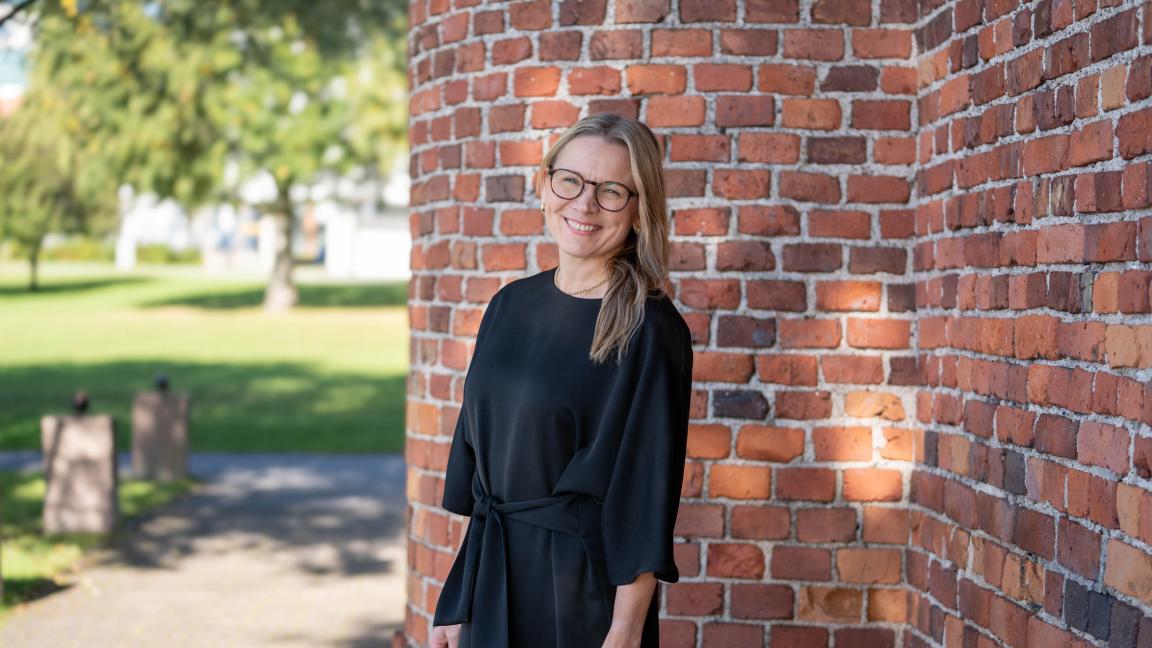

Some small and medium-sized accountancy firms have lagged behind larger firms in adopting artificial intelligence. Both a lack of expertise and investment costs can act as barriers, and now a new maturity model is helping to plan new development initiatives.
Some small and medium-sized accountancy firms have fallen behind the major players in terms of digitalisation. Heli Kortesalmi’s doctoral thesis in accounting, currently under review at the University of Vaasa, shows that a lack of expertise is the main reason why new solutions are not being utilised in nearly all Finnish accountancy firms.
According to Kortesalmi, there are more than 6,000 accountancy firms operating in Finland.
The Intelligent Accounting Digital Maturity Model (IADMM), created by Kortesalmi, offers accountancy firms the opportunity to assess their current situation and identify and select future steps for development.
– The model is practical in nature and supports the adoption of artificial intelligence even in small organisations, whilst enhancing the competitiveness and efficiency of these firms.
– At present, many firms are concerned about the potential compatibility of new technologies with the tools they already use. Concerns about the erosion of one’s own skills and issues relating to time management also act as barriers.
Most firms in the sector are small.
– There is a desire for new technologies to be easy and quick to adopt. It is thought that there may not necessarily be time to adopt and learn them. One of my key findings, however, is that accounting software utilising artificial intelligence and robotics is the most sensible solution for small accountancy firms, and that this automation is being introduced, Kortesalmi says.
Financial management services can be an export product
There are a few really large firms operating in the Finnish accountancy sector.
– Larger accountancy firms, in particular, operate so efficiently that it may take an accountant no more than a few minutes to review a particular company’s monthly accounts.
Although the sector is changing and the use of new technologies is constantly increasing, some clients still prefer to handle their accountancy matters manually. The ability to speak on the phone to their own accountant – as if they were a sparring partner – is also considered important.
According to the maturity model in the doctoral thesis, the role of accountants will not disappear; rather, in the future, accountants will shift increasingly from routine data entry towards providing expert advice.
Kortesalmi explains that, according to previous studies, small companies quite often overestimate their own level of digitalisation.
– Many people’s first thought is how much investing in something new will cost. However, it’s also worth considering the value of one’s own working time.
Discussions are already underway as to whether the maturity model developed by Kortesalmi could also be tested abroad.
– Financial management services have export potential for Finland, Kortesalmi believes.
Doctoral dissertation
KTM, MBA, Heli Kortesalmi (2026) Developing the Intelligent Accounting Digital Maturity Model for SME Accounting Firms. Acta Wasaensia 593. Doctoral dissertation. University of Vaasa.
Doctoral defence
The public examination of M.Sc. Heli Kortesalmi’s doctoral dissertation “Developing the Intelligent Accounting Digital Maturity Model for SME Accounting Firms”will be held on Friday 2 October 2026 at 12at the University of Vaasa, auditorium Nissi.
It is possible to participate in the defence also online:
https://uwasa.zoom.us/j/64289449042?pwd=S3kY8UJbvKo8yWdcDFrwJ5dpaYt0r8.1
Password: 841721
Professor Iris Stuart (University of Adger and University of Padua) will act as opponent and Professor Teija Laitinen as custos.
Tietolaatikko
Further information
Heli Kortesalmi, tel. +358 50 382 7628, heli.kortesalmi@gmail.com
Heli Kortesalmi holds a Master of Science in Accounting and Tax from the University of Vaasa in 2001 and Master of Business Administration, Degree in Business Technologies, from Haaga-Helia University of Applied Sciences in 2024. She is currently working as a Senior Lecturer in Accounting at Haaga-Helia University of Applied Sciences.