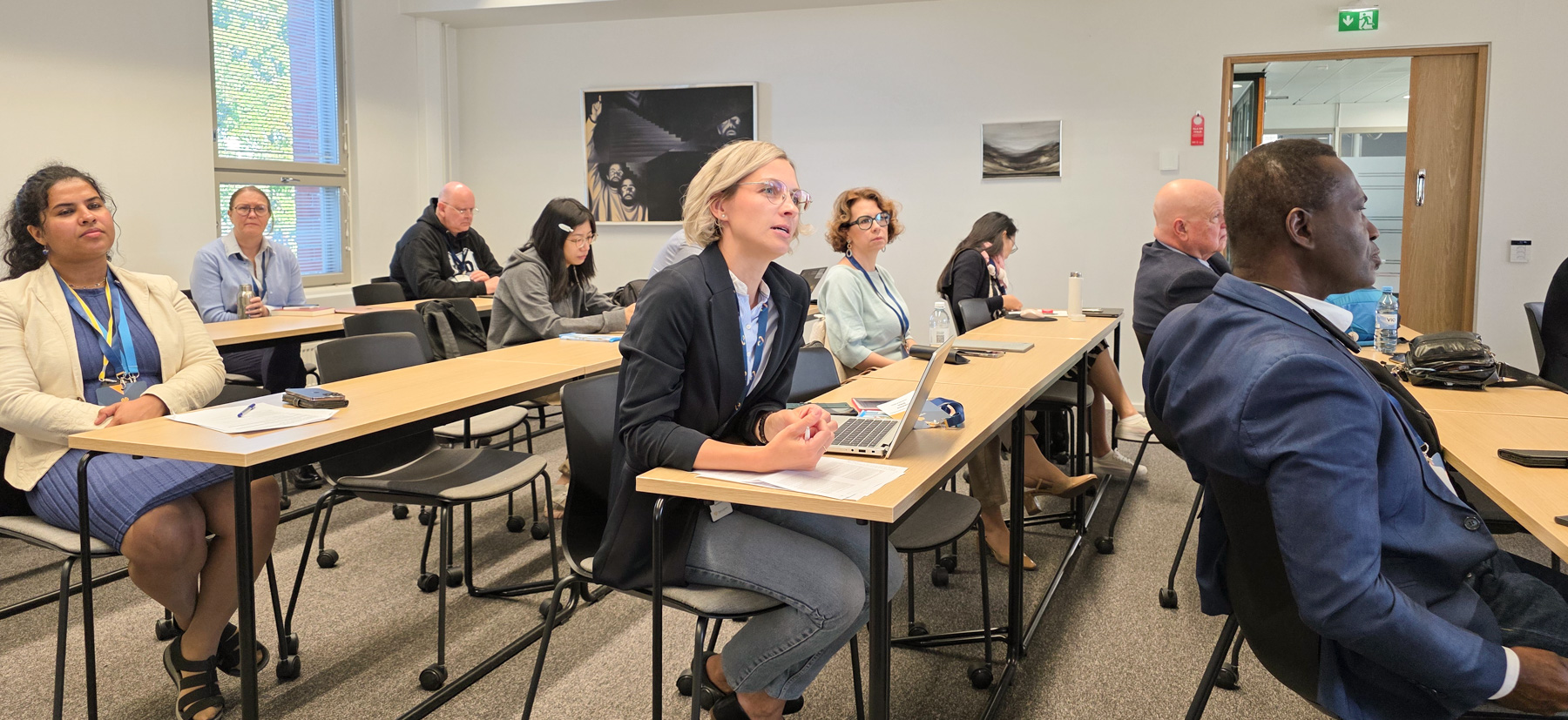
International business researchers gather in Vaasa – populism and geopolitical upheaval pose challenges for companies
Image
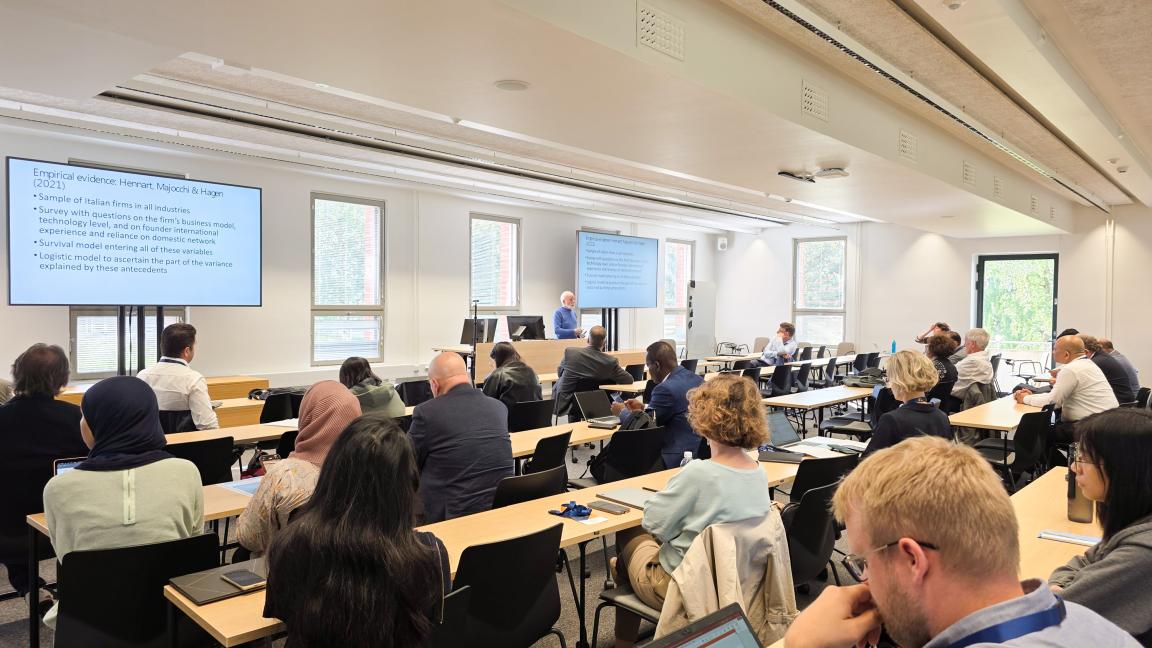
The rise of populism is undermining the predictability of the business environment and may reduce investment. At the same time, geopolitical tensions, artificial intelligence and growing sustainability requirements are forcing companies to reassess how they pursue international growth.
The changing international business environment is a key focus of the Vaasa International Business Conference, currently taking place at the University of Vaasa. The largest conference in the field in the Nordic countries is being held for the 18th time.
Populism increases uncertainty and may reduce investment
Image
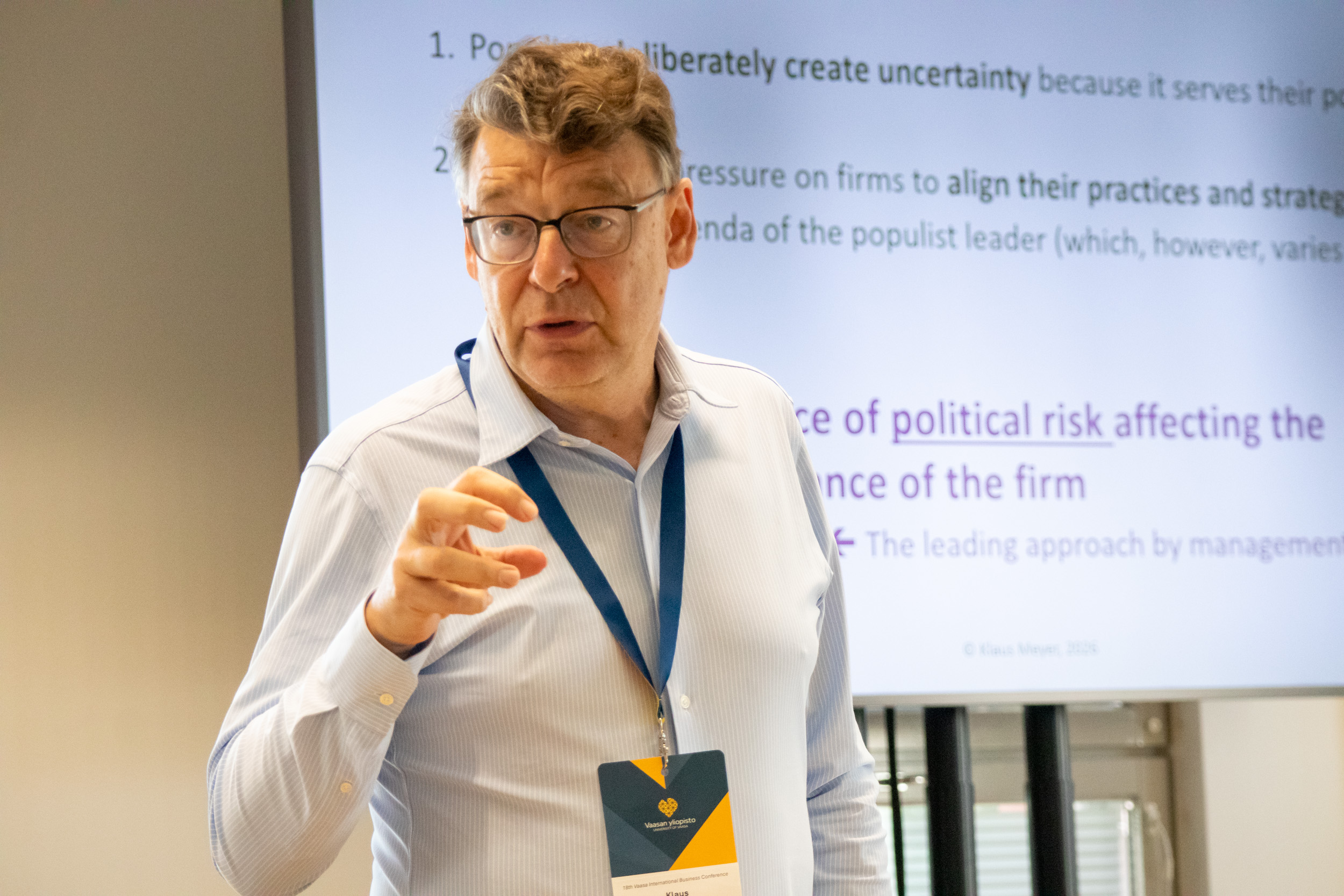
At the conference’s opening session, Professor Klaus Meyer of Ivey Business School in Canada examined the rise of populism and its effects on international business. Drawing parallels with Germany in the 1920s and 1930s, he also considered the role that companies themselves may play in the rise of populism.
According to Meyer, populist politics undermine institutions and increase uncertainty in the business environment. Research suggests that populism is associated with reductions in exports and corporate investment, while its long-term economic effects are negative.
– In terms of location choices, companies that have choices where they want to invest, they invest in environments that have a stable institutional environment. Populism is not associated with a stable political environment.
Image
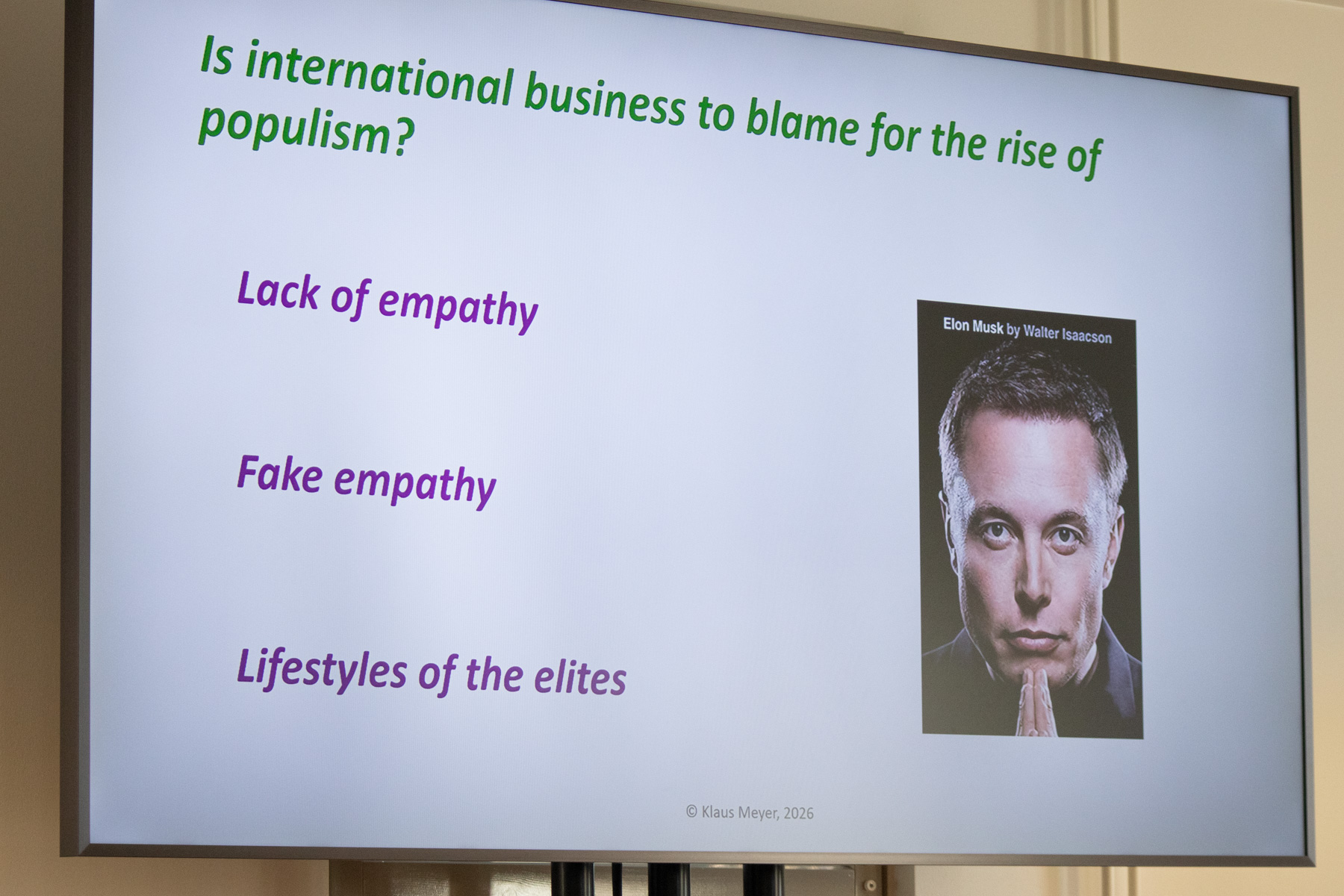
Meyer also challenged companies to examine their own responsibilities. He argued that growing inequality, the uneven distribution of the benefits of globalisation and a lack of empathy among some influential business leaders may contribute to dissatisfaction with the economic system and its elites.
– There are some arguments to say business actually contributes to the rise of extremist politics, both left and right wing.
Companies face difficult choices when operating under populist governments. They may cultivate relationships with those in power, adapt to the political situation, keep out of the public eye, push back against the government or, ultimately, withdraw from the country. Each option carries risks.
SMEs and multinational enterprises have complementary strengths
Image
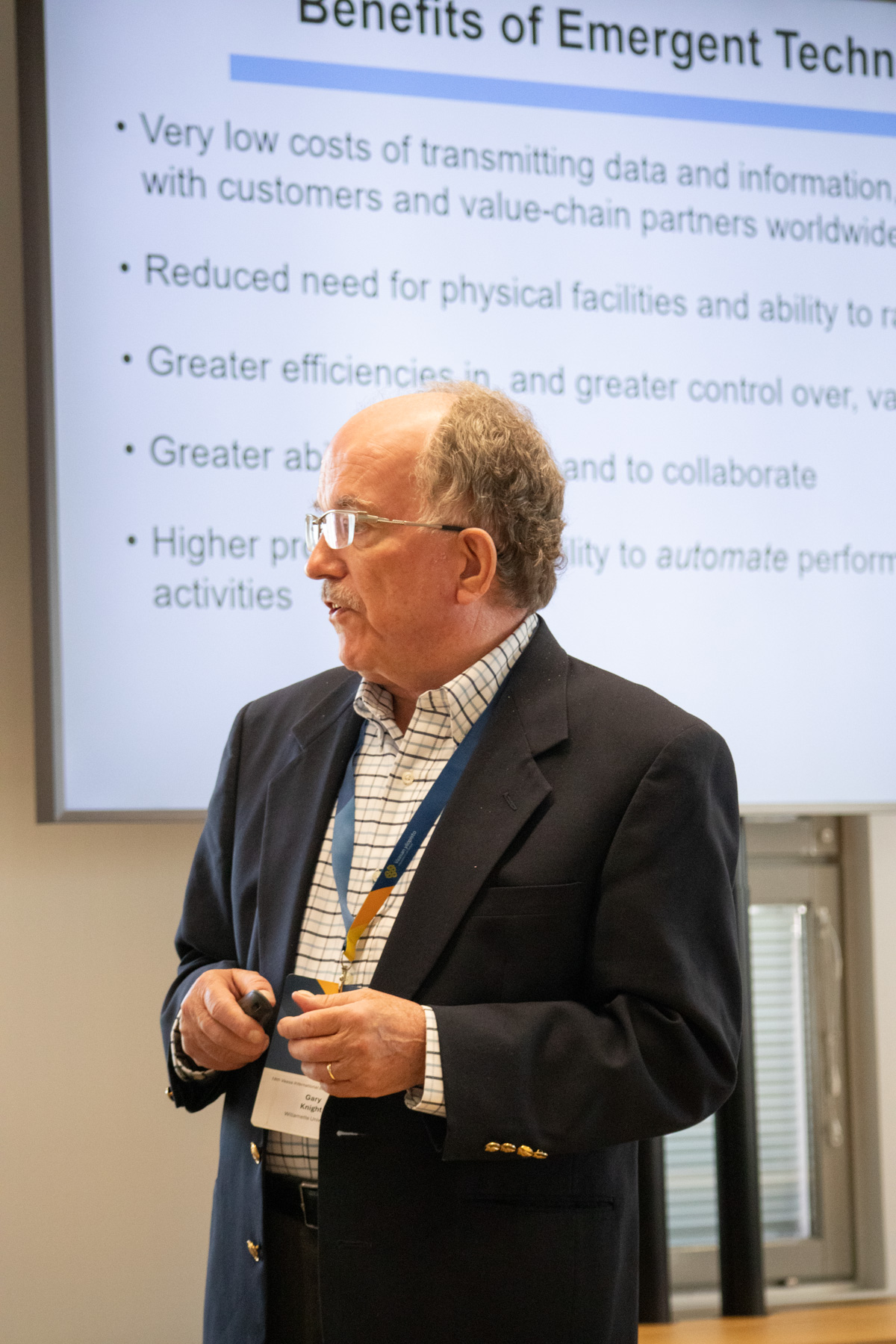
Professor Gary Knight of Willamette University in the United States examined how geopolitical uncertainty affects internationally active small and medium-sized enterprises. Trade barriers, changing regulation and the reorganisation of supply chains are particularly challenging for smaller companies because their resources are limited.
Being small can also bring advantages. SMEs are often able to operate more agilely, innovatively and entrepreneurially than larger companies. Knight emphasised the importance of international expertise, networks, innovation capabilities and new technologies.
– Research suggests that SMEs tend to be better at exploration activities – the search for international opportunities. MNEs, meanwhile, tend to have more resources, experience and capabilities and are consequently more skilled at the exploitation of opportunities. There is therefore great value in SMEs partnering with MNEs.
Following Knight’s presentation, Meyer noted that the growing regulation and bureaucracy associated with international trade could deal a serious setback to SME internationalisation. Smaller companies do not have the same resources as large companies to navigate regulation or engage in lobbying.
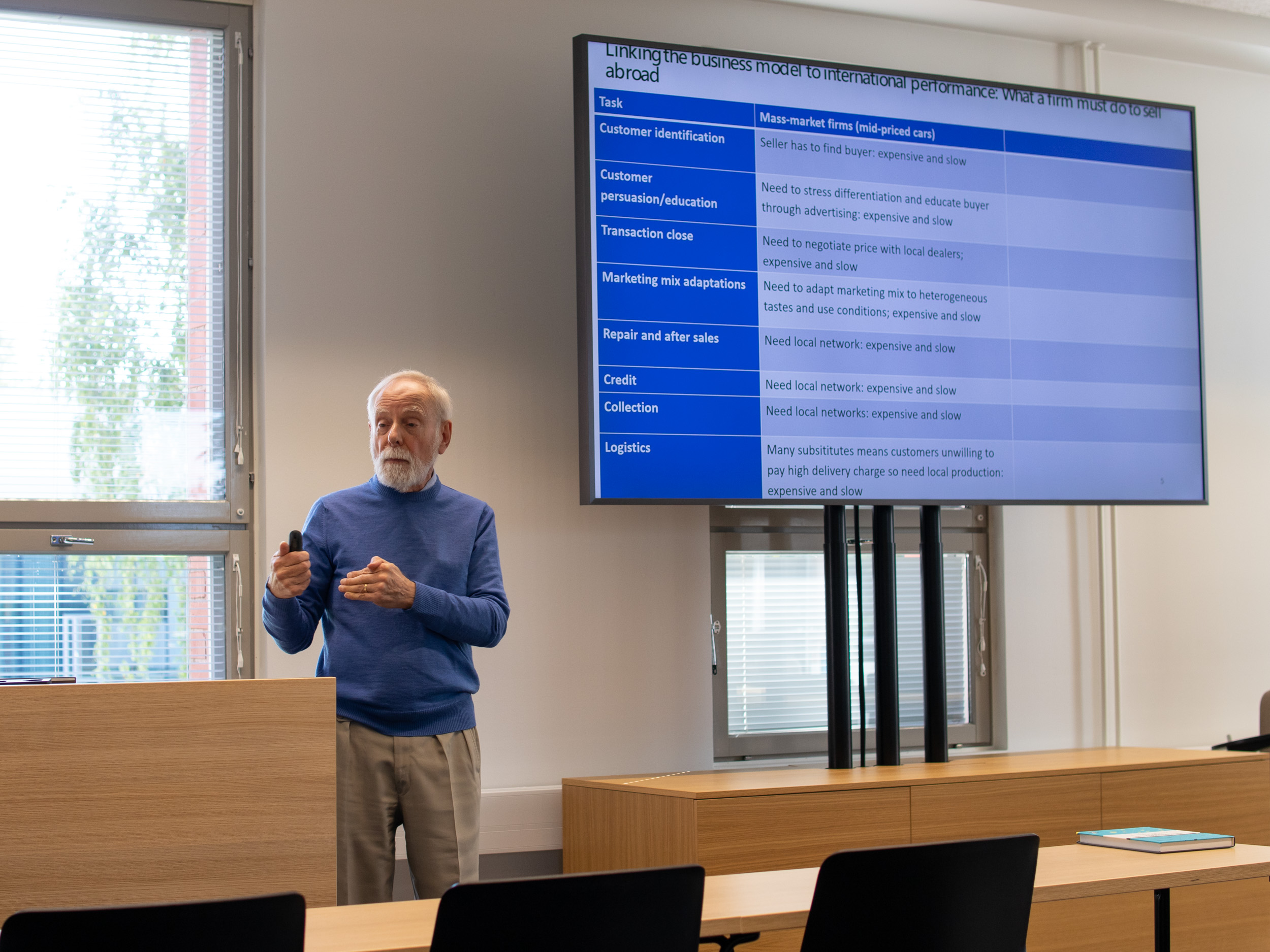
Professor Jean-François Hennart of Tilburg University in the Netherlands used practical examples to demonstrate how a company’s business model affects the speed of its internationalisation. What matters is not only what the company sells, but also to whom and how it sells, and whether its operations require local sales, distribution or production.
Image
The opening session also included an address by Professor Ismail Gölgeci of the University of Auckland and the University of Vaasa. Vice-Rector for Research Mika Grundström delivered the University of Vaasa’s welcome address.
Companies must pursue sustainable growth amid uncertainty
This year’s conference theme is ‘Scaling Sustainable International Business in a New Digital-Geopolitical Landscape’. According to Peter Gabrielsson, Professor of International Business at the University of Vaasa, the theme is particularly timely because technological transformation and geopolitical change are affecting companies simultaneously.
– The theme is extremely timely because the international business environment is undergoing rapid technological transformation while also being more geopolitically uncertain than it has been for a long time.
– Digitalisation, artificial intelligence and the data economy are fundamentally changing companies’ business models. At the same time, geopolitical tensions, changes in trade policy and the reorganisation of supply chains are challenging traditional models of internationalisation.
Image
Sustainability requirements are also becoming more stringent. Companies must be able to combine international growth with economic, environmental and social sustainability. This is particularly challenging for Finnish SMEs, whose resources are often limited and which need to enter international markets quickly.
According to Gabrielsson, this year’s research presentations highlight business models related to digitalisation, artificial intelligence and sustainable development, as well as supply chain resilience in a changing geopolitical environment. Other prominent subjects include corporate responsibility, the green transition, the energy transition and international entrepreneurship.
– A common aim across many of the presentations is to understand how international companies can combine growth, sustainability and competitiveness in the new operating environment.
Companies must also recognise that international growth no longer follows such a predictable or straightforward path.
– Perhaps the single most important point is that the international business environment is no longer as predictable and linear as it was in the past.
According to Gabrielsson, companies’ success increasingly depends on their ability to adapt to sudden changes, improvise and build flexible networks.
The two-day conference has around 100 participants. It was preceded on 18 August by a one-day doctoral tutorial, during which doctoral students presented their research and received feedback from experienced researchers.
The conference chairs are Professor Peter Gabrielsson and Associate Professors Anisur Faroque and Emilene Leite of the University of Vaasa. Gabrielsson says that bringing together researchers at different stages of their careers is one of the conference’s strengths.
– The Vaasa International Business Conference is attractive to researchers because it brings together a genuinely international research community and strong multidisciplinary discussion.
Image