
Call for Abstracts
The conference participants are invited to submit abstracts aligned with the conference tracks and special sessions. The deadline for abstract submission is 4 December 2026.
Tracks & Special Sessions
Tracks
- AI – Artificial Intelligence and Transformative Innovation in Times of Tensions
- POLITICS – The politics of transformative innovation in times of (geo)political tensions
- ANTICIPATION – Anticipating Transformation: Rethinking Institutional Capacities for STI Policy in Times of Tensions
- SPATIAL – Spatial dimensions of industrial policy in times of geopolitical tensions
- PARTICIPATION – Governing engagement, participation and knowledge co-production for transformative innovation
- FUTURES & GEOPOLITICS – Futures in polycrises: Foresight for navigating geopolitical turns and strategic autonomy in the innovation–sustainability–security nexus
- HISTORY – Innovation policy and defence; Historical origins, contemporary transformations and new theoretical frontiers
- SECURITY & RESILIENCE – Innovation for Security, Defence and Societal Resilience
- ENERGY TRANSITIONS – Governing Urban Energy Transitions in Times of Tension: Resilience, Digital Infrastructure and Participation
- CONTROL POINTS – Control Points and Strategic Interdependence: Implications for securing transformative innovation
- RESEARCH SECURITY – Research security, innovation security and the future of international collaboration
- Open track – If you can't find a suitable track or special session but would like to submit an abstract that fits the conference theme, you can select this open track
You can find the track descriptions below on this same page.
Special sessions
A) Space, security and Transformative innovation: Governing strategic tech in times of geopolitical tensions
B) The future of brokering: Knowledge brokers in times of tension
C) Standardization in times of tensions
You can find special session descriptions below on this same page.
All submissions must be sent through the online submission system, please see the guidelines below.
Presenting authors must register and pay the registration fee to attend the conference. Only one oral presentation per corresponding author is allowed. One additional poster presentation is allowed.
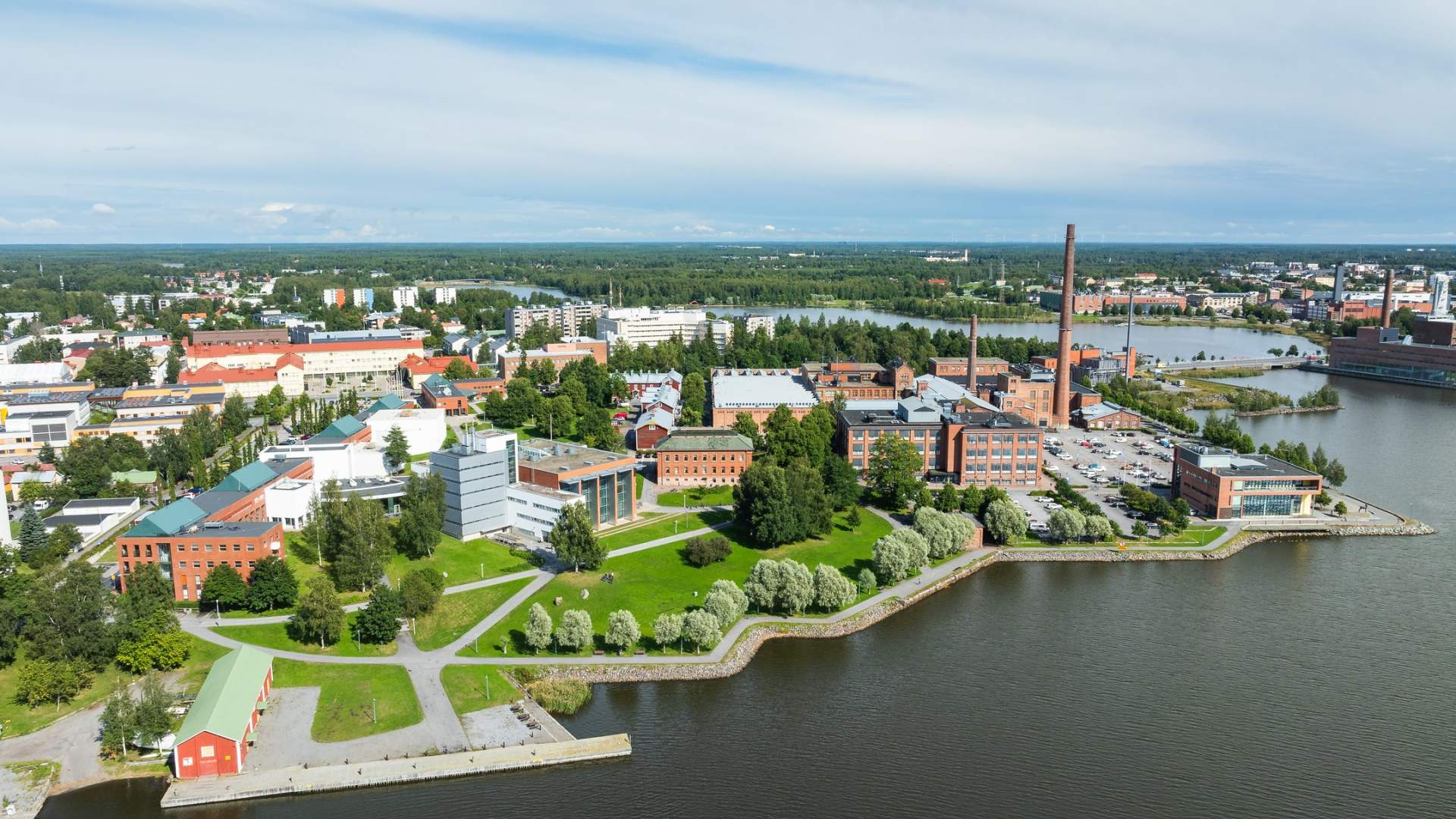
All presentations will be held onsite in Vaasa.
Abstract submission guidelines
All submissions must be made via the Oxford Abstracts online submission system. Please register to Oxford Abstracts via the submission link to submit your abstract.
Abstracts must be written in English. Please proofread your submission carefully.
Submissions should include the following:
- Title (max. 15 words) should be written in capital letters.
- Abstract (max. 400 words), do not include tables or images. References are not required. If included, they must be included in the word limit. The abstracts should include: (1) the research problem and objectives, (2) theoretical or conceptual framing, (3) methods and data, (4) key findings or expected results, and (5) the paper's contribution to the conference theme and the broader literature.
- Authors and presenters: list all authors’ names and provide affiliations including institution, city, and country. Indicate the presenting author(s) using the tick box. Email is requested for the presenter on the submission form.
- Tracks/session – choose one of the Eu-SPRI conference tracks/sessons most relevant to you. Please also select a secondary option.
- Presentation method – indicate the preferred means of presentation (oral / poster).
- Complete all required fields in the submission form and click “Submit” to finalize your submission. By submitting your abstract to Eu-SPRI conference, you confirm that the submission has been approved by all authors.
- After submitting, you may log in again to edit your submission until the final submission deadline.
- Please note that incomplete abstracts will not be reviewed.
- Accepted abstracts will be published in the online programme on the conference website.
Review and notification of acceptance
All submissions will undergo a peer review by the scientific committee and/or the track/session conveners. The scientific committee will determine to which track a submission is assigned, considering the submitters’ preference.
Notification of acceptance will be sent to the abstract submitter only (and to the email used to sign into the Oxford Abstract system) by 15 January 2027. Possible later correspondence may be sent to the presenting author as well (if different from the submitter). If you need to change the presenting author, please notify events@certia.fi.
Note that the abstract presenter, if the abstract is accepted for presentation, must register as an Eu-SPRI conference participant and pay the registration fee by 21 March 2027.
The deadline for extended abstracts or full papers is 21 March 2027.
Dates and deadlines
- Abstract submission opens: 15 October 2026
- Abstract submission ends: 4 December 2026
- Announcement of abstract acceptance: 15 January 2027
- Deadline for extended abstracts or full papers: 21 March 2027
- Final deadline for abstract presenters to register: 15 February 2027
Questions
If you have scientific programme related questions, please contact the organising committee: eusprivaasa2027@uwasa.fi
If you have questions regarding the abstract submission process, please contact events@certia.fi
Track Descriptions
1. Artificial Intelligence and Transformative Innovation in Times of Tensions
Track convenors
Jasper van Kempen, TNO, Arash Hajikhani, VTT, Daniela Valenzuela, OECD, David Howoldt, OECD, Janpieter van der Pol, Utrecht University
Track description
Artificial intelligence is rapidly becoming both an object of science, technology and innovation (STI) policy and an infrastructure through which science, innovation and industrial transformation take place. At the same time, industrial policy increasingly shapes how AI develops and, with it, the context in which STI policy operates. This makes AI a particularly revealing lens on transformative innovation in times of geopolitical tension, systemic uncertainty and sustainability challenges.
Advances in generative, agentic and embodied AI promise accelerated scientific discovery, new forms of innovation, productivity gains and novel industrial capabilities. Yet amid growing geopolitical and geo-economic competition, AI also gives rise to tensions around security, technological sovereignty, access to compute and data, research openness, environmental costs and sustainability. As a general-purpose technology, AI can deliver benefits through widespread adoption and diffusion. However, because critical AI capabilities are concentrated among a few firms and countries, adoption also deepens dependencies.
This track invites research examining how AI is reshaping innovation systems and the policy frameworks governing them under conditions of geopolitical uncertainty, strategic competition and sustainability. We are particularly interested in work that moves beyond AI as a standalone digital technology and studies it as a general-purpose capability embedded in science, firms, public organisations, infrastructures and physical systems. The track asks how established assumptions in innovation policy are being renegotiated as governments simultaneously pursue AI-enabled transformation, strategic autonomy, resilience, security, sustainability and public value. This concerns openness, international collaboration and diffusion, but also competition and market formation, which are increasingly shaped by trade and economic security measures, further intertwining innovation and industrial policy.
A central focus is the interaction between transformation and tension. How do growing concerns about strategic autonomy, technological sovereignty and economic security alter AI-related research and innovation policy? How can AI-enabled methods help make these shifts visible and measurable? What new dependencies emerge around foundation models, semiconductors, cloud infrastructure, data and talent, and how do these dependencies reshape innovation ecosystems and international knowledge flows? How does the diffusion of AI change the organisation and geography of scientific and industrial innovation? When do security-oriented interventions strengthen transformative capacity, and when might they constrain openness, experimentation and international knowledge flows and collaboration? How do trade and economic security measures interact with innovation and industrial policy? How should policy balance rapid AI adoption with legitimacy, accountability, sustainability and (open) strategic autonomy? What costs are countries willing to bear for strategic autonomy, and how can these be assessed?
We welcome conceptual, empirical and methodological contributions from innovation studies, science policy, economics, management, security studies, sustainability transitions, public policy and related fields. We particularly encourage interdisciplinary perspectives that connect currently fragmented debates on AI, transformative innovation, geopolitical tensions and sustainability. The ambition is to understand how innovation systems, policy frameworks and governance arrangements evolve when openness, security, resilience and sustainability become simultaneously important, thus charting implications for the next generation of STI policy, governance and measurement.
Indicative topics and research questions
- AI in science, technology and innovation: changes in research practices, discovery, scientific productivity, evaluation and the organisation of R&D.
- Technological sovereignty and strategic autonomy: impact on AI, foundation models, compute, semiconductors, cloud, data, digital infrastructure and talent dependencies.
- Research security, openness and international collaboration in AI-intensive science and innovation.
- Dual-use, defence and security applications of AI and their spillovers into civilian innovation systems.
- AI, sustainability and energy/resource demands, including tensions between rapid scaling and environmental objectives.
- Public-sector AI, regulation and governance: balancing experimentation, accountability, resilience, sovereignty and public value.
- Multi-use AI within the emerging innovation–security–sustainability nexus.
- Measuring strategic autonomy and geopolitical tensions: AI-enabled methods, indicators and data sources for identifying critical dependencies and assessing their implications for STI policy.
- The costs of strategic autonomy: economic, technological and societal trade-offs of reducing dependencies, including forgone benefits of AI and slower transitions.
- Interplay between industrial and innovation policy in AI: how increasingly strategically motivated industrial policy shapes the goals, instruments and outcomes of innovation policy, and vice versa.
Intended format
We propose a conventional paper track organised into thematically coherent sessions, complemented by a concluding synthesis discussion. Abstracts would be reviewed by the convenors and grouped into 3–4 paper sessions depending on submissions. Each session would combine research presentations with substantial discussion rather than maximising the number of papers. We would aim to mix disciplinary and institutional perspectives and, where possible, include both conceptual and empirical contributions. A final roundtable or synthesis session would bring together recurring insights across the papers around the question: what does the rise of AI change in how we understand and govern transformative innovation in times of tensions? The convenors would summarise the main insights and open research questions for the conference organisers after the event
2. The politics of transformative innovation in times of (geo)political tensions
Convenors
Martin Fougère, Hanken School of Economics, Helsinki, Finland
Helmi Hämäläinen, VTT and University of Vaasa, Finland
Eija Meriläinen, University of Vaasa, Finland
Ville Takala, University College London, UK
Track description
For transformative innovation policy (TIP) to work, conditions for longer term directionality need to be established. Even in a society assumed to be stable, securing longer term directionality requires political work, as the framed problems and prioritized challenges or ‘missions’ are never politically neutral (e.g., Fougère and Meriläinen, 2021; Mazzucato, 2018; Takala and Papaioannou, 2026; Uyarra et al., 2025). In recent years, a number of studies have explicitly engaged with the politics of TIP and directionality (e.g., de Graaff et al., 2025; Molica, 2025). This emphasis on politics beyond policy, which some would say was long overdue, is particularly understandable in the current contexts, ripe with tensions, in relation to both domestic politics (in most Global North countries) and transnational geopolitics.
On the one hand, in most contemporary Global North societies, alternative political movements have been on the rise, gaining traction notably by harnessing divisive political topics such as climate change (see Vihma et al., 2021), thereby contributing to political polarization. When involved in governmental roles, populist parties have rejected some central TIP premises, for example by framing green directionality as an elite-driven topdown project that harms the common people by raising energy costs (Institut Montaigne, 2026). These disruptions can be seen to directly challenge TIP objectives, making it difficult to legitimize long-term missions and to secure the power base to implement directionality (see Molica, 2025).
On the other hand, geopolitical tensions have contributed to reshuffle the priorities of innovation policy, placing questions of national and global security higher on the agenda (see e.g., Kivimaa, 2022) and often reframing sustainability questions as security questions, as in the EU’s strategic reflection on the “Climate and Security Nexus” (European Commission, 2023). As a result, those sustainability questions traditionally understood, in International Relations terminology, as belonging to ‘low politics’ necessitating globally aligned action, now become reframed as a matter of ‘high politics’ entailing to some degree a return to sovereign national politics. These significant political shifts are bound to affect TIP as we know it today.
Relevant questions for this track include:
- How do politicians, Members of Parliament and/or governments relate to and shape TIP?
- How (non-)neutral are concepts such as TIP and ‘missions’ perceived to be by different political parties?
- How are mission-oriented and transformative innovation policies being reshaped by concerns of ‘high politics’?
- To what degree action on sustainability-related grand challenges exacerbates political division and/or polarization?
- How does geopolitical uncertainty affect the politics of sustainable innovation?
- How can security, sustainability, and competitiveness be reconciled in legitimate and democratically accountable ways?
- What role does anticipatory governance of emerging technologies(/innovations) play in times of (geo)political disruption?
- What are the (geo)political implications of prioritizing questions such as critical minerals, strategic dependencies, supply chains, and resilience?
- To what degree are sustainability questions bound to be subjugated to security questions in the emergent paradigm focusing on the sustainability-security nexus?
- To what degree the prioritization of national security can be an opportunity for meaningful sustainability policy on the national scale?
- What types of political activities are deployed to secure TIP as a resilient policy paradigm?
References
de Graaff, S., Wanzenböck, I., Frenken, K., 2025. The politics of directionality in innovation policy through the lens of policy process frameworks. Science and Public Policy 52(3), 418-432.
European Commission, 2023. A new outlook on the climate and security nexus: Addressing the impact of climate change and environmental degradation on peace, security and defence. Joint communication to the european parliament and the council, 28.6.2023.
Fougère, M., & Meriläinen, E., 2021. Exposing three dark sides of social innovation through critical perspectives on resilience. Industry and Innovation 28(1), 1-18.
Institut Montaigne, 2026. Hungary, Poland, Italy: How National Populists Govern. Available at: https://www.institutmontaigne.org/en/publications/hungary-poland-italyhow-national-populists-govern
Kivimaa, P., 2022. Transforming innovation policy in the context of global security. Environmental Innovation and Societal Transitions 43, 55–61.
Mazzucato, M., 2018. Mission-oriented innovation policies: challenges and opportunities. Industrial and Corporate Change 27, 803–815.
Molica, F., 2025. The politics of missions: a gloomy perspective. Science and Public Policy 52, 159–163.
Takala, V., & Papaioannou, T. (2026). Towards an entrepreneurial welfare state? A conceptual perspective. Review of Evolutionary Political Economy, 7(1), 8.
Uyarra, E., Bugge, M.M., Coenen, L., Flanagan, K., Wanzenböck, I., 2025. Geographies of mission-oriented innovation policy. Environmental Innovation and Societal Transitions 56, 100970.
Vihma, A., Reischl, G., Nonbo Andersen, A., 2021. A Climate Backlash: Comparing Populist Parties’ Climate Policies in Denmark, Finland, and Sweden. The Journal of Environment & Development 30, 219–239.
Intended format
Conference presentations, 30 minute slots for each presentation
(presentation+feedback+Q&A)
3. Anticipating Transformation: Rethinking Institutional Capacities for STI Policy in Times of Tensions
Organisers
Susanne Giesecke, Austrian Institute of Technology (AIT), Austria
Kerstin Cuhls and Philine Warnke, Fraunhofer Institute for Systems and Innovation Research ISI, Germany
Theme and contribution
Over the past decade, debates on transformative innovation policy have fundamentally broadened the ambitions of science, technology and innovation (STI) policy. Rather than primarily correcting market and system failures, STI policy is increasingly expected to contribute to the transformation of socio-technical systems and to address complex societal challenges. Concepts such as directionality, missions, experimentation, transformative outcomes and system change have become central to this debate.
Yet one important dimension of transformative capacity has received comparatively little attention: the capacity of institutions to anticipate transformation while it is unfolding.
Transformation is inherently future-oriented but also deeply uncertain. Transformative processes do not follow predetermined pathways towards agreed endpoints. They involve emerging technologies and practices, changing actor constellations, contested visions of desirable futures, institutional path dependencies and unexpected interactions between systems. Moreover, public institutions pursuing transformative ambitions face tensions between established organisational routines and emerging policy demands, between short-term pressures and long-term transformation objectives and between competing expectations of different actors.
These challenges raise a critical question that has not yet been sufficiently integrated into the transformative innovation policy debate:
What institutional and organisational capacities enable STI-policy actors to anticipate, navigate and shape transformations under conditions of deep uncertainty and competing demands?
This session proposes anticipatory capacity as a missing link between transformative ambition and institutional capability. Existing work on strategic Foresight, technology assessment and anticipatory governance provides important foundations. However, Foresight often remains organised as a discrete activity that produces knowledge about possible futures. Transformative STI policy requires something more: the institutional capacity to continuously sense emerging change, question established assumptions, recognise alternative and contested transformation pathways and translate anticipatory insights into experimentation, policy choices and adaptive action.
The session therefore seeks to connect two bodies of scholarship that have developed partly in parallel: research on transformative innovation policy and system transformation, on the one hand, and research on anticipation, institutional capacities and anticipatory governance, on the other.
Rather than focusing on Foresight as an instrument for exploring specific future challenges, the session examines the institutional conditions under which anticipation becomes an integral and sustained capability of transformative STI governance.
This perspective shifts attention towards the organisational structures, competencies, routines, institutional arrangements and governance practices through which anticipatory capacities are developed, mobilised and maintained. It also raises questions about how institutions can remain responsive to emerging developments while sustaining long-term transformative orientations, and how anticipatory capacities interact with existing institutional mandates, policy logics and power relations.
By bringing these perspectives together, the session aims to address a blind spot in current debates: while transformative innovation policy has extensively discussed why and in which direction systems should transform, considerably less attention has been paid to how institutions develop the capacities required to govern transformation when pathways, conditions and consequences cannot be known in advance.
Indicative topics and research questions
The special session invites conceptual, empirical and comparative contributions addressing questions including:
- Conceptualising anticipatory capacity: What does it mean for STI-policy institutions to anticipate transformation? How can anticipatory capacity be conceptualised as a dimension of transformative governance, and how does it relate to other institutional and transformative capacities?
- Institutionalising anticipation: How can anticipation become embedded in institutional structures, organisational routines and policy processes rather than remain a separate Foresight exercise? What institutional arrangements support or hinder this integration?
- Organisational competencies and practices: What competencies, resources, organisational cultures and forms of collaboration enable public institutions to develop and sustain anticipatory capacities?
- Anticipation and institutional change: How do existing institutional mandates, path dependencies, governance arrangements and power relations shape the development and use of anticipatory capacities? How can institutions overcome organisational inertia and create space for alternative transformation pathways?
- Anticipation under tensions and uncertainty: How can institutions navigate tensions between competing policy objectives, established routines and transformative ambitions? How can they recognise emerging contradictions, unintended consequences and changing conditions without reverting to prediction or technocratic planning?
- From anticipation to transformative action: How can anticipatory capacities inform experimentation, policy portfolios, organisational learning and adaptive governance? What mechanisms enable institutions to translate anticipatory insights into policy decisions and transformative action?
- Comparative institutional perspectives: What can comparative analysis across countries, policy domains and organisations reveal about different approaches to building and institutionalising anticipatory capacities for transformative STI policy?
Intended outcome and format
The session aims to advance conceptual and empirical understanding of anticipatory capacity as a core institutional dimension of transformative STI governance. Rather than treating Foresight as an additional instrument in the policy toolbox, it explores how anticipation becomes embedded in institutional structures, organisational practices and governance processes, enabling institutions to navigate transformations under conditions of uncertainty and competing demands.
We propose an interactive research session combining short presentations of conceptual and empirical contributions with a structured, moderated discussion. Presentations will introduce different theoretical perspectives and empirical insights into the development, institutionalisation and mobilisation of anticipatory capacities.
Building on these contributions, the discussion will explore commonalities, tensions and complementarities across different approaches, guided by three overarching questions:
- How can anticipatory capacity be conceptualised as a dimension of transformative STI governance?
- Which institutional and organisational conditions enable or constrain the development and effective use of anticipatory capacities?
- What are the most promising directions for future conceptual and comparative empirical research?
The session seeks to stimulate dialogue between scholars working on transformative innovation policy, anticipatory governance, institutional change and organisational capacities. Its intended outcome is to identify conceptual building blocks and promising avenues for a shared research agenda on institutional anticipatory capacities for transformative STI policy, including opportunities for comparative research and future collaboration.
Possible structure (90 minutes):
Academic Papers and Discussions
Duration Activity
5 min Introduction: Why anticipatory capacity matters for transformative STI governance
60 min Three research presentations (20 minutes each)
10 min Discussant reflections and questions
15 min Structured discussion: Towards a research agenda on institutional anticipatory capacities
References
Cuhls, K. (2020): Horizon Scanning in Foresight – Why Horizon Scanning Is Only a Part of the Game. Futures & Foresight Science, 2(1), e23.
Georghiou, L., & Cassingena Harper, J. (2011): From Priority-Setting to Articulation of Demand: Foresight for Research and Innovation Policy and Strategy. Futures, 43(3), 243–251.
Gheorghiu, Radu, Dragomir, Bianca, Giesecke, Susanne, et al. (2025): Foresight as a Key Social
Infrastructure for Europe: A Manifesto of the Research & Innovation Foresight Community. Eye of Europe
Kattel, R., & Mazzucato, M. (2018). Mission-oriented innovation policy and dynamic capabilities in the public sector. Industrial and Corporate Change, 27(5), 787–801.
Kimpeler, Simone, Cuhls, Kerstin , Giesecke, Susanne, Wasserbacher, Dana et al. 2023. Foresight on
Demand (FoD) Impact of the COVID-19 Pandemic on European Consumer Behaviour - Foresight Study. Services to Support DG Justice and Consumers, Unit B.1 Consumer Policy and Sustainability under the Framework Contract 2018/RTD/A2/PP-07001-2018 - LOT1. Final Report. Final Version
2022-01-07. https://publica.fraunhofer.de/han-dle/publica/457080, https://doi.org/10.24406/publica-2194
OECD (2025). Building Anticipatory Capacity with Strategic Foresight in Government: Lessons from Lithuania, Italy, and Malta.
Priebe, M., Warnke, P., & Weber, M. (2025): Setting the Scene for Discussing Innovation Policy Directions: Foresight as a Practice of Synchronizing. Futures, 173.
Tõnurist, P., & Hanson, A. (2020).:Anticipatory innovation governance: Shaping the future through proactive policy making. OECD Working Papers on Public Governance, No. 44. OECD Publishing.
Warnke, P., Cuhls, K., Kruse, M., Svanholm, T., & Danilov, T. (2025): How Can Foresight Contribute to Building Societal Resilience? FUTURESILIENCE, Policy Brief #4.
Weber, K.M. and S. Giesecke: "Foresight" in: "Encyclopedia of Creativity, Invention, Innovation and Entrepreneurship", E. Carayannis, D. Campbell (ed.); Springer, New York, 2019, ISBN: 978-1-46146616-1, 6 pages.
4. Spatial dimensions of industrial policy in times of geopolitical tensions
Organisers
- Main contact: Lisa Wätzold (University of Vaasa)
- Helka Kalliomäki (University of Vaasa)
- Antti Mäenpää (University of Vaasa)
- Simon Baumgartinger-Seiringer (AIT Austrian Institute of Technology)
- Iryna Fil Kristensen (University Klagenfurt)
- Jon Fisk (The University of Utah)
Theme and relevance
After several decades of limited attention, industrial policy has returned into the focus of policymaking. Following its popular use in the post-war period, industrial policy was largely abandoned during the 1980s and 1990s. Market-oriented approaches gained prominence as concerns regarding industrial policy emerged about government failure, inefficiencies, and the tensions around “picking winners” (Rodríguez-Pose, 2026). However, a series of economic, environmental and geopolitical crises has challenged the assumption that markets alone can deliver desired economic and societal outcomes (Bailey et al., 2018). Since the global financial crisis in 2008, and increasingly since the Covid-19 pandemic, governments have adopted industrial policy measures to address versatile compounding challenges related to competitiveness, sustainability, resilience and security concerns (Choi & Levchenko, 2025).
Recent industrial policy initiatives demonstrate how innovation, security and sustainability objectives are becoming increasingly intertwined (Criscuolo et al., 2022; De Ville, 2023). Geopolitical tensions, changing security environments and concerns about critical dependencies have further brought attention to questions of where production, innovation and industrial capabilities are located. Strategic objectives such as technological sovereignty, resilience and preparedness are increasingly linked to the geographical distribution of industrial and innovation capacities.
Industrial policy scholarship gradually acknowledges this link, however spatial outcomes are often treated as implicit consequences rather than explicit policy objectives (Curran & Eckhardt, 2023). In contrast, regional and innovation studies have long examined territorial differentiation and regional capabilities, yet often without connecting these to industrial policy agendas or strategic state intervention (Haukioja et al., 2018). As a result, the spatial dimensions of industrial policy remain under-theorised. This leaves a gap at the intersection of industrial policy, regional development and spatial strategy in times of geopolitical tensions.
This track invites contributions that explore how industrial, innovation and regional policies are reshaped in times of geopolitical tensions. It seeks to advance emerging debates on spatially strategic industrial policy and to deepen understanding of how industrial, innovation and security objectives are negotiated across scales, places and governance systems. We are particularly interested in contributions that examine what spatially strategic and multi-scalar industrial policy might mean in practice (Wolf, 2025). Another relevant line of thought is the tension between key actors having differing perspectives on geography and spatiality which may lead to policymaking failures (Doloreux et al., 2026). Overall, the track aims to bring together scholars working on industrial policy, innovation policy, regional development, economic geography, strategic spatial planning, security and governance.
We welcome submissions addressing, but not limited to, topics like regional industrial policy in times of geopolitical uncertainty; spatial dimensions or implications of industrial policy; place-sensitive approaches to industrial and innovation policy; new industrial policy agendas; multi-level governance and coordination of industrial policy; legitimacy of industrial policy and state-local relations; navigation of political tensions; regional industrial transformation in the Nordics; as well as strategic foresight, anticipatory governance and future-oriented approaches to industrial renewal.
Intended format
Oral presentations
References
Bailey, D., Pitelis, C., & Tomlinson, P. R. (2018). A place-based developmental regional industrial strategy for sustainable capture of co-created value. Cambridge Journal of Economics, 42(6), 1521–1542.
Choi, J., & Levchenko, A. A. (2025). The long-term effects of industrial policy. Journal of Monetary Economics, 152, 103779. https://doi.org/10.1016/j.jmoneco.2025.103779
Criscuolo, C., Gonne, N., Kitazawa, K., & Lalanne, Gu. (2022). Are industrial policy instruments effective?: A review of the evidence in OECD countries (OECD Science, Technology and Industry Policy Papers No. 128; OECD Science, Technology and Industry Policy Papers, Vol. 128). https://doi.org/10.1787/57b3dae2-en
Curran, L., & Eckhardt, J. (2023). The EU’s COVID-19 policy response and the restructuring of global value chains. Global Policy, 14(S3), 30–39. https://doi.org/10.1111/1758-5899.13165
De Ville, F. (2023). The Return of Industrial Policy in the European Union. Universiteit Gent. https://www.ugent.be/ps/politiekewetenschappen/gies/en/research/publications/gies_papers/2023-global-energy-crisis/the-return-of-industrial-policy-in-the-european-union
Doloreux, D., Baumgartinger-Seiringer, S., Shearmur, R., & Gauthier, A. (2026). New industrial policy between territorial assumptions and spatial practices: The case of Technum Québec. Science and Public Policy, scaf098. https://doi.org/10.1093/scipol/scaf098
Haukioja, T., Kaivo-oja, J., Karppinen, A., & Vähäsantanen, S. (2018). Identification of Smart Regions with Resilience, Specialisation and Labour Intensity of globally Competitive Sector – The Examination of the LAU-1 Regions in Finland. European Integration Studies, 0(12), 50–62. https://doi.org/10.5755/j01.eis.0.12.21872
Rodríguez-Pose, A. (2026). Institutions at the helm of industrial policy. SERIEs. https://doi.org/10.1007/s13209-026-00341-4
Wolf, C. (2025). The making and unmaking of uneven development: The role of anchor firms in creating and overcoming industrial decline in East Germany. JOURNAL OF ECONOMIC GEOGRAPHY. (WOS:001628841600001). https://doi.org/10.1093/jeg/lbaf055
5. Governing engagement, participation and knowledge co-production for transformative innovation
Organisers
- Matias Barberis, EFIS Centre
- Lyudmyla Tautiyeva, EFIS Centre
- Cristian Matti, Joint Research Centre
- Karel-Herman Haegeman, Joint Research Centre
- Jani Lukkarinen, Finnish Environment Institute
- Sampsa Hyysalo, Aalto University
- Satu Lähteenoja, Demos Helsinki
Track description
European societies are navigating transformations under conditions of change and increasing uncertainty: tensions, disruptions or crises are getting in the middle of policy agendas, potentially deviating or deepening the focus of policy actions. Meanwhile, research and innovation (R&I) systems in support of transformations are shaped by powerful path dependencies – including institutional and funding arrangements, capabilities, expertise and technology development – posing the question of how these trajectories can allow for new forms of knowledge, problem definitions and societal priorities to be introduced in a collective way.
In this context, engagement stands as a core mechanism through which societies interpret risks, change, and negotiate the future through policy changes and create, strengthen or keep the ability to adapt to changing circumstances. However, meaningful engagement sits within this tension between path dependency and policy reflexivity (adaptability to changing circumstances), as it has the potential to provide mechanisms for identifying and analysing emerging needs, contesting established assumptions or generating alternative policy directionality. Existing research and collaborative policy actions (i.e. FutuResilience collaborative evidence-based labs addressing societal challenges, EU Preparatory Action Innovation for place-based transformation, EC-UNFCCC collaboration on transformative innovation addressing climate adaptation, co-design of solutions in various Communities of Practices involving business, universities, public actors and boundary spanners) have identified challenges and opportunities that emerge when facing engagement and knowledge co-production for transformative innovation:
- Moving beyond consultation: shifting from legitimation exercises to continuous societal adaptation and strategic directionality.
- Operationalising co-production: embedding place-based knowledge, reflexivity and transition arenas across all policy stages, and managing its gradual institutionalisation.
- Overcoming power dynamics: addressing asymmetries, institutional resistance and the disconnect between co-creation outputs and actual policy adoption.
- Learning from success and failure: analysing both successful and stalled transitions, policy achievements and lost momentum, or policy friction caused by shifting political priorities to build a better understanding of winners and losers of the transition policies.
- Scaling practices: integrating scaling strategies into learning and experimentation practices, including through combining a place-sensitive approach with a national, European and global dimension.
This session aims to discuss how multi-stakeholder engagement can enable, support and reinforce experimentation, collective learning and adaptive policymaking. The session invites contributions that critically assess the relationships between engagement, trust, transformation and resilience. Some guiding questions include:
- Power and directionality: how can co-creation methodologies explicitly tackle power asymmetries and conflicting stakeholder interests when negotiating trade-o=s within the R&I– sustainability policy nexus?
- Actionable knowledge: what participatory engagement mechanisms enable co-created knowledge to directly shift policy decisions towards reflexivity of R&I systems in conditions of uncertainty or changing priorities?
- Institutionalising transformative practices: which organisational capabilities and intermediation spaces (e.g. transition arenas, policy labs) are essential to navigate the commitment to long-term transformation with changing priorities?
- Participation dynamics: How do di=erent forms, intensities and configurations of stakeholder participation shape collective learning, agency and legitimacy in transformative innovation processes?
We are particularly interested in approaches that move beyond conventional consultation towards cocreation processes, policy experimentation, transition arenas, etc. Contributors may address both successful and unsuccessful experiences, including cases where transformative agendas have lost momentum, have been displaced by emerging priorities, or generated unexpected forms of learning.
Main References
- Harding, R., Nauwelaers, C. and Haegeman, K., Transformative Innovation for Climate Change Adaptation - A mapping-based framework for territories, Carat, G. and Gnamus, A. editor(s), Publications O\ice of the European Union, Luxembourg, 2024, doi:10.2760/319559, JRC137300.
- Kivimaa, P., Pontikakis, D., Reimeris, R. and Miedzinski, M. (2023) Directionality for transformation: Analytical dimensions and illustrations of selected `policy tools’, European Commission, Seville, JRC134822.
- Muscio, A., Barberis Rami, M. & Reid, A. (2026) “Resilience configurations as a core element of innovation policies”, Regional Studies, Regional Science.
- Palavicino, C. A., Matti, C., & Brodnik, C. (2023). Co-creation for Transformative Innovation Policy: an implementation case for projects structured as portfolio of knowledge services. Evidence & Policy, 19(2), 323–339.
- Woolford, J., Haegeman, K., Hazelkorn, E., Cavicchi, A. and Kroll, H., Tertiary Education in placebased transformative innovation - JRC Working Paper Series on Transforming Territories N° 02/2025, European Commission, Seville, 2025, JRC144053.
Format
The session will have an interactive format with a sequence of presentations followed by discussions guided by experts from research, policy and community management, including addressing audience concerns. Discussants will be asked to connect contributions around the themes of uncertainty and policy implications, allowing to move from individual experiences towards a reflection on the meaning and practices of engagement in transformative policymaking in Europe. As result of the session, a synthesis poster will be produced, including emerging topics of discussion, results contributing to the research agenda and policy recommendations.
6. Futures in polycrises: Foresight for navigating geopolitical turns and strategic autonomy in the innovation–sustainability–security nexus
Organisers
| Toni Ahlqvist | Finland Futures Research Centre (FFRC), University of Turku, Finland |
| Attila Havas | Institute of Economics, HUN-REN Centre for Economic and Regional Studies (KRTK), Budapest, Hungary |
| Jari Kaivo-oja | Finland Futures Research Centre (FFRC), University of Turku, Finland |
| Mikkel Knudsen | Finland Futures Research Centre (FFRC), University of Turku, Finland |
| Totti Könnölä | Insight Foresight Institute (IFI), Madrid; University of Alcalá, Spain |
| Veli Virmajoki | Finland Futures Research Centre (FFRC), University of Turku, Finland |
| Matthias Weber | Austrian Institute of Technology |
Theme and relevance
The convergence of climate imperatives and security concerns has fundamentally altered the landscape of industrial and innovation policies in the European Union (EU). The EU's ambitious climate neutrality target by 2050, articulated through the Clean Industrial Deal, now unfolds within a context where sustainability transformations are increasingly intertwined with questions of strategic autonomy, technological sovereignty, and geopolitical resilience (Andersen et al., 2022, Edler et al., 2023; Kivimaa et al., 2025).
Recent geopolitical shocks, such as energy dependencies stemming from the wars in Ukraine and the Middle East, together with China's raw material dominance, have recast EU industrial decarbonisation as a security-sustainability-innovation challenge (Correia & Falck, 2025; Meckling, 2025). These geopolitical and geo-economic turns pit clean tech competition against climate co-operation, demanding transformative innovation policy's (TIP) explicit directionality to balance sustainability, energy security, and resilience while preserving competitiveness (Boni et al., 2025; Kivimaa et al., 2025). New trade blocks and political governance networks are emerging and collapsing after turbulent tariff and trade policy changes (Kaivo-oja, 2026).
These turns open several plausible futures rather than one trajectory. Tariff escalation, supply-chain weaponisation, rearmament, and fragmenting research collaboration could settle the balance between openness and protection, and between green and security goals, very differently (European Commission, 2025; Kivimaa et al., 2026, Kaivo-oja, 2026a). Policies designed for a single expected future risk lock-in or the quiet sacrifice of sustainability to short-term security (Kivimaa, 2022). The analyses of future shock scenarios are now more relevant than before the Cold War 2.0 era (Kaivo-oja, 2026b). We know that sustainability policies require a long-run approach and systemic scenario and simulation analyses (Luukkanen et al. 2024, Roth et al., 2024, Luukkanen et al., 2026). Multi-level, multi-domain futures also emerge as relevant tools to support STI policy strategy setting processes (Könnölä, 2025; Könnölä et al., 2026).
This track positions foresight as a core capability for transformative innovation in times of polycrisis. Scenarios, horizon scanning, weak signal and wild card analyses, intelligence studies and participatory visioning, for instance, can expose the assumptions behind strategic autonomy agendas, stress-test missions against contrasting futures (Andersen et al., 2022, Ghosh et al., 2025; Könnölä, 2025, Kaivo-oja, 2026). The EU is the main, but not exclusive, focus; comparative and third-country perspectives beyond Europe are welcome.
Indicative topics and research questions
- Which multiple geopolitical futures matter most for EU policy, and how robust are current strategies across them?
- How can foresight reveal the assumptions, costs, winners and losers of strategic autonomy and technology sovereignty agendas?
- How can transformative and mission-oriented policies keep a sustainability direction as security priorities shift?
- Where do clean tech, critical raw materials, circularity, and dual-use innovation reinforce or undermine each other across futures?
- How is foresight used, or ignored, in EU and national policy-making, and which governance structures make insights and implications offered by foresight processes matter?
- Who takes part in imagining secure and sustainable futures, and how can participation build legitimacy and resilience?
- Which methods (scenarios, wild cards, stress-testing, AI-assisted scanning, …) suit times of discontinuity and how can foresight methodologies be adapted or redesigned to remain useful in times of deep geopolitical uncertainty?
Intended format
Paper presentations of 15-20 minutes each. The length of the session depends on the number of accepted abstracts and available time.
The organisers will explore a joint publication outlet (e.g., a special issue or edited collection) with selected contributions.
References
Andersen, T., Andreas Bjerre Lunkeit, A.B.. Kaivo-oja, J. & Schmidt-Kessen, M.J. (2022). Stress-testing EU Policies. In the report: How to Stress-test EU Policies: Building a More Resilient Europe for Tomorrow. European Parliamentary Research Service, Brussels. https://data.europa.eu/doi/10.2861/301781 and https://doi.org/10.2861/301781.
Boni, A., Velasco, D. & Ghosh, B. (2025). A human capability approach to transformative innovation policy: Theoretical insights and practical implications for directionality. Journal of Responsible Innovation, 12(1), Article 2440966. https://doi.org/10.1080/23299460.2024.2440966
Correia, V. & Falck, W. E. (2025). Europe's critical raw materials: Balancing strategic needs with environmental protection. Intereconomics, 60(5), 297–301. https://doi.org/10.2478/ie-2025-0057
Edler, J., Blind, K., Kroll, H. & Schubert, T. (2023). Technology sovereignty as an emerging frame for innovation policy: Defining rationales, ends and means. Research Policy, 52(6), Article 104765. https://doi.org/10.1016/j.respol.2023.104765
European Commission (2025). Strategic Foresight Report 2025: Resilience 2.0 – Empowering the EU to thrive amid turbulence and uncertainty (COM(2025) 484). https://commission.europa.eu/strategy-and-policy/strategic-foresight/2025-strategic-foresight-report_en
Ghosh, B., Velasco, D., Chakraborty, K., Mguni, P. & Yuana, S. L. (2025). Transformative innovation policy: An analytical review of key methods and challenges. Annual Review of Environment and Resources, 50, 593–623. https://doi.org/10.1146/annurev-environ-111523-102251
Kaivo-oja, J. (2026a). Global Trade Policy Perspectives in a Current Turbulent Global Transformation Process. What We Can Expect in the World? A Discussion about Obvious and Non-Obvious Global Trade Policy Scenarios, FFRC blog 22.01.2026. https://ffrc.wordpress.com/2026/01/22/global-trade-policy-perspectives/
Kaivo-oja, J. (2026b). The Analysis of the Future Shock for Finland and the European Union: PESTEV + C analyses and the Basic Outline of Future Shock Scenarios. FFRC blog text 04.02.2026. Finland Futures Research Centre. https://ffrc.wordpress.com/2026/02/04/future-shock-for-finland-and-eu/
Kaivo-oja, J. (2026c). Interfaces between intelligence research and foresight research: Promoting fruitful interfaces. 22.1.2026. Baltic Rim Economies, 1/2026. Central Balticum. https://centrumbalticum.org/jari-kaivo-oja-interfaces-between-intelligence-research-and-foresight-research-promoting-fruitful-interfaces
Kivimaa, P. (2022). Transforming innovation policy in the context of global security. Environmental Innovation and Societal Transitions, 43, 55–61. https://doi.org/10.1016/j.eist.2022.03.005
Kivimaa, P., Daniels, C. & Jayaram, D. (2025). Transformative innovation policy in energy transition and digitalization: A geopolitical and security perspective. Oxford Open Energy, 4, Article oiaf008. https://doi.org/10.1093/ooenergy/oiaf008
Kivimaa, P., Janssen, M. & Edler, J. (2026). From sustainability transitions to security: Mapping the new terrain for innovation policy (Fraunhofer ISI Discussion Papers Innovation Systems and Policy Analysis No. 92). Fraunhofer ISI. https://ideas.repec.org/p/zbw/fisidp/338081.html
Könnölä, T. (2025). “Geopolitics of Industrial Decarbonisation Workshop Report on Global Scenarios and R&I Opportunities for Europe”, Eye of Europe, Madrid, April 10-11, 2025. https://if-institute.org/geopolitical-industrial-decarbonisation-scenarios-to-identify-ri-opportunities-for-the-eu
Könnölä, T. Havas, A. & Weber, M. (2026). Navigating the security-sustainability-innovation nexus: First results of a multi-layer, multi-domain foresight process, paper presented at the Eu-SPRI 2026 conference, Valencia, 10–12 June 2026
Luukkanen, J.; Vehmas, J.; Kaivo-oja, J. & O’Mahony, T. (2024). Towards a general theory of sustainable development: Using a Sustainability Window approach to explore all possible scenario paths of economic growth and degrowth. Sustainability 2024, 16, 5326. https://doi.org/10.3390/su16135326
Luukkanen, J., Vehmas, J., Kaivo-oja, J. & Saunders Vázquez, A. (2026). Sustainability Window (SuWi) method for integrated multidimensional analysis. Journal of Cleaner Production, Vol. 565 Article 148505. https://doi.org/10.1016/j.jclepro.2026.148505
Meckling, J. (2025). The geoeconomic turn in decarbonization. Nature, 645, 869–876. https://doi.org/10.1038/s41586-025-09416-x
Roth, S., Kaivo-oja, J., van Assche, K. & Dahms, H.F. (2024). Expressions of untruth, suppressions of truth. A 21st century reintroduction to “Simulation and Dissimulation. Futures, Vol. 155. Article 103283 https://doi.org/10.1016/j.futures.2023.103283
7. Innovation policy and defence: Historical origins, contemporary transformations and new theoretical frontiers
Organisers
Mart Laatsit (Lund University, SE)
Helka Kalliomäki (University of Vaasa, FI)
Maria-Theresa Norn (Danish Technical University, DK)
Dan Breznitz (University of Toronto, CA)
Paul Nightingale (University of Sussex, UK) (to be confirmed)
Joonmo Ahn (Korea University, KR) (to be confirmed)
Track description
Innovation policy has long been shaped by defence objectives and the pursuit of national security (Ergas, 1987; Weiss, 2014). Landmark programmes such as the Manhattan Project, Apollo and DARPA established enduring models of state-led, mission-oriented innovation that continue to influence innovation policy today (Foray, Mowery, & Nelson, 2012; Fuchs, 2010; Mazzucato, 2013; Mowery, 2012). Over recent decades, however, innovation policy increasingly focused on societal challenges such as climate change, health and digital transformation, while defence received comparatively limited attention within innovation studies. Recent geopolitical developments, including military conflict, strategic competition, technological rivalry and concerns over technological sovereignty, have brought defence back to the centre of innovation policy debates.
Rather than viewing defence and security simply as new application areas for existing innovation policy frameworks, this track invites papers exploring their renewed prominence that offers an opportunity to revisit some of the field's most fundamental questions. Contemporary defence and security-oriented innovation policies draw on institutional models and policy instruments developed during earlier periods of military and geopolitical competition, but operate in a markedly different technological and economic environment. What can the return of defence and security reveal about the evolution of innovation policy over the past years? How have the purposes, instruments and governance of mission-oriented innovation changed across historical contexts? Which features of earlier defence innovation programmes remain relevant today, and which require new theoretical explanations? More broadly, what does the return of defence imply for our understanding of the role of the state in directing and shaping innovation?
Examples of topics include:
- The historical evolution of mission-oriented innovation policy, from traditional defence missions to contemporary defence and security-oriented innovation policies
- The changing purposes, instruments and governance of innovation policy under conditions of geopolitical competition and technological change
- Lessons from historical defence innovation programmes for understanding the conditions, mechanisms and limits of contemporary innovation policy
- The distinctive characteristics of defence and security-oriented missions, including implications for directionality, legitimacy, procurement, experimentation and public-private collaboration
- The governance of defence and dual-use technologies, including technological sovereignty and military-civilian interactions
- The role of the state in directing innovation through defence procurement, public investment, mission agencies and other strategic policy instruments
- Whether the contemporary security turn represents a reconfiguration of existing innovation policy rationales or the emergence of a new policy paradigm.
As defence and security re-emerge as central concerns of innovation policy, this track aims to bring together scholars from across the interdisciplinary SPRI community to reflect on its historical foundations, contemporary manifestations and theoretical implications. We welcome conceptual, empirical and comparative contributions from diverse disciplinary perspectives and envisage the track as a starting point for developing a Special Issue on innovation policy and defence.
References
Ergas, H. (1987). The importance of technology policy. In P. Dasgupta & P. Stoneman (Eds.), Economic Policy and Technological Performance (pp. 51–96). https://doi.org/10.1017/CBO9780511559938.005
Foray, D., Mowery, D. C., & Nelson, R. R. (2012). Public R&D and social challenges: What lessons from mission R&D programs? Research Policy, 41(10), 1697–1702. https://doi.org/10.1016/j.respol.2012.07.011
Fuchs, E. R. H. (2010). Rethinking the role of the state in technology development: DARPA and the case for embedded network governance. Research Policy, 39(9), 1133–1147.
Mazzucato, M. (2013). The entrepreneurial state : debunking public vs. private sector myths.
Mowery, D. C. (2012). Defense-related R&D as a model for Grand Challenges technology policies. Research Policy, 41, 1703–1715. https://doi.org/10.1016/j.respol.2012.03.027
Weiss, L. (2014). America Inc.?: Innovation and Enterprise in the National Security State. Ithaca, NY: Cornell University Press.
8. Innovation for Security, Defence and Societal Resilience
Is societal resilience primarily about controlling strategic capabilities, or about maintaining the capacity to adapt when control is impossible?
Track convenors
Amber Geurts & Maike Conijn (TNO), Mika Nieminen & Antero Karvonen (University of Vaasa), Carolina Resende Haddad & Douglas Robinson (OECD), Pelle Berkhout & Matthijs Janssen (Utrecht University) and Santtu Lehtinen (Technical research Centre of Finland, VTT ltd).
Track description
The changing geopolitical environment is fundamentally reshaping the role of science, technology and innovation (STI) policy. Growing geopolitical tensions and instability, strategic competition, systemic crises and emerging (hybrid) security threats are challenging assumptions that have long underpinned innovation systems, including openness, international interdependence and efficiency. At the same time, governments
and societies are increasingly expected to strengthen their capacity to anticipate, withstand and recover from disruptions affecting critical infrastructures, supply chains, technological systems, public services and essential societal functions. Security and defence are therefore becoming increasingly intertwined with questions of innovation, economic resilience and societal resilience.
This track explores how innovation contributes to security and defence while also strengthening the resilience of societies more broadly. We invite research that examines how innovation systems, technologies, organisations, policy frameworks and governance are adapting to a context in which security is no longer confined to the traditional domains of defence and military capability. Cyber threats, disruptions to critical infrastructure, dependencies on strategic emerging technologies and resources, disinformation, climate-related disruptions, pandemics and geopolitical shocks demonstrate how vulnerabilities can emerge across interconnected technological, economic and societal systems. These developments raise fundamental questions about what it means for an innovation system - and for society as a whole - to be resilient.
A central focus of the track is the relationship between civilian innovation, defence innovation and societal resilience. Defence organisations have historically been important users and developers of advanced technologies. Civilian innovation also supplies capabilities for defence and security, while dual-use potential can emerge as knowledge and technologies diffuse, combine and acquire new applications – as well as generate new ethical, political, environmental, and security impacts and risks. Examples include
artificial intelligence, space technologies, autonomous systems, cybersecurity, and advanced materials. How do closer civilian–defence relationships reshape research priorities, institutions, and impacts? Under what conditions do these relationships generate wider societal capabilities, and when might benefits remain concentrated within particular actors, sectors or applications?
The track also examines how security and resilience considerations are changing the organisation and governance of innovation systems. Governments are increasingly seeking to secure strategic capabilities, diversify dependencies, strengthen domestic and regional production capacity and develop more resilient innovation ecosystems. This can involve new forms of state–industry coordination, mission-oriented policy, strategic procurement, public-private partnerships and the development of national or regional technological capabilities. Such interventions may strengthen resilience, but can also create tensions with openness and responsibility, competition, international collaboration and efficient resource allocation. This track therefore invites research that advances our understanding of these tensions, which is essential for designing STI policies that strengthen security without undermining the innovative and adaptive capacities on which long-term resilience depends.
Societal resilience extends beyond withstanding disruption to include the capacity to adapt, learn and transform. At the same time, transformative innovation policy increasingly emphasizes responsibility, sustainability, anticipation, inclusiveness, and renewed value creation. Tensions and contradictions may emerge when civilian and defence related normative and practical frameworks meet. The track examines how these approaches interact, including tensions between preserving existing systems and enabling their transformation. We welcome research on the technological, institutional and societal capabilities that support preparedness, recovery and adaptation, and their implications for sustainability transitions.
Indicative topics and research questions
We particularly encourage contributions that address questions such as:
- How are security and defence considerations reshaping innovation policy and the evolution of national and regional innovation ecosystems?
- How do changing civilian–defence relationships affect research priorities, funding, institutional responsibilities and openness?
- What institutional and governance arrangements enable civilian and defence innovation systems to interact effectively?
- How do dual-use technologies alter relationships between military, economic and societal security?
- What kinds of ethical and social acceptance related tensions and challenges are related to dual-use innovations?
- What new dependencies and vulnerabilities emerge as societies become increasingly reliant on digital and technological infrastructures?
- What evidence and governance arrangements support proportionate responses to emerging dual-use potential while preserving openness, international cooperation and responsibility?
- How can innovation policy support societal resilience while maintaining democratic accountability, inclusiveness and public value? What ethical tensions and societal, environmental, political and economic impacts emerge?
Intended format
The track seeks to bring together scholars from innovation studies, defence and security studies, sustainability transitions, ethics, resilience research and related disciplines. We particularly welcome contributions that critically investigate how emerging defence and dual-use technologies can be governed in ways that balance security, preparedness, resilience, sustainability, democratic legitimacy, and societal responsibility. Convenors will summarise cross-cutting insights and priorities for further research.
9. Governing Urban Energy Transitions in Times of Tension: Resilience, Digital Infrastructure and Participation
Organizers: Sonja Niemelä (1)., Tauno Kekäle (1,2), Elham Ahmadi (1), Ramez Ba Deeb (1), Raimo Vuopionperä (3), Miia Lammi (2).
Affiliations: University of Vaasa (1), Merinova Technology Centre (2), City of Vaasa (3).
Track description
Urban energy transitions are increasingly shaped by geopolitical instability, climate urgency, affordability pressures and rapid digitalisation. Cities are expected to accelerate decarbonisation while ensuring reliable energy services and maintaining public trust, legitimacy, and the fair distribution of costs and benefits. Implementing energy transitions often faces challenges beyond technological readiness and requires balancing the interests among different societal actors across different governance levels. Technological innovations can improve energy efficiency, system optimisation and preparedness, while raising critical questions about infrastructure security, data sovereignty, growing energy demand, technological dependence and equitable access to the benefits of innovation.
In this track, we are interested in exploring how different actors co-create energy transitions and public value through navigating competing interests and redistributing power. An important question is the role of citizens in energy transitions; How can citizen participation go beyond merely technological uptake towards shaping future energy systems at a more fundamental level, and what might this look like in practice? How are energy transformations negotiated, and who gets to define what counts as success, and through which mechanisms? We will also examine how integrated energy systems, sector coupling, digital twins and data-driven energy planning are governed under conditions of geopolitical and infrastructural tension, and how these tools can either reinforce or transform existing power relations in the innovation–security–sustainability nexus.
Possible contributions could include, but are not limited to:
- governing urban energy transitions under competing policy agendas and growing security and resilience pressures;
- navigating tensions and trade-offs between decarbonisation, energy security, affordabiity, resilience and innovation;
- social innovation, civic participation and the role of citizens and communities in shaping future energy systems;
- examining how framing AI as a strategic and security asset reshapes energy-transition
priorities compared with a sustainability-focused approach; - energy justice, legitimacy, trust, and distribution of the costs, risks and benefits of energy transitions;
- the role of digital infrastructures, digital twins, and data-driven approaches in energy
planning, efficiency and preparedness; - governing integrated energy systems, sector coupling and local energy resilience;
- multi-scalar and whole-system approaches to analysing transformation and evaluating change in urban energy transitions;
- the limits of scaling urban energy innovations across different cities and countries, and the role of place and institutional context.
We welcome case studies, comparative policy research, conceptual contributions, and qualitative empirical studies. We are particularly interested in papers that connect innovation policy with energy security, geopolitical studies, and governance research, consistent with the interdisciplinary objectives of the conference.
Proposed format
We propose a 2-hour track in which there is time to dive deeper into each presentation and viewpoint. The track will combine paper presentations (approx. 15–20 minutes) with facilitated, synthesising discussion after each presentation (approx. 5 + 10 minutes). In this track, we favour quality and depth over quantity and want to give contributors sufficient time to introduce their thinking, which is why we aim to fit about 4-5 presentations into the track. Particular attention will be given to learning across different urban and geographical contexts. We connect the track to an ongoing urban energy transition project in Vaasa, the Nordic Energy Capital, and bring experienced energy transition managers from different societal sectors to the table to bring real-world and timely perspectives to the discussion.
Key references
Kanger, L., & Sovacool, B. K. (2022). Towards a multi-scalar and multi-horizon framework of energy injustice: A whole systems analysis of Estonian energy transition. Political geography, 93, 102544. https://doi.org/10.1016/j.polgeo.2021.102544
Kivimaa, P., Daniels, C., & Jayaram, D. (2025). Transformative innovation policy in energy transition and digitalization: A geopolitical and security perspective. Oxford Open Energy, 4, . https://doi.org/10.1093/ooenergy/oiaf008
Rutherford, J., & Coutard, O. (2014). Urban Energy Transitions: Places, Processes and Politics of Sociotechnical Change. Urban studies (Edinburgh, Scotland), 51(7), 1353-1377. https://doi.org/10.1177/0042098013500090
Schot, J., & Steinmueller, W. E. (2018). Three frames for innovation policy: R&D, systems of innovation and transformative change. Research policy, 47(9), 1554-1567. https://doi.org/10.1016/j.respol.2018.08.011
Vivoda, V., Matthews, R., & McGregor, N. (2024). A critical minerals perspective on the emergence of geopolitical trade blocs. Resources Policy, 89, 104587.
Wittmayer, J. M., De Geus, T., Pel, B., Avelino, F., Hielscher, S., Hoppe, T., Mühlemeier, S., Stasik, A., Oxenaar, S., Rogge, K. S., Visser, V., Marín-González, E., Ooms, M., Buitelaar, S., Foulds, C., Petrick, K., Klarwein, S., Krupnik, S., De Vries, G., … Härtwig, A. (2020). Beyond instrumentalism: Broadening the understanding of social innovation in socio-technical energy systems. Energy Research & Social Science, 70, 101689. https://doi.org/10.1016/j.erss.2020.101689
10. Control Points and Strategic Interdependence: Implications for securing transformative innovation
Track convenors
Daan Pisa & Amber Geurts (TNO), Jorge Tiago Martins, Katri Valkokari, Juha Oksanen, Minna Halonen & Helmi Hämäläinen (VTT), Carolina Resende Haddad & Douglas Robinson (OECD), and Patrick Friedrichs, Simon Michaux (Geological Survey of Finland GTK)
Track description
Geopolitical tensions, security concerns and technological sovereignty goals have moved from the margins of science, technology and innovation (STI) policy to the centre of debates. These concerns are increasingly reshaping STI policy, garnering increased attention to strategic dependencies, technological capabilities and material security. These “new” priorities are interacting with existing ambitions for international collaboration and sustainability transitions, raising questions about how innovation systems should be organised and governed. A growing focus of policy attention is the understanding and management of strategically important positions within innovation and production systems: so-called control points that provide strategic influence within value chains and innovation networks. Recent policy and industry initiatives also illustrate the increasing interest in identifying, developing and strengthening such positions as a means of reducing risky dependencies and enhancing economic resilience.
This track uses control points as a lens for examining strategic interdependence in innovation and production systems. It considers whether building or securing such positions supports public objectives, when to do so, and when diversification, cooperation or reducing dependence on particular control points1 offers a more effective response. The concept draws attention to the strategic positions through which influence, dependency and value are organised within increasingly complex and interdependent innovation systems. Geopolitical and geo-economic considerations shape which technologies, capabilities, infrastructures and activities are considered strategically important, and where actors seek to build or reduce dependencies. Particular attention is given to how these dependencies emerge and change, what evidence makes them identifiable, and how assessments inform policy choices under technological and geopolitical uncertainty.
Strategies for managing interdependence involve trade-offs - building control points, diversifying supply or pooling capabilities may strengthen resilience and stimulate investment, but can also create new dependencies or tensions with openness, competition and international collaboration. Their effects on sustainability require targeted attention: securing strategic capabilities may enable transitions, while measures that raise costs, restrict diffusion or reinforce incumbent technologies may impede them. This track therefore examines open strategic autonomy as a contested policy objective to ask whose resilience is strengthened, who bears the costs, and how interventions serve broader public interests and societal interests.
Indicative topics and research questions
This raises a set of important questions for innovation studies and STI policy.
- How do control points emerge, or how they are created, and what evidence distinguishes them from other valuable capabilities or positions? How do critical-material dependencies reshape national and European innovation-policy priorities?
- Under what conditions and via which strategic responses do control points strengthen resilience, and how might they generate vulnerabilities and for whom?
- How do firms and governments choose between building or securing control points, diversifying dependencies and pooling capabilities with partners?
- How do these strategies affect innovation, competition, international knowledge flows and sustainability transitions? What trade-offs emerge?
- How can strategic foresight, scenarios and stress-testing support decision-making under geopolitical and technological uncertainty?
- What governance arrangements support managed interdependence through the reassessment of strategic dependencies and adaptation of interventions as technologies and geopolitical conditions change?
Intended format
We welcome conceptual, empirical and methodological contributions on how innovation systems are being reorganised at the intersection of innovation, security, resilience and sustainability. Rather than treating tensions between these objectives simply as barriers, we encourage participants to examine them as analytical entry points for understanding emerging policy paradigms, institutional transformations and new forms of experimentation and governance. The ambition is to connect currently fragmented debates on strategic dependencies, economic security, resilience, innovation policy and sustainability transitions, and to develop a richer understanding of how strategic positions within innovation systems shape both opportunities and vulnerabilities
We propose a full paper track aimed at substantial discussion and a concluding synthesis session. The number of sessions will depend on submissions and the conference programme. Convenors will identify cross-cutting findings and priorities for further research.
11. Research security, innovation security and the future of international collaboration
Professor Andrew D James, Manchester Institute of Innovation Research, University of Manchester, UK.
Santtu Lehtinen, Research Scientist, VTT Technical Research Centre of Finland Ltd
Jutta Suksi, Senior Specialist, VTT Technical Research Centre of Finland Ltd.
Rachel Fishberg, AIAS-Science Diplomacy Fellow, Aarhus University, Denmark.
Description of the theme
This track directly addresses the conference theme of Transformative Innovation in Times of Tensions by examining how governments, universities, research organisations, firms and funding bodies navigate the growing tensions between international research collaboration, innovation, security and sustainability. Openness and cross-border collaboration have long been central to scientific excellence, knowledge creation and innovation performance through the exchange of ideas, data, people and capabilities (Wagner, 2008; Heringa et al., 2016; Beldengrün & Smith, 2025). However, changing geopolitical conditions have introduced a “security turn” in science and technology policy, with significant implications for international collaboration (OECD, 2025). This security turn has seen heightened concerns about the misuse, diversion or strategic capture of knowledge, technology and talent, as well as wider debates about strategic autonomy, technological sovereignty, resilience and national security (OECD, 2022; G7, 2024; European Council, 2024).
The track invites papers that explore research security, technology security and innovation security as emerging policy and governance challenges within the wider innovation-security-sustainability nexus. In this context, research security concerns the protection of research integrity, academic freedom, trusted collaboration and the responsible governance of sensitive knowledge (Shih, 2024; Shih, et al, 2025; James et al., 2025; Pinna, 2026). Innovation security extends this agenda to the protection of emerging technologies, critical intellectual property, supply chains and innovation ecosystems that underpin national resilience, economic competitiveness and transformative capacity (Edler et al, 2023; Haddad et al, 2024). These concerns also extend to research valorisation and intellectual asset management: the processes through which scientific knowledge is translated into economic, social or policy value, including university spin-outs, licensing, consultancy, collaborative R&D and other forms of knowledge transfer. Such valorisation pathways can create new opportunities for impact and growth, but they may also raise security questions where sensitive knowledge, dual-use technologies, intellectual property or data are transferred, scaled or internationalised. Together, these issues raise important questions about how STI policy and practice can balance openness with protection, internationalisation with resilience, and scientific collaboration with security imperatives (Pinna, 2024; Rüffin et al., 2025; Markussen, 2026; Leclerc, 2026).
We invite theoretical, empirical and policy-oriented contributions that examine how actors, institutions and governance arrangements are adapting to these tensions. Indicative topics and research questions include, but are not limited to:
- How are universities, research organisations, firms and funders interpreting and implementing research security, technology security and innovation security agendas?
- What new governance arrangements, capabilities and support infrastructures are emerging to manage risks linked to sensitive knowledge, critical technologies and international collaboration?
- How do security concerns reshape established norms of openness, academic freedom, responsible internationalisation and collaborative innovation?
- What tensions arise between security, sustainability and transformative innovation objectives, and how are these tensions negotiated in different national, sectoral or institutional contexts?
- How do firms, universities and public agencies protect critical intellectual property, talent, data, infrastructure and supply chains while sustaining innovation ecosystems, international partnerships and knowledge valorisation pathways such as university spin-outs, licensing and collaborative R&D?
- What roles do policy instruments such as export controls, intellectual asset management, investment screening, due diligence, trusted research guidance and funding conditions play in shaping research and innovation practices?
- How can research security and innovation security be governed in ways that are proportionate, inclusive, evidence-based and sensitive to administrative burdens on researchers and innovators?
Brief information about the intended format
The track will combine an opening roundtable with conventional academic paper sessions. The roundtable, involving the track chairs and an invited policy maker, will use the submitted abstracts to identify key themes and open questions that speak directly to the conference theme of Transformative Innovation in Times of Tensions. It will frame the track’s discussion around how research security and innovation security are reshaping international collaboration, STI governance and the innovation-security-sustainability nexus. Selected papers will then be grouped into themed sessions according to their conceptual, empirical or policy focus, with time allocated for presentation, discussion and constructive cross-disciplinary feedback
12. Open track
If you can't find a suitable track or special session but would like to submit an abstract that fits the conference theme, you can select this open track.
Special Session descriptions
A - The Future of Brokering: Knowledge Brokers in Times of Tension
Organisers
- Noël Klima – Ghent University, IDC Crime, Criminology & Criminal Policy, RadiLab, Belgium
- Sampo Ruoppila – University of Vaasa, School of Management, Finland
Abstract
Knowledge brokers are the people and units that connect research, policy and practice across disciplines. They are widely seen as enablers of interdisciplinary and transformative innovation, and their legitimacy rests on openness, neutrality and inclusive participation. Today, knowledge brokers are increasingly caught between competing demands. Innovation policy asks them to open up and connect. Security agendas ask them to protect, vet and restrict. Sustainability transitions ask them to include more voices and work on longer horizons. These tensions are changing what brokers do, where they stand, and whom they serve.
We argue that these tensions meet in the knowledge broker. Brokers are no longer neutral go-betweens but the place where competing priorities are negotiated and traded off, and where it is decided what counts as legitimate knowledge. New brokering roles are already emerging, such as advisers who translate security rules into academic practice while upholding norms of openness. Yet knowledge brokering has mostly been understood in open, consensual settings, and little is known about how it works when innovation, security and sustainability goals collide.
This special session puts the knowledge broker at the centre. It welcomes papers presenting concrete case studies with discussions how the role of the broker is shifting, how brokers position themselves between neutrality and alignment, inside and outside, and what brokering should look like in the future. The session does not treat these tensions as obstacles. Acknowledging the adaptive nature of the function, it uses them as the starting point for rethinking knowledge brokering as a professional practice and an institutional function. The organisers present one practitioner case each. From Belgium, brokering within an interdisciplinary university consortium on crime, security and policy (Ghent University), and from Finland, place-based brokering between a university and a city (University of Vaasa & City of Vaasa).
Research questions
Guiding question: How do tensions between innovation, security and sustainability reshape the role, position and future of knowledge brokers?
Format and programme
Special sessions that show different brokering positions, and a structured discussion afterwards will connect these with a focus at the future role of knowledge brokers.
- Welcome and framing (5 min). The organisers introduce to the topic and guiding question.
- Opening cases from Belgium and Finland (2 × 15 min). Noël Klima and Sampo Ruoppila present their experiences.
- Selected other cases (15 min each). Selected through this call for case contributions, ideally from a variety of countries and/or sectors.
- Structured discussion (45 min ideally). Open discussion, that sets out the key tensions and discusses the future role of knowledge brokers.
- Synthesis (10 min). The session closes with the highlights of the discussions.
Call for case contributions
We invite case contributions from researchers and practitioners at the interface of research, policy and practice where innovation, security and sustainability developments show influence. Examples could include (but are not limited to) research or knowledge security offices, innovation and technology transfer units, city-university partnerships, dual-use or defence collaborations or energy transition platforms among others. Cases from any sectors or countries are welcome.
Suggested references
Edler, J., Blind, K., Kroll, H., & Schubert, T. (2023). Technology sovereignty as an emerging frame for innovation policy. Research Policy, 52(6), 104765.
Gluckman, P. D., Bardsley, A., & Kaiser, M. (2021). Brokerage at the science–policy interface: From conceptual framework to practical guidance. Humanities and Social Sciences Communications, 8, 84.
Guston, D. H. (2001). Boundary organizations in environmental policy and science. Science, Technology, & Human Values, 26(4), 399–408.
Howells, J. (2006). Intermediation and the role of intermediaries in innovation. Research Policy, 35(5), 715–728.
Kalliomäki, H., Ruoppila, S., & Airaksinen, J. (2021). It takes two to tango: Examining productive interactions in urban research collaboration. Research Evaluation, 30(4), 529–539.
Kivimaa, P., Boon, W., Hyysalo, S., & Klerkx, L. (2019). Towards a typology of intermediaries in sustainability transitions: A systematic review and a research agenda. Research Policy, 48(4), 1062–1075.
Kivimaa, P., Janssen, M., & Edler, J. (2026). From sustainability transitions to security: Mapping the new terrain for innovation policy. Fraunhofer ISI Discussion Papers Innovation Systems and Policy Analysis, No. 92.
Klima, N., Meysman, S., Carlier, J., Dewaele, A., & De Smet, E. (2019). Ghent University’s interdisciplinary SSH-consortia: A strategy to enhance the societal impact of research. fteval Journal for Research and Technology Policy Evaluation, 48, 133–138.
MacKillop, E., Connell, A., Downe, J., & Durrant, H. (2023). Making sense of knowledge-brokering organisations: Boundary organisations or policy entrepreneurs? Science and Public Policy, 50(6), 950–960.
Meyer, M. (2010). The rise of the knowledge broker. Science Communication, 32(1), 118–127.
Sá, C., Pashayeva, A., Weidenslaufer, C., & Gong, E. (2026). Organizing research security: The embedded advisory model in Canadian universities. Higher Education. Advance online publication. https://doi.org/10.1007/s10734-026-01770-7
Schot, J., & Steinmueller, W. E. (2018). Three frames for innovation policy: R&D, systems of innovation and transformative change. Research Policy, 47(9), 1554–1567.
Sivonen, M. H., & Kivimaa, P. (2024). Securitization of energy transitions in Estonia, Finland and Norway. International Political Sociology, 18(3), olae017.
Spaapen, J., & van Drooge, L. (2011). Introducing ‘productive interactions’ in social impact assessment. Research Evaluation, 20(3), 211–218.
B - Space, Security, and Transformative Innovation: Governing Strategic Technologies in Times of Geopolitical Tensions
Organisers:
Johanna Kalliokoski, University of Vaasa
Iolanda Ialongo, Finnish Meteorological Institute
Titiana Ertiö, University of Turku
Olli-Pekka Ruuskanen, Pellervo Economic Research, University of Vaasa
Jari Ratilainen, Vaasa University of Applied Sciences
As geopolitical tensions intensify and concerns over resilience, preparedness, technological sovereignty, and economic security become increasingly prominent, strategic technologies have moved to the center of Science, Technology and Innovation (STI) policy debates. Space technologies provide a well-suited context for examining these emerging developments. Once largely associated with state-led scientific space exploration programmes, space technologies have become critical enablers of communication, navigation, Earth observation, environmental monitoring, critical infrastructure protection, and national security, underpinning the emergence of the new space economy (Punnala et al., 2025; De Man & Wouters, 2026; Ialongo et al., 2023). Simultaneously, governments and supranational organizations such as the EU increasingly view space as an essential component of economic competitiveness, societal resilience, and strategic autonomy (Punnala et al., 2025; De Man & Wouters, 2026). Despite the growing strategic importance of space technologies, STI policy is only beginning to respond to the speed and scale of these geopolitical transformations.
This track explores how growing security concerns reshape innovation systems, governance arrangements, and policy frameworks in the space economy. We are particularly interested in understanding how innovation policy objectives interact with security, sustainability, and societal goals; how actors navigate tensions between openness and security, international collaboration and strategic autonomy, commercialization and public value, as well as civilian and defense applications. These questions resonate strongly with ongoing debates concerning transformative innovation policy under conditions of uncertainty and geopolitical contestation (Kivimaa, 2022).
The track welcomes contributions from STI studies, innovation policy, sustainability transitions, security studies, public policy, governance research, regional development, business and management studies, and other related fields. We encourage conceptual, empirical, and comparative contributions examining developments at local, national, European, and global scales. Contributions may also examine conflict tracking and monitoring, dual-use applications of space technologies, and the role of space-enabled services in supporting civil security, public protection, resilience, and the continuity of critical services.
Topics include, but are not limited to:
- The evolving relationship between STI policy, security policy, and industrial policy
- Dual-use innovations and the governance of strategic technologies
- Space technologies for resilience, preparedness, and crisis response
- Strategic autonomy, technological sovereignty, and economic security
- Security implications of Earth observation, satellite communications, and positioning systems
- Satellite-based monitoring of conflict events and their socio-economic and environmental impacts
- Space resilience and the use of space-enabled services for civil security and public protection
- Innovation ecosystems and entrepreneurial dynamics in the space economy
- Critical infrastructures and dependencies in space-based services
- Governance of emerging space data ecosystems and AI-enabled applications
- Sustainability, security, and resilience trade-offs in innovation policy
The track seeks to advance understanding of how space technologies reshape the foundations of STI policy and contribute to emerging governance paradigms at the intersection of innovation, security, and sustainability.
References
De Man, P. & J. Wouters (2026). EU Space Governance at the Threshold of a New Era. Global Policy 17, no. S3: S4–S8. https://doi.org/10.1111/1758-5899.70030.
Ialongo, I., Bun, R., Hakkarainen, J., Virta, H., & Oda, T. (2023). Satellites capture socioeconomic disruptions during the 2022 full-scale war in Ukraine. Scientific reports, 13(1), 14954. https://doi.org/10.1038/s41598-023-42118-w.
Kivimaa, P. (2022). Transforming innovation policy in the context of global security. Environmental Innovation and Societal Transitions, 43, 55-61. https://doi.org/10.1016/j.eist.2022.03.005.
Punnala, M., Punnala, S., Ojala, A., & Kuusniemi, H. (2025). Navigating the space frontier: Insights into the current state and future potential of the space economy. Space Policy, 74, 101710. https://doi.org/10.1016/j.spacepol.2025.101710.
C - Standardization in times of tensions
Keywords
Standardisation, innovation policy, geopolitical tensions
Proponents
Jussi Heikkilä, Lappeenranta-Lahti University of Technology LUT, Finland
Paul Moritz Wiegmann, Eindhoven University of Technology, the Netherlands
Knut Blind, Technical University Berlin and Fraunhofer Institute for Systems and Innovation Research ISI, Germany
Geerten van de Kaa, Delft University of Technology, the Netherlands
Ville Ojanen, Lappeenranta-Lahti University of Technology LUT, Finland
Jyri Paasonen, University of Vaasa, Finland
Jyri Naarmala, University of Vaasa, Finland
Description
Standards and regulation shape the rate and direction of technological progress and innovation. Beyond their economic functions, standards increasingly serve as governance mechanisms addressing societal objectives, including sustainability, security and resilience. Concurrently, geopolitical tensions, technological competition and competing societal priorities challenge established approaches to open consensus-based standardisation. International cooperation and openness increasingly face pressures from technological sovereignty, strategic autonomy and security concerns. Understanding these tensions requires examining standardisation as focal science, technology, and innovation (STI) policy instrument.
This special session invites contributions addressing questions such as:
- How does standardisation impact innovation and vice versa in times of tensions?
- How do geopolitical tensions reshape standardisation and international cooperation?
- How does standardisation promote transformative innovation in emerging, critical and dual-use technologies?
- How does standardisation enable (or hinder) scaling of businesses and innovations in international markets?
- How can standards balance innovation, security, competitiveness and sustainability?
- What are the impacts of national standardisation strategies?
- How can standardisation remain inclusive while preventing regulatory capture and responding to urgent societal challenges?