
University of Vaasa co-leads Europe’s AI guidelines for the energy future
Image
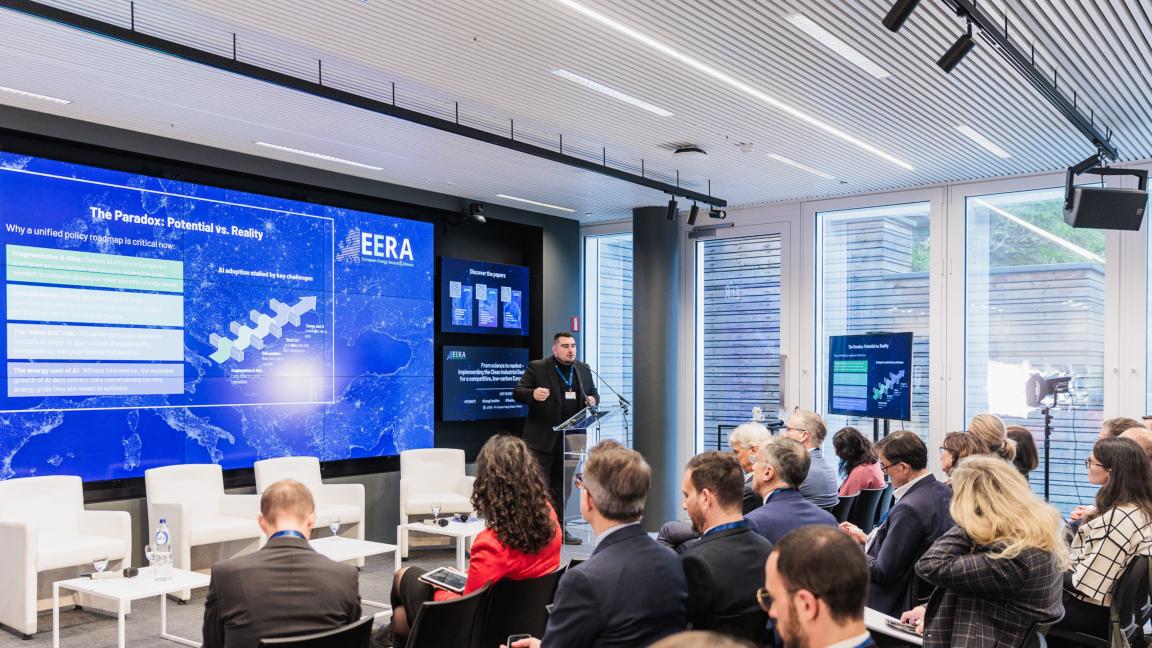
The University of Vaasa has played a key role in defining policy directions for artificial intelligence in Europe’s energy systems. The new EERA report provides concrete recommendations to support the EU’s green transition and digital energy future.
The report, titled "Unlocking the Power of AI in Europe's Energy Systems: Expert Policy Recommendations," issued by European Energy Research Alliance (EERA) marks a significant step forward in the EU’s strategy to integrate artificial intelligence into the energy sector enabling the green transition. Lead authors Assistant Professor in International Strategic Management Aušrinė Šilenskytė and Marketing Specialist/Advanced Technologies for Business Strategy Researcher Julio C. Serrano, both from the School of Management, spearheaded an extensive collaboration involving a crew of top-tier experts from across Europe.
A blueprint for Europe's digital energy future
The report explores how the five core objectives identified by the European Commission –ranging from accelerating AI deployment to establishing robust governance – can support the EU’s emerging "Clean Industrial Deal" and other EU-level initiatives. The report itself adopts a unique "fact versus fiction" approach to dismantle common myths about AI in the energy sector, ultimately proposing a comprehensive framework built on three core pillars.
The report calls for Coordinated Governance through the creation of an "EU AI in Energy Mission Board." This body would oversee strategic investments and legitimise responsible AI practices, moving away from fragmentation toward a unified European strategy. It also advocates for Secure Data Ecosystems, emphasising the need for Common European Energy Data Spaces and EU-wide testbeds where innovations can be validated safely through industry, academia, and policy collaborations. Finally, the report stresses the need of the EU investments in AI for energy skills development.
– The report advocates for the AI adoption in the energy sector through strategic investments and supportive actions that encourage innovations, collaboration among industry, academia and policymakers. Also, the report suggests adopting system’s view in which data centers powering this revolution act as integrated energy assets that contribute to, rather than strain, energy systems, says Aušrinė Šilenskytė.
The report was unveiled on 3 December during the 5th edition of the EERA High-Level Policy Conference in Brussels, an event that brings together the continent’s most influential policymakers, industry leaders, and researchers.
Julio C. Serrano represented the University of Vaasa in Brussels, where he presented the report’s key findings and served as a panelist in high-level policy discussions.
– This is not just about technology; it is about creating a governance framework that ensures AI works for the energy transition, not against it, Serrano stated during the panel.
– The University of Vaasa is proud to lead this conversation, demonstrating that our research has direct, actionable value for the future of Europe’s energy infrastructure.
Leading the charge in AI and energy
The publication of this report underscores a strategic engagement of the University of Vaasa, showcasing its energy research hub having a major impact within EU policy circles. By co-leading a diverse team of experts from Europe – including contributors from Norway, Austria, Italy, and Spain – the lead authors alongside EERA’s Communications and Outreach Director, Maria Luisa Fernandez Vanoni, have orchestrated large-scale, pan-European initiatives.
Rather than relying on isolated efforts, this collaboration has facilitated a unified approach to tackle critical issues, such as the energy demand of data centers, the necessity for 'sandboxes' to test AI innovations, and the imperative of combating algorithmic bias in critical infrastructure.
The report represents a unified voice from the European research community. It is the result of intensive collaboration with major universities and institutes working on energy research, including:
- University of Vaasa
- IIASA (International Institute for Applied Systems Analysis)
- SINTEF (Norway)
- NORCE (Norwegian Research Centre)
- CIEMAT (Spain)
- Vicomtech (Spain)
- AIT (Austrian Institute of Technology)
- FZ-Juelich (Germany)
This crew of experts produced a document that moves beyond hype, offering pragmatic steps for policymakers to harness AI for decarbonisation and grid resilience.
The presentation of these findings comes at a crucial time as the European Union enters a new institutional cycle focused on competitiveness and decarbonisation. The University of Vaasa’s contribution alongside all the major partners are expected to directly influence the upcoming EU Strategic Roadmap for AI in Energy.
With this high-profile appearance in Brussels, the University of Vaasa has signaled that it is not merely a participant in the academic conversation but a driving force in shaping the regulations and technologies that will define Europe's energy future.
Tietolaatikko
Read the report on EERA’s website