
Hydrogen microgrids could power everything from residential and industrial areas to ships at sea
Image
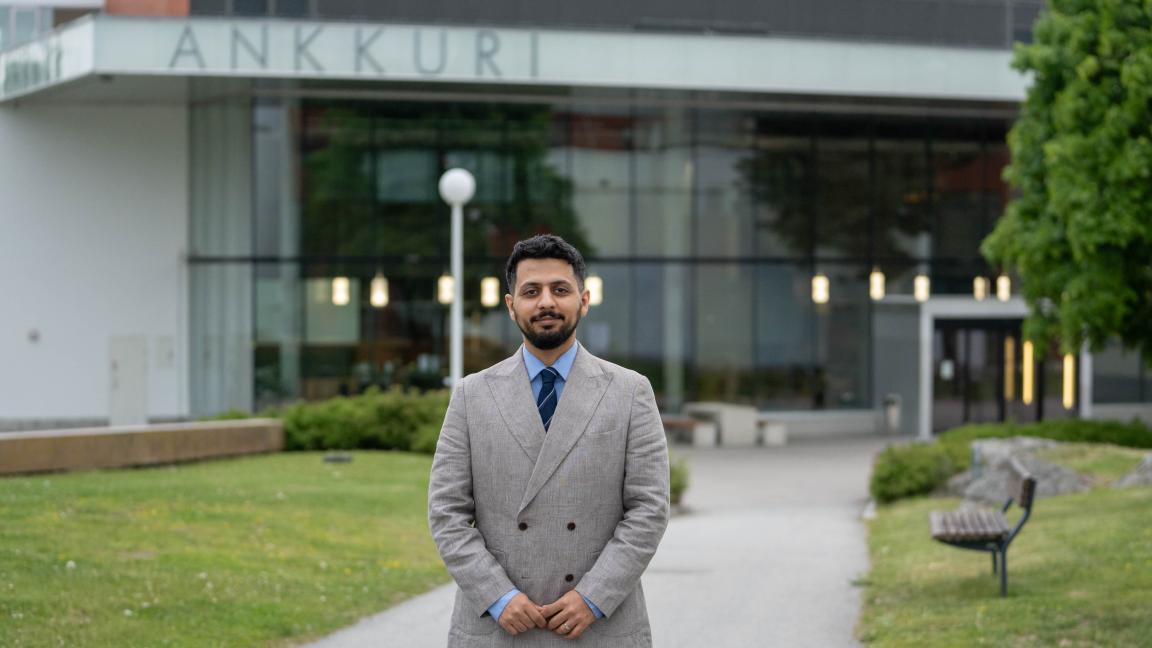


Hydrogen could play a key role in making future energy systems cleaner, more resilient and less dependent on fossil fuels. In his doctoral dissertation at the University of Vaasa, Vahid Shahbazbegian demonstrates how hydrogen-integrated microgrids can help balance fluctuating renewable energy production while improving energy security and reducing costs.
Integrating renewable energy sources into local power systems has long been a balancing act due to the unpredictable nature of wind and solar power. Vahid Shahbazbegian’s doctoral dissertation in electrical engineering examines how hydrogen can act as a flexible energy carrier within multi-energy microgrids.
– A microgrid is a small-scale energy system that can operate either connected to the main electricity network or independently in so-called islanded mode. Examples range from residential neighbourhoods and industrial facilities to electric vehicle charging hubs and ships operating at sea, explains Shahbazbegian.
Shahbazbegian’s work highlights the importance and role of sector coupling, specifically linking electricity with hydrogen networks. This integration can help stabilise electricity prices by reducing imbalances between supply and demand while improving system resilience.
– When solar or wind generation exceeds demand, the surplus electricity can be used to produce hydrogen, which can later be converted back into electricity when supply is low.
Microgrids could improve resilience during disruptions
The research is closely linked to ongoing discussions about energy security and Europe’s transition away from fossil fuels. Shahbazbegian notes that hydrogen and microgrids could provide additional resilience and flexibility to local energy systems.
– A microgrid can continue operating independently even during prolonged power outages or supply shortages by relying on its own local power generation and energy storage. If we also store surplus renewable energy as hydrogen and use it later during periods of high demand, the electricity system becomes more balanced.
While hydrogen systems have developed rapidly in recent years, improvements and investments are still needed before widespread adoption becomes possible.
– Hydrogen technology is evolving quickly, and future improvements will make these systems even more cost-effective which is important for their large-scale deployment. The results help show how much renewable energy can be integrated into future energy systems and what kinds of investments are needed to build fully green microgrids in the coming decades, Shahbazbegian says.
Dissertation
Shahbazbegian, Vahid (2026) Optimal Operation and Planning of Multi-Energy Microgrids with Hydrogen Carriers Integration. Acta Wasaensia 585. Doctoral dissertation. University of Vaasa.
Public defence
The public examination of M.Sc. Vahid Shahbazbegian’s doctoral dissertation “Optimal Operation and Planning of Multi-Energy Microgrids with Hydrogen Carriers Integration”will be held on Tuesday 16 June 2026 at 12 at the University of Vaasa, auditorium Nissi.
It is possible to participate in the defence also online:
https://uwasa.zoom.us/j/62331218722?pwd=Fk0LvaYTxQa6j1BXun6dRvpsyuFw7t.1
Password: 826727
Associate Professor Yanbo Wang (Aalborg University) will act as opponent and Professor Hannu Laaksonen as custos.
Tietolaatikko
Further information
Vahid Shahbazbegian, tel. +358 46 525 3941, vshahbazbegian@gmail.com
Vahid Shahbazbegian was born in 1995 in Hamedan, Iran. He completed a Master of Science degree at Shahid Beheshti University in 2020 and a Bachelor of Science degree at Bu-Ali Sina University in 2017. He currently works as a Lead Design Engineer at GE Vernova.