
Harnessing space data and AI for energy transition – professor Ali Arslan starts at the University of Vaasa
Image
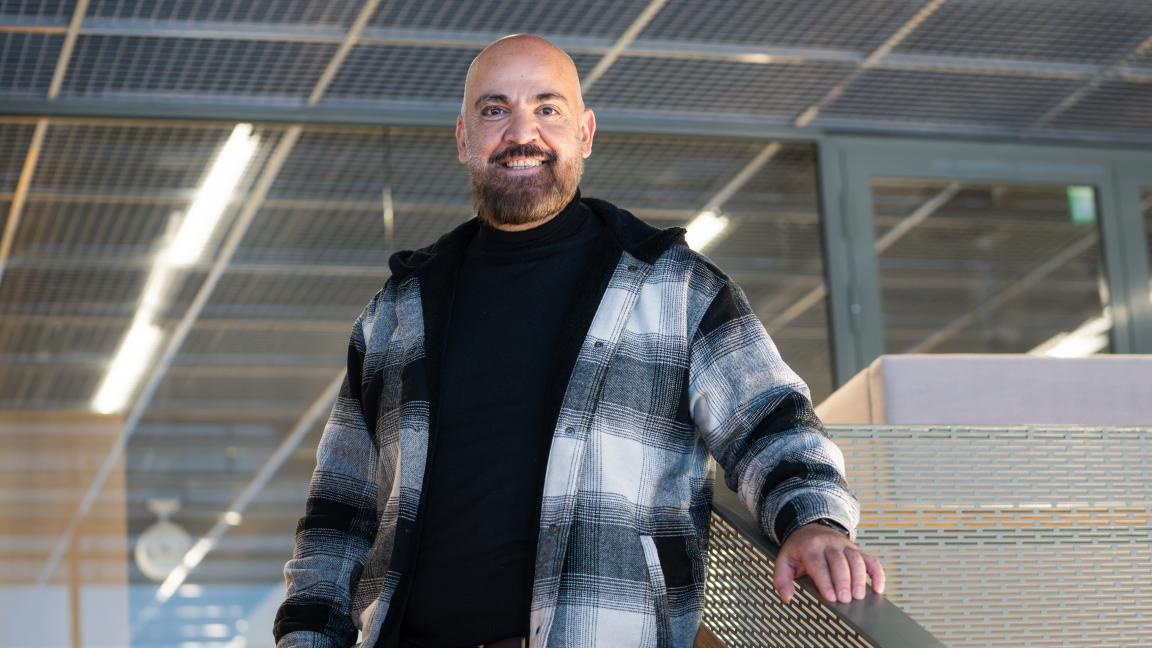


Doctor of Technology Ali Arslan has started as Professor of Space Data Processing at the University of Vaasa in February, bringing with him a strong expertise in space technology and satellite-based Earth Observation. In his new position, he will focus on integrating space data and artificial intelligence to support the energy transition and climate action.
Arslan’s research addresses one of the biggest challenges of our time: how to move toward a climate-neutral energy system while ensuring reliability, affordability, and sustainability.
– Data-driven insights from space help reduce uncertainty, improve efficiency, and support evidence-based decisions in the transition toward cleaner energy. Reliable and affordable renewable energy requires accurate information about natural resources such as solar radiation, wind conditions, snow, and water availability. Satellite data, combined with AI, can provide this information at local, national, and global scales. This supports energy system planning, risk management, and long-term sustainability, Arslan says.
In his research, Arslan develops methods to monitor renewable energy sources and the environmental effects of energy production using satellite observations. He also develops AI tools to make it easier to detect patterns from large data-sets.
– For example, snow and water conditions strongly affect hydropower production in Nordic countries, and satellite observations can improve forecasting and planning, Arslan explains.
“Space data is becoming an everyday resource for solving real societal challenges”
Over the past two decades, Arslan’s work has focused on turning satellite data into practical information for understanding the environment and supporting decision-making. Arslan previously worked at the Finnish Meteorological Institute, leading and coordinating international Earth Observation projects. Before that, he worked in industry at Nokia, where he led research teams and worked on advanced technology development.
Arslan has a strong appreciation for applied research and innovation, and in his new role, he wants to ensure the relevance of research through multidisciplinary collaboration within the university community industry, public authorities and international partners.
– Space data is no longer something distant or abstract — it is becoming an everyday resource for solving real societal challenges. I look forward to working across disciplines, because the energy transition requires expertise from technology, economics, policy, and social sciences. My expectation is to develop a strong, internationally connected research and education environment where space data, AI, and energy applications come together in a meaningful way. By working together, we can turn advanced research into practical solutions that support sustainable energy systems and climate resilience.
In teaching, Arslan aims to develop learning opportunities that give students hands-on experience with satellite data and AI methods, helping to train the next generation of experts in space data and sustainability.