
Erasmus Mundus students gain real‑world insights at Smart Cities and Communities Winter School in Vaasa
Image
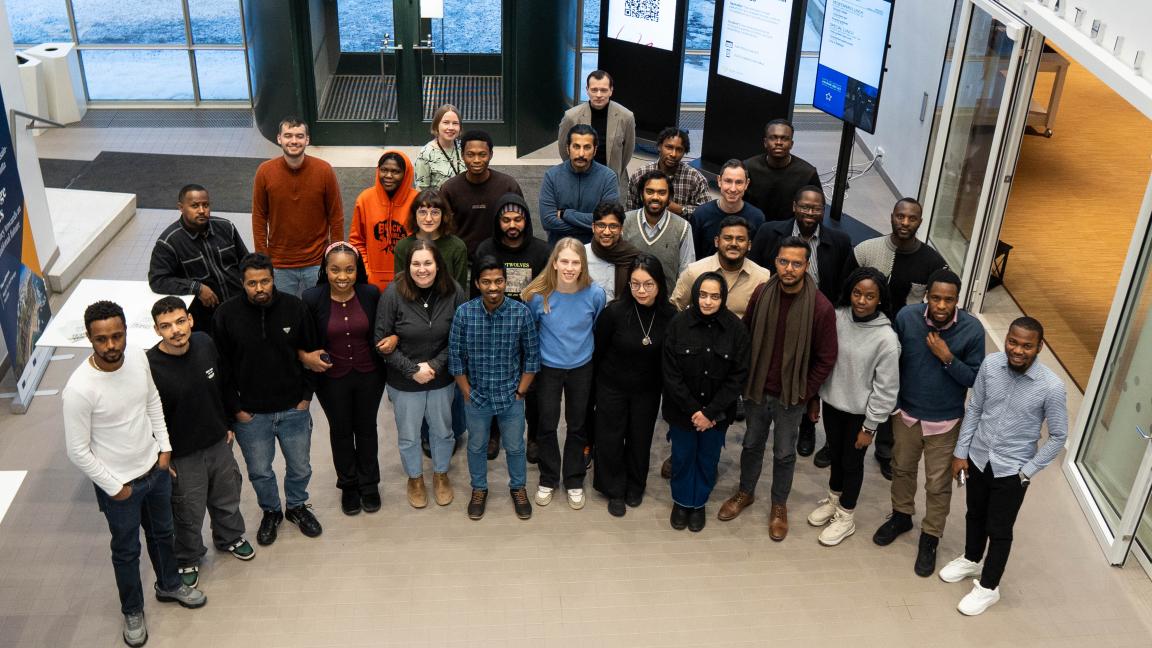
The University of Vaasa hosted the Erasmus Mundus Smart Cities and Communities (SMACCs) Winter School from 12–16 January 2026, bringing together first- and second‑year students as well as faculty members from the programme’s partner universities across Europe.
The event was part of the international SMACCs master’s programme, jointly run by the University of Vaasa, the University of Mons (Belgium), the International Hellenic University (Greece) and the University of the Basque Country (Spain).
Interaction between industry and academia to support students’ professional development
The Winter School offered students an intensive week of expert lectures, company and research visits, workshops, and social activities, giving participants the opportunity to deepen their understanding of smart city development while strengthening the programme’s international community.
Tareq Anwar Shikdar from Bangladesh and Anna van Bussel from the Netherlands both enjoyed the Winter School experience.
– I have attended winter schools before, but the Winter School at the University of Vaasa has been the best so far. What stood out the most was the close interaction with industry representatives and researchers, which helped me understand their vision and way of thinking. This experience has genuinely helped me reshape my own mindset and career goals, Tareq says.
The programme featured guest speakers from industry and academia. The students visited Wärtsilä’s Sustainable Technology Hub in Vaasa and got to hear company presentations from other technology companies in the region, such as Danfoss, Hitachi Energy, ABB, VEO, WE Tech Solutions, and Wapice. One day was dedicated to visiting the UNESCO World Heritage Site Raippaluoto Island and to learn about personal branding in a workshop which students found very useful for them.
– I really enjoyed the workshop on personal branding. In this workshop, we first worked on who you want to be and how you want to be perceived, then on your offline presence through networking and your own elevator pitch, Anna explains.
Image
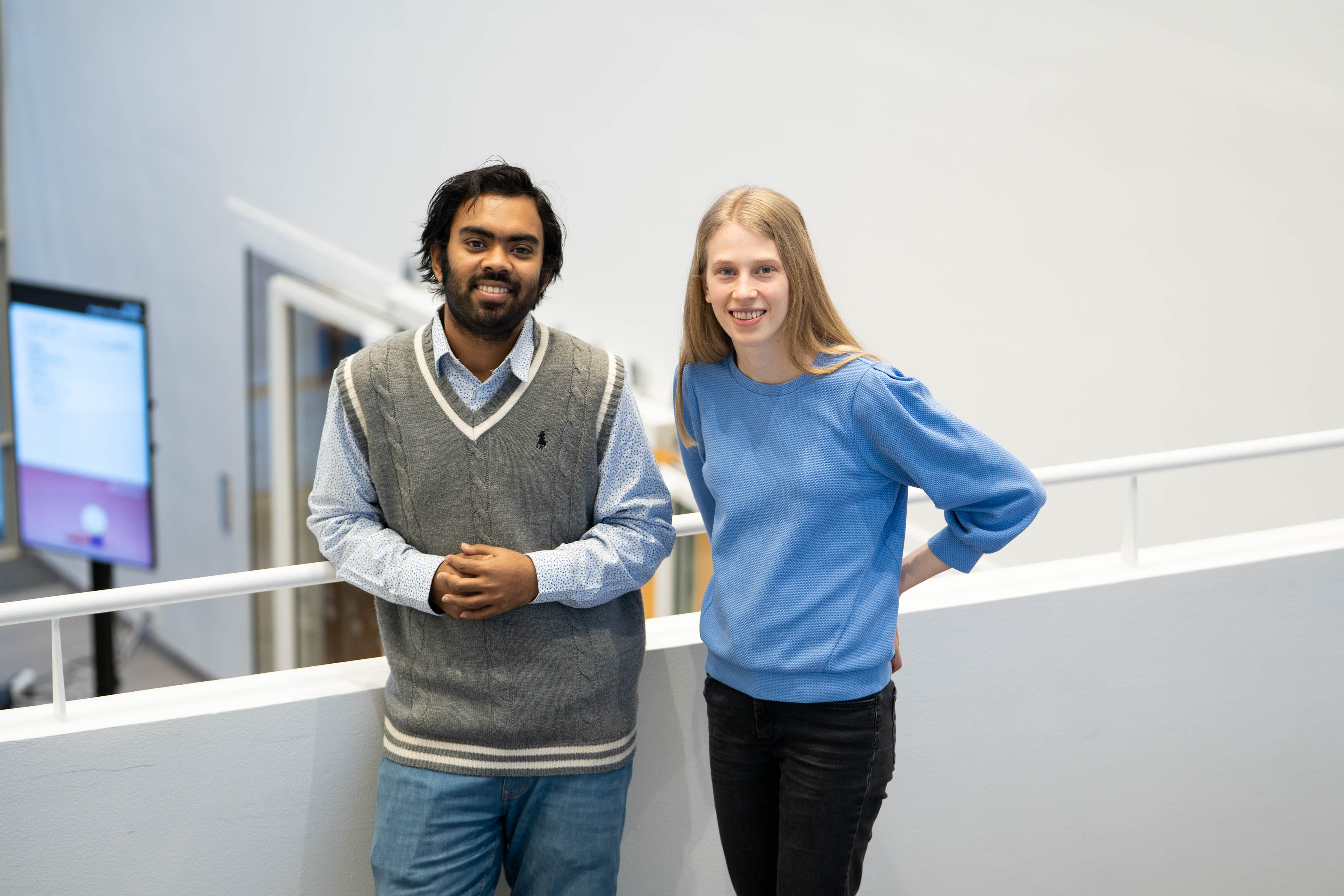
The industry-academia collaboration equips students for their future careers.
– I am deeply interested in research, but my goal is to ensure that my research has direct industrial relevance. I want my work to benefit industries while also allowing me to gain hands-on, practical expertise. At this stage, my main career goal is to pursue an industrial PhD, ideally in collaboration with the University of Vaasa and one or more industry partners, possibly through a dual-industry PhD pathway, Tareq says.
– The Winter School has strongly supported this goal by giving me direct exposure to industry expectations, real-world challenges, and networking opportunities with professionals. It has helped me better understand how to align academic research with industrial needs, which is exactly the direction I want to take in my future career, he continues.
– Eventually, I would love to work with the European Union on energy policies or something related. Before that, I would want to work as a project manager at an energy company or more broadly within the renewable energy sector. During the Winter School, we did not only have academic presentations, but also had engaging company presentations. In particular, I am interested in completing my master’s thesis at one of these companies and plan to reach out to them. Also, the workshop helped me create my elevator pitch and in general I got a better idea on how I should present myself. This will be important for networking and once I graduate to find a job, Anna says.
Connecting with each other through studies and social activities
Image
One of the most significant outcomes of this year’s Winter School was the opportunity for students from different universities to meet, many for the first time. Participants also gained a broader view of the University of Vaasa, its research, and its strong links to the region’s business ecosystem. For staff, the event provided valuable in‑person collaboration time, supporting long-term cooperation within the Erasmus Mundus framework.
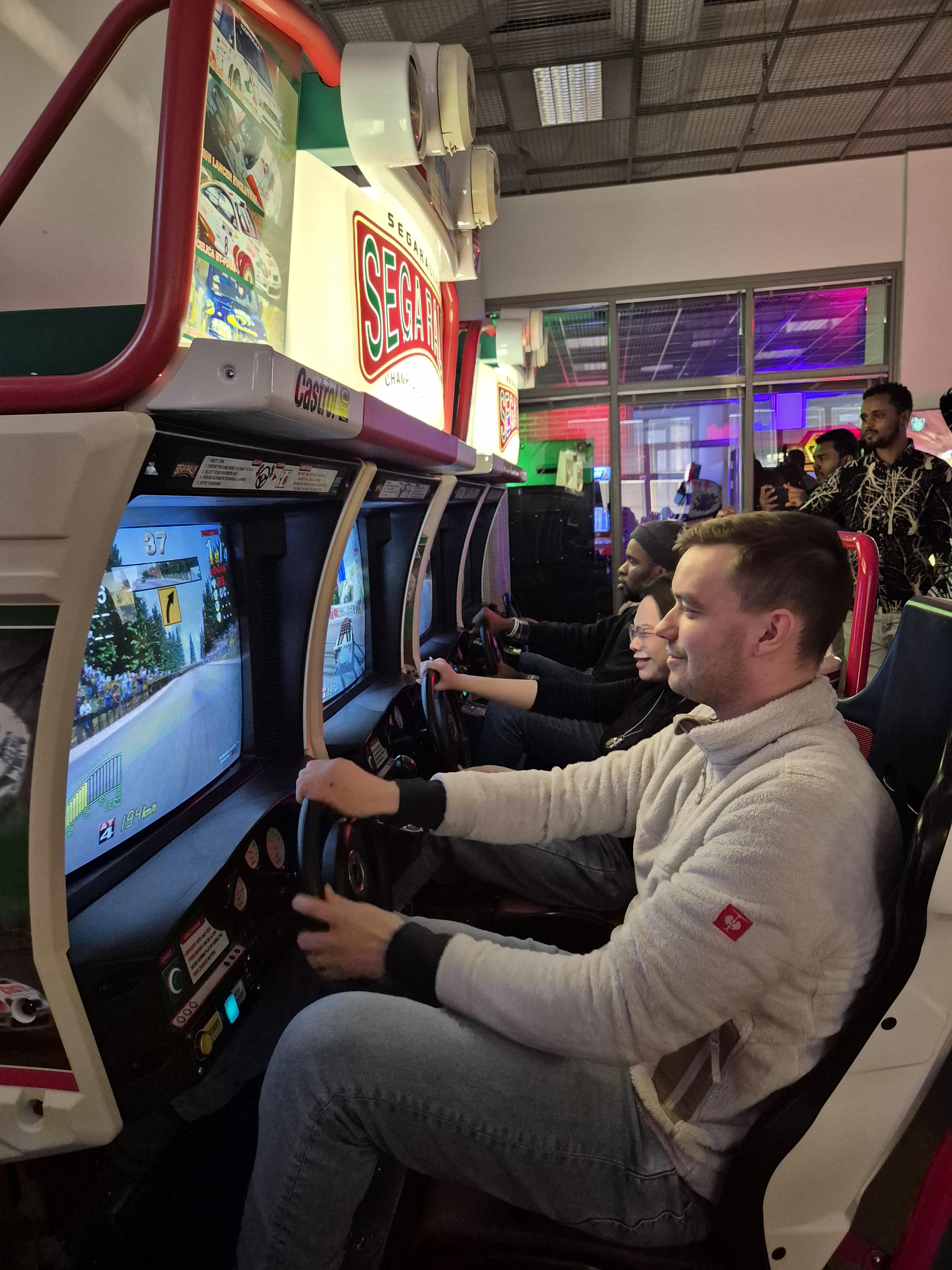
A fun highlight of the week was a friendly Sega Rally 2 tournament held at the University of Vaasa Arcade. Social activities such as this supported building connections and fostering group cohesion among students – and staff.
– Personally, the best part was going to the Arcade and participating in a racing tournament where I was able to defeat Professor Hannu Laaksonen in one round, says Anna.
Smart Cities and Communities: A unique gateway to international experience and industry collaboration
The Winter School plays a central role in the SMACCs curriculum: each student is required to participate in at least one summer and one winter school during their studies. Organising of these events rotates annually among partner universities. Overall, the SMACCs programme offers students a unique possibility to experience different cultures and study in a multicultural learning environment, as it includes four terms in three different countries.
– Studying and collaborating with people from so many different backgrounds has helped me grow both academically and personally. I have also discovered myself as a traveler during my time in Europe, experiencing its cultural diversity and seeing cities from entirely new perspectives, says Tareq.
– What I have enjoyed the most is being able to immerse myself into another culture for a semester. Now that I have had one semester in Vaasa, I'm convinced: I love the sauna! Moreover, the programme brings together students from more than 30 different nationalities. Working with people from all different backgrounds can sometimes be challenging, but most of all fun, says Anna.
– Academically, SMACCs has given me a broader worldview of smart cities, allowing me to explore engineering topics that I did not encounter during my bachelor’s studies. I particularly appreciate that the programme encourages student voices and teachers listen to our ideas, welcome suggestions, and actively engage us in discussions, Tareq adds.
– Another major highlight is the strong connection between research and industry. We are encouraged to think beyond theory, focus on real-life urban challenges, and interact directly with researchers and industry professionals. This exposure has helped me understand how academic knowledge can be translated into practical solutions for cities and communities. Overall, the programme has opened doors to PhD and career opportunities, while also motivating me to give back to my community by applying what I learn through Erasmus.