
Ecosystem collaboration helps SMEs take a digital leap and maintain their competitiveness
Image
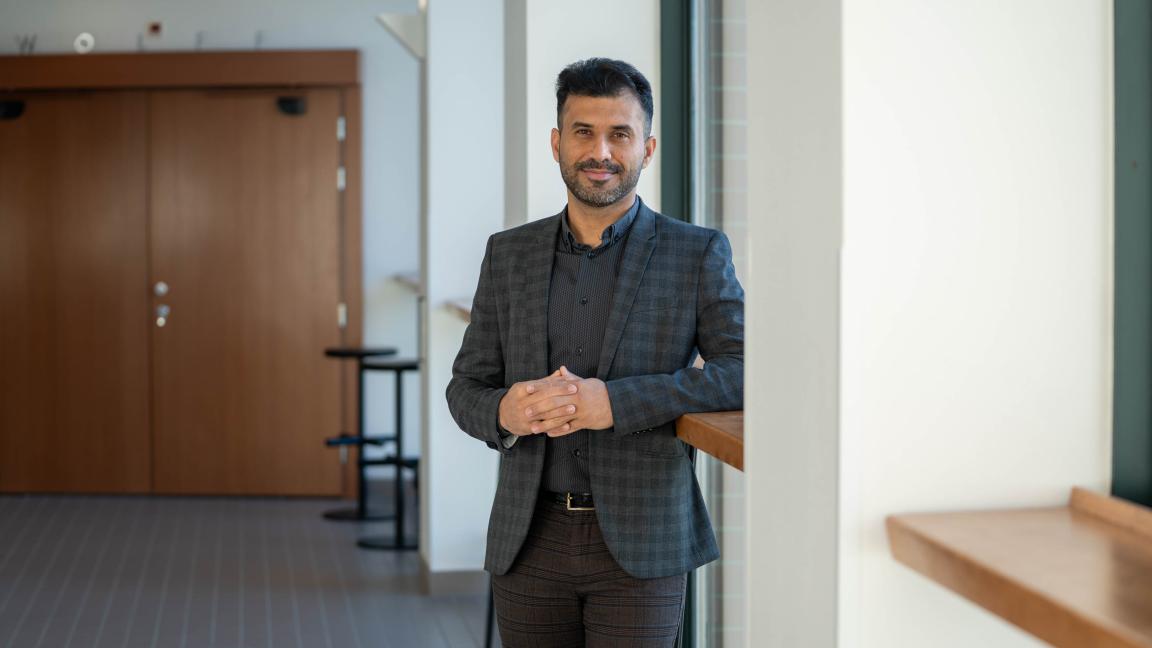

A doctoral dissertation in Industrial Management to be defended at the University of Vaasa examines the digital transformation of small and medium-sized enterprises (SMEs). Shahid Hafeez’s doctoral research shows that SMEs can adopt new digital technologies and maintain their competitiveness through ecosystem collaboration.
Finland is dominated by small and medium-sized enterprises (SMEs), with nearly 100 percent of Finnish companies falling into this category. For these businesses, digital transformation is increasingly essential to remain competitive and capitalise on new business opportunities.
Shahid Hafeez, who is defending his doctoral thesis at the University of Vaasa, investigated digital transformation in SMEs from the perspective of knowledge acquisition and utilisation.
– It emerged that many companies struggle due to limited resources, skills shortages, and digital capabilities. SMEs play a major role in the Finnish economy, and I wanted to study how these companies can be encouraged to adopt new technology and collaborate, says Hafeez.
Hafeez’s dissertation examines SME digital transformation through the roles of ecosystem actors and diverse networks. In this context, ecosystem actors comprise other enterprises, universities, and various business support organisations.
Qualitative interviews conducted for the study revealed that the way SMEs collect and utilise data differs substantially from that of large corporations.
– In SMEs, employees are tied down much more closely to projects and day-to-day routines than in larger enterprises. Therefore, it is a tremendous help when another local SME is grappling with the same challenges, making it possible to share experiences.
Ecosystem collaboration can accelerate growth and employment
Hafeez’s dissertation provides practical guidelines for SMEs, business leaders, policymakers, and intermediary organisations on how SMEs can accelerate their digital transformation, thereby adopting new digital technologies and maintaining their competitiveness.
– Assessing capabilities, identifying skills gaps, strategic participation in ecosystems, Hafeez lists.
The study explores how collaboration can drive innovation, growth, and employment.
A central finding of the dissertation, however, is that merely participating in an ecosystem does not guarantee digital transformation or business benefits for SMEs. Value is generated through collaboration only when externally acquired knowledge is transformed into concrete digital solutions and new business models.
– Ecosystem collaboration must therefore be viewed as a long-term strategic investment. Only sustained partnerships enable knowledge sharing, co-creation, and access to technologies, expertise, and funding.
Dissertation
Hafeez, Shahid (2026) Digital Transformation Through Ecosystem Collaborations: Navigating Knowledge Exploration-Exploitation Pathways in SMEs. Acta Wasaensia 595. Doctoral dissertation. University of Vaasa.
Public defence
The public examination of M.Sc. Shahid Hafeez’s doctoral dissertation “Digital Transformation Through Ecosystem Collaborations: Navigating Knowledge Exploration-Exploitation Pathways in SMEs” will be held on Thursday 29 October 2026 at 12 at the University of Vaasa, auditorium Kurtén.
It is possible to participate in the defence also online:
https://uwasa.zoom.us/j/66182046319?pwd=FK7DawYRDbChCQsBC7o0XJwEeOFYkz.1
Password: 385068
Associate Professor Agnieszka Radziwon (University of Southern Denmark) will act as opponent and Associate Professor Khuram Shahzad as custos.
Tietolaatikko
Further information
Shahid Hafeez holds a master’s degree in business and economics. He works as doctoral researcher at University of Vaasa. His research interests include collaborative innovation, digital transformation, knowledge management and SMEs competitiveness. He has presented his work in various international conferences and published in high-quality international journals.