
The Year 2050 Begins with a Small Moment
The year 2050 begins with a small moment.
An ordinary moment in our everyday life – yet one that rests on a system that is anything but simple.
In the morning, the kitchen is quiet. The floor feels pleasantly warm under bare feet. The coffee machine hums. The car has charged overnight.
I don’t know exactly when – and I don’t really care. Before, I wouldn’t have even thought about it. Now, it matters.
Somewhere in the background, something — or someone — has decided that this was the right moment. The most optimal moment. The most affordable one. Electricity is available. Everything works.
But if you stop for a moment and think about it, you realize that none of this is simple anymore.
When a chain becomes a network
For a long time, we have been used to thinking about energy in a fairly linear way. Somewhere it is produced, somewhere it is transmitted, somewhere it is consumed. A clear chain – familiar and manageable. But that way of thinking is no longer enough.
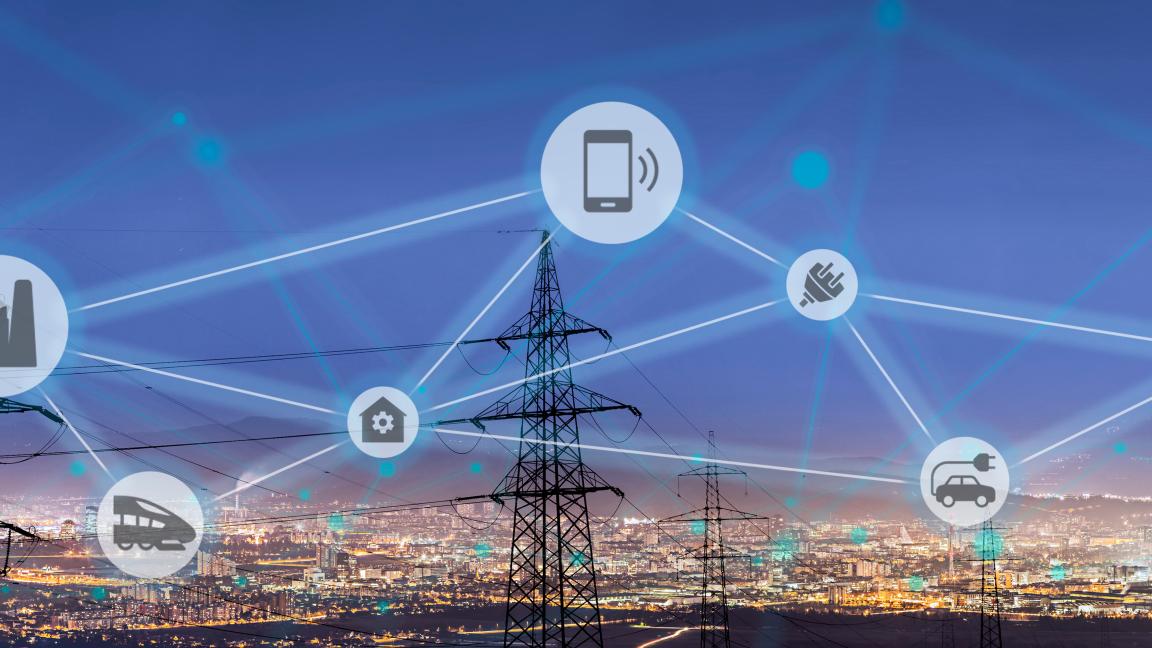
In its place, a network has emerged – layered, partly visible, partly completely hidden. A system where everything affects everything: generation, consumption, grids, markets, data – the algorithms and AI systems interpreting it – and the people behind them.
At the same time, entirely new phenomena are appearing: the massive growth of data centers, the flexibility demands of hydrogen production, the load created by charging infrastructure. And increasingly, the key question is not only what is built – but where.
This is no longer about individual technologies. This is about a system of systems – a living, continuously evolving whole.
A small shift in the question — a big shift in thinking
I remember a discussion with a company. They were no longer asking how much electricity costs.
They were asking:
When should electricity be used — and when should it not?
When should consumption be shifted?
When should operations adapt to the state of the system?
Consumption is no longer an isolated decision. It depends on what others are doing.
And the same is visible in everyday life.
The car charges.
The house responds in rhythm with my life.
Prices fluctuate. Markets operate.
Often without anyone making a conscious decision.
Yet the system constantly operates through us.
We are part of it – even when we don’t notice it.
Balance in constant motion
The electricity system is no longer controlled from a single point. We are in a situation where everything moves at once: generation, consumption, data, markets, and users.
This is not just about control.
It is about how the whole remains manageable.
Often, the entire system is still dimensioned based on situations that occur only a small fraction of the time – yet have traditionally defined the structure of the whole system. For example, a cold winter morning, when heating, industry, and electric vehicle charging all coincide – even though for most of the year, demand is much lower.
We are building a system that does not yet exist
At the same time, the electricity system is being built and renewed at an unprecedented pace:
new generation, more transmission capacity, data centers, charging infrastructure.
This historic wave of construction adds layer upon layer of new technology on top of the old –
creating a complexity that can no longer be grasped at a glance.
That is why safety and reliability cannot be a checklist at the end. They must be embedded from the very beginning – in design, testing, and operation – as a physical, digital, and socio-technical whole.
We are building a system that does not yet exist.
One that cannot be switched on and tested as a complete entity.
One that evolves while it is being designed and constructed.
And still – we must be able to trust it.
Testing is no longer enough
Isolated testing is not enough.
A single device can work perfectly – and the system can still fail. Problems no longer arise only in components. They emerge at the interfaces – in the interactions we have not yet fully understood.
In 2050, the energy system will not be finished.
It will not be fully predictable.
It will be a living lab.
And perhaps the most important question in 2026 is not what we are building – but
do we understand well enough what we are building?
About this blog
In this blog, I explore the transformation of the energy system through everyday observations, research, and collaboration.
I share insights that emerge from research, industry collaboration, and daily life – reflecting on what future energy systems might look like, and what we need to understand today as technology, people, and systems become increasingly interconnected.
I examine how the energy system is evolving and becoming more complex, and how different solutions and technologies are interlinked. At the same time, I reflect on what we learn in multi-actor environments, co-creation processes, and ecosystems – and how even small everyday observations can lead to broader systemic insights.
My hope is that this blog will open up dialogue between different actors – and bring in new voices and perspectives along the way.