
An international career was always the goal
When Timo Pätiälä began his studies in International Marketing at the University of Vaasa, an international career was already a clear ambition. Having spent part of his youth abroad, he had developed a strong command of English, while his parents' international careers had made the global business environment both familiar and appealing.
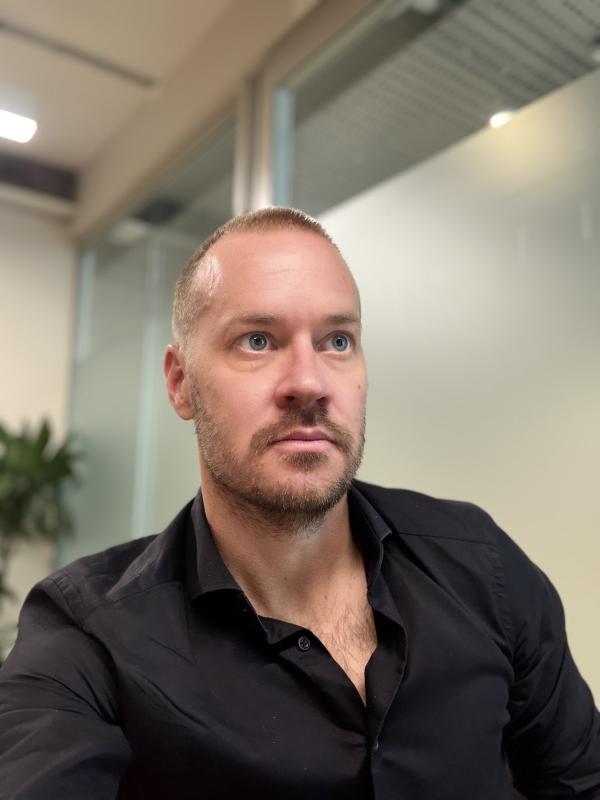
Graduating with a Master of Science in Economics and Business Administration in 2013, Pätiälä is one of the founders of strategy and innovation consultancy Hellon and currently leads the company's UK operations. He established Hellon's London office and is now responsible for the firm's international client relationships. His work has brought him into close collaboration with global organisations and senior decision-makers. His clients include multinational corporations as well as international organisations.
– It's a privilege to work with senior leaders from major organisations and help solve challenges across a wide range of industries.
One of the realities of international work is managing time zones, extensive travel, and balancing both with everyday life. In recent years, another dimension has been added by the rapid development of artificial intelligence.
– Another challenge, which is also incredibly fascinating, is navigating the AI transformation. Organisations are taking very different approaches, and that is clearly reflected in my own client portfolio. My clients range from companies such as HSBC and Vodafone to the United Nations and organisations like UNICEF and UNHCR, Pätiälä explains.
He encourages students and anyone still considering their future career direction to develop a comprehensive understanding of AI
– Artificial intelligence will transform every industry. Learn how it works, what opportunities it creates, and what risks come with it.
Lessons learned inside and outside the classroom
Pätiälä does not point to a single lesson from university as the most important one. Instead, he sees value in the entire student experience, both inside and outside the lecture hall.
The university taught him perseverance and the ability to move steadily towards long-term goals, one step at a time. At the same time, student life provided natural opportunities to build networks and lasting relationships.
When applying for his first truly international role at a listed American company early in his career, Pätiälä found that his master's degree was a significant advantage.
– A degree signals both competence and determination. Early in your career, that matters a great deal, even though experience and achievements naturally become more important later on.
The customer as a compass
Over the years, working life has taught Pätiälä a number of principles that remain relevant regardless of industry or situation.
1.Pätiälä has observed that large organisations often struggle with remarkably similar issues, regardless of their sector. Finding a solution frequently begins with looking at the problem from a new perspective.
2. Working life has also taught him that in times of uncertainty, the customer is usually the best place to start. A customer-centric mindset provides a solid foundation for strategic decision-making.
3. His most recent lesson concerns working with executive teams. According to Pätiälä, listening carefully is essential, but so is having the confidence to contribute your own ideas.
– When you're in a room with a client's executive team, listen more than you speak, but do speak. Leaders are people too, and they value fresh perspectives. It's better to offer an opinion or insight that adds something to the discussion than to remain silent.
The Vaasa years remain among the best of his life
Pätiälä looks back on his student years with great fondness. The friendships he formed in Vaasa have lasted to this day, and he describes those years as some of the best of his life. His message to current and future students is clear: there is no need to rush into working life.
– Enjoy your time as a student. You'll have plenty of time to work, but it's much harder to return to that stage of life when you were a student and the world felt full of possibilities. Don't skip the good parties.
At the same time, he emphasises that there is no need to map out an entire career path in advance. Very few people end up doing exactly what they imagined at the beginning of their studies.
– There isn't just one career or one industry waiting for you. People can have several different careers during their lifetime, so there is no single right or wrong choice.


